Institute of Biomechanics, School of Bioscience and Bioengineering, South China University of Technology, Guangzhou, 510006, People's Republic of China.
Department of Cardiovascular Surgery, Guangdong Cardiovascular Institute, Guangdong Provincial Key Laboratory of South China Structural Heart Disease, Guangdong Provincial People's Hospital & Guangdong Academy of Medical Sciences, School of Medicine, South China University of Technology, Guangzhou, 510080, People's Republic of China.
Sci Rep. 2021 Feb 26;11(1):4803. doi: 10.1038/s41598-021-84155-3.
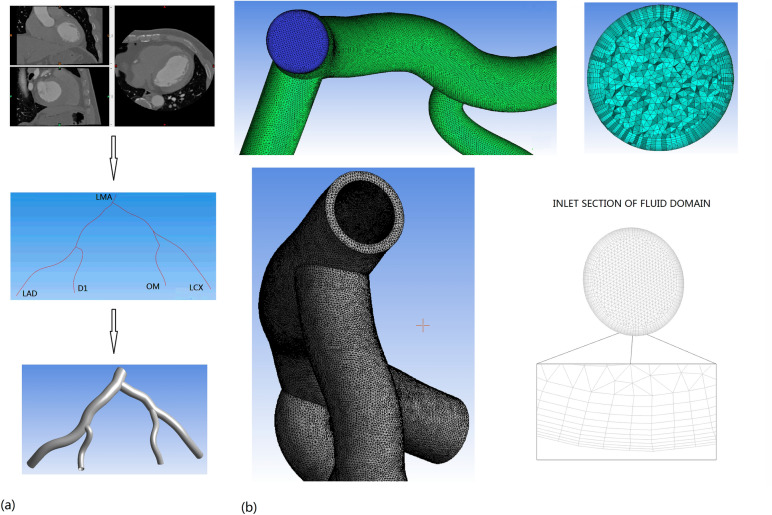
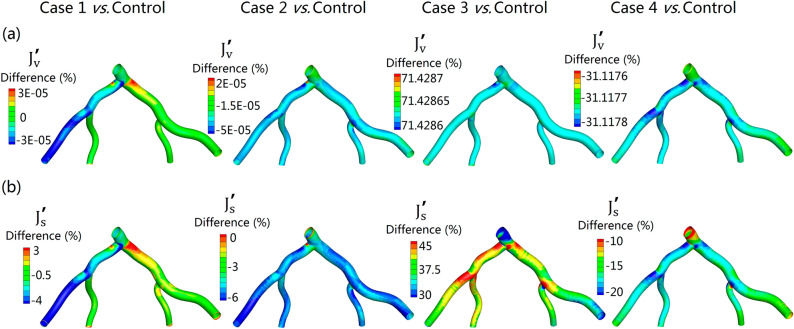
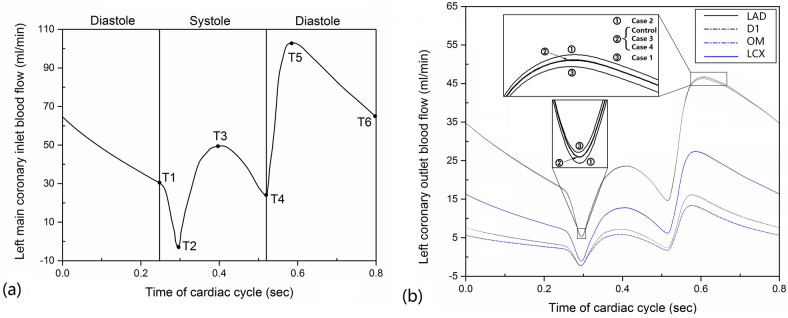
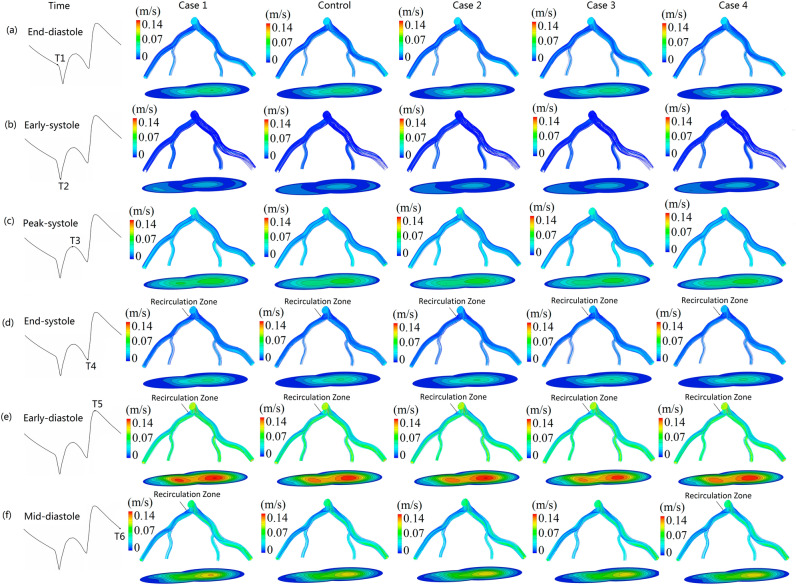
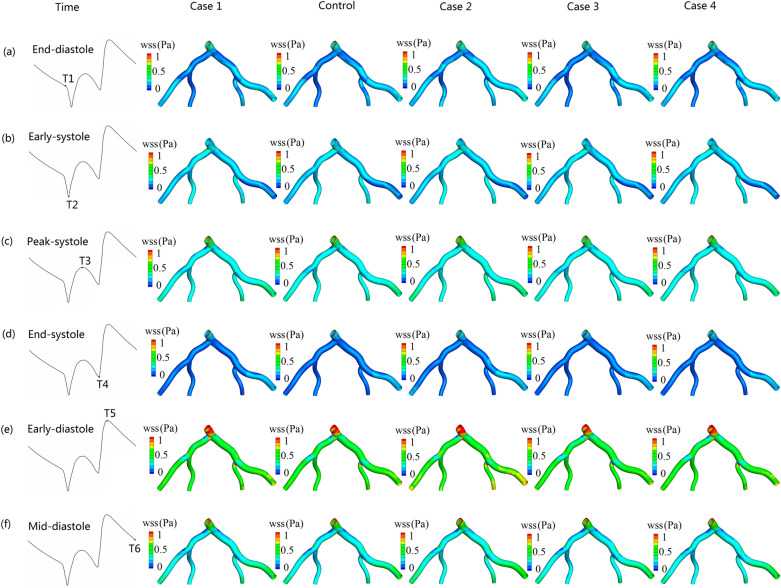
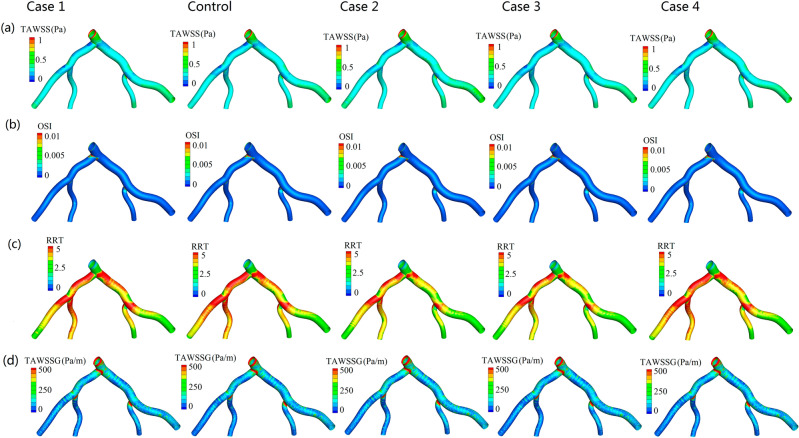
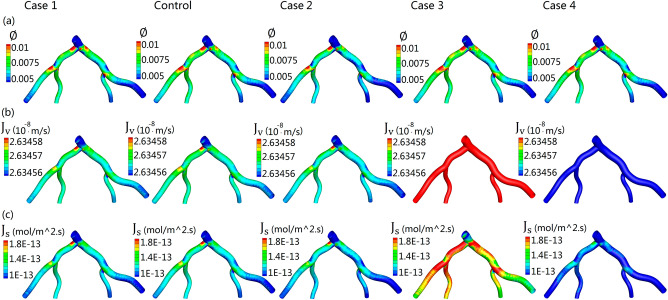
The purpose of this study is to compare the effect of the different physical factors on low-density lipoproteins (LDL) accumulation from flowing blood to the arterial wall of the left coronary arteries. The three-dimensional (3D) computational model of the left coronary arterial tree is reconstructed from a patient-specific computed tomography angiography (CTA) image. The endothelium of the coronary artery is represented by a shear stress dependent three-pore model. Fluid-structure interaction ([Formula: see text]) based numerical method is used to study the LDL transport from vascular lumen into the arterial wall. The results show that the high elastic property of the arterial wall decreases the complexity of the local flow field in the coronary bifurcation system. The places of high levels of LDL uptake coincide with the regions of low wall shear stress. In addition, hypertension promotes LDL uptake from flowing blood in the arterial wall, while the thickened arterial wall decreases this process. The present computer strategy combining the methods of coronary CTA image 3D reconstruction, [Formula: see text] simulation, and three-pore modeling was illustrated to be effective on the simulation of the distribution and the uptake of LDL. This may have great potential for the early prediction of the local atherosclerosis lesion in the human left coronary artery.
本研究旨在比较不同物理因素对从血流中向左侧冠状动脉动脉壁积累低密度脂蛋白 (LDL) 的影响。从患者特定的计算机断层血管造影 (CTA) 图像重建左侧冠状动脉树的三维 (3D) 计算模型。冠状动脉的内皮通过依赖于切应力的三个孔模型表示。使用基于流固耦合 ([Formula: see text]) 的数值方法来研究 LDL 从血管腔向动脉壁的转运。结果表明,动脉壁的高弹性特性降低了冠状动脉分叉系统中局部流场的复杂性。LDL 摄取水平较高的部位与壁切应力较低的区域重合。此外,高血压促进了动脉壁中血流中的 LDL 摄取,而增厚的动脉壁则减少了这一过程。本研究将冠状动脉 CTA 图像 3D 重建、[Formula: see text] 模拟和三孔模型方法相结合的计算机策略,有效地模拟了 LDL 的分布和摄取。这对于预测人类左侧冠状动脉局部动脉粥样硬化病变具有很大的潜力。