Department of Mechanical Engineering, King Saud University, P.O. Box 800, Riyadh 11421, Saudi Arabia.
Laboratoire de Mécanique de Lille, UMR CNRS 8107, Villeneuve-d'Ascq, France.
Comput Math Methods Med. 2017;2017:4198095. doi: 10.1155/2017/4198095. Epub 2017 Sep 24.
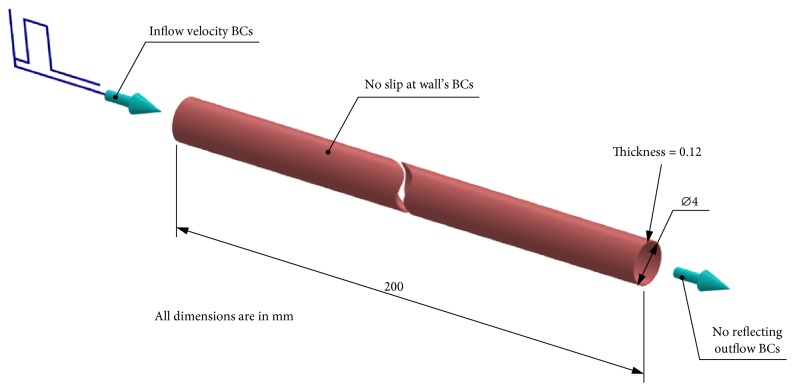
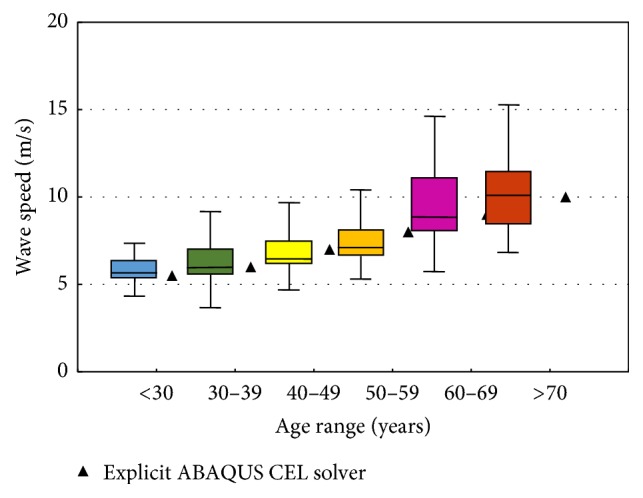
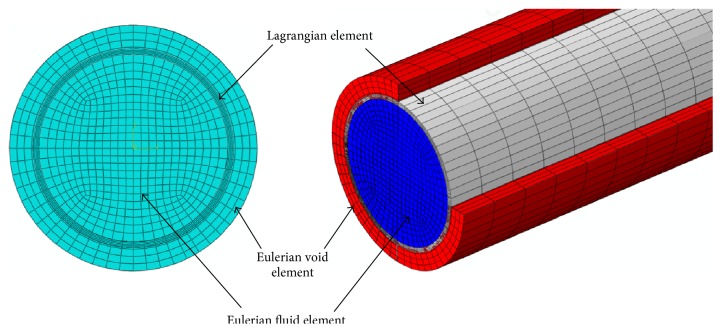
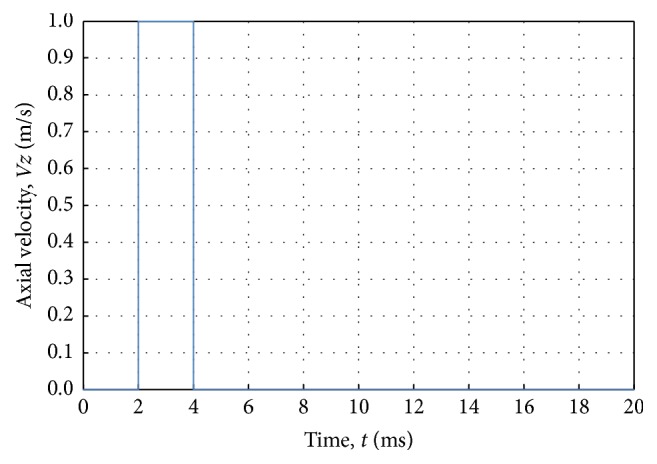
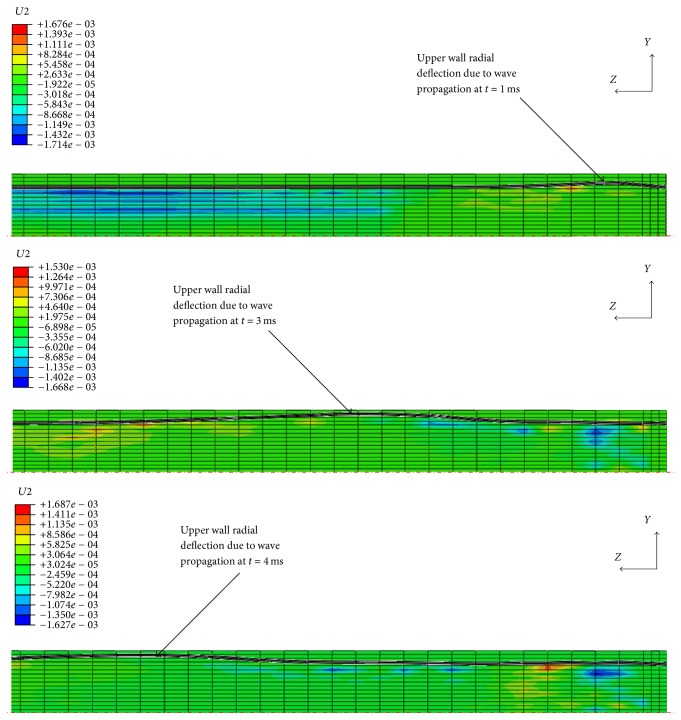
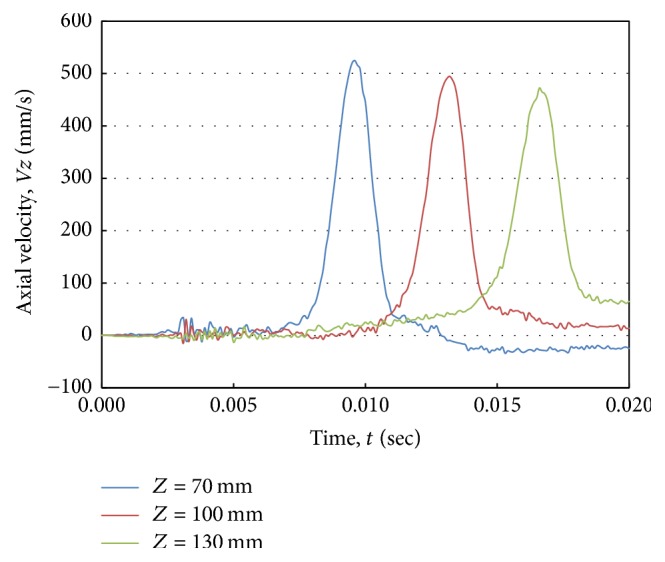
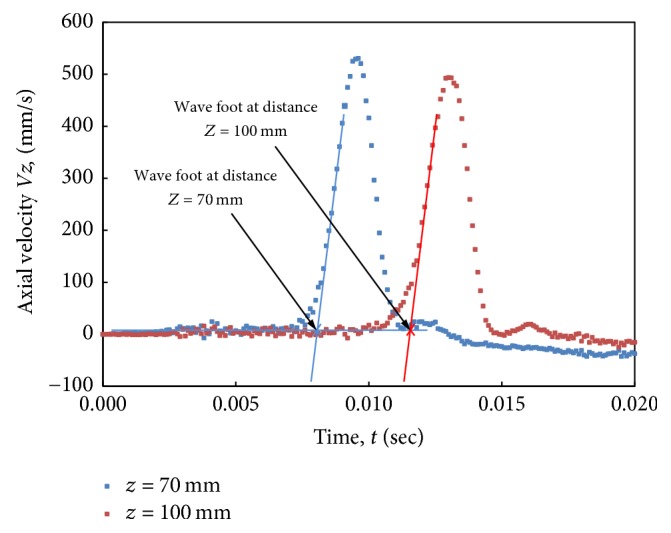
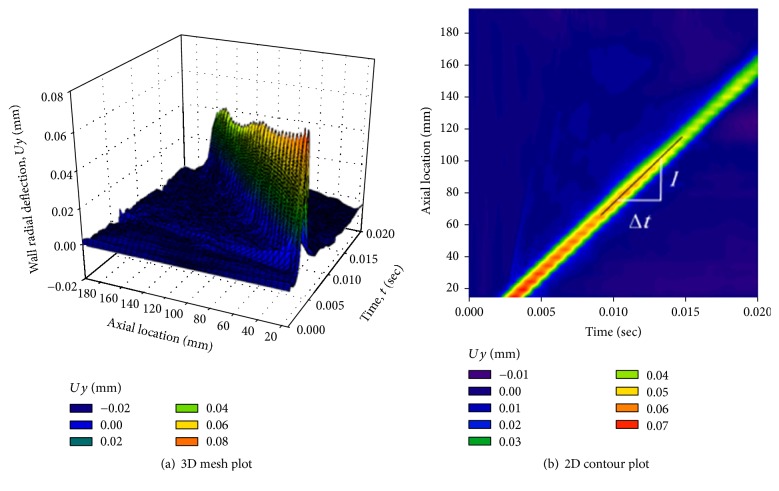
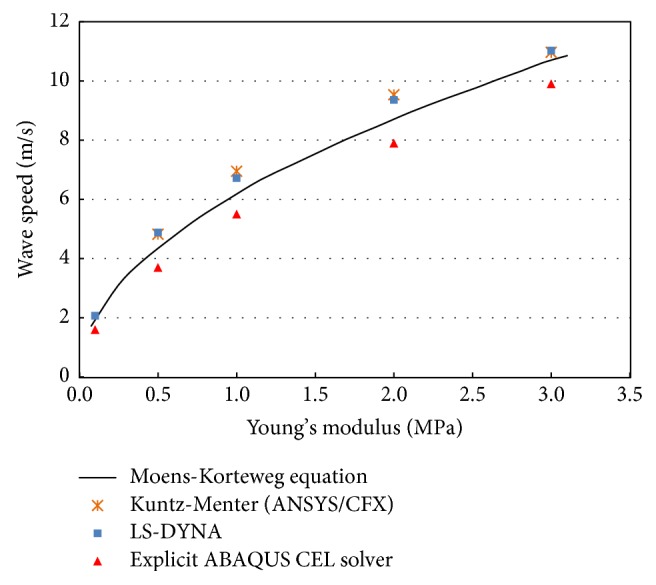
The aim of this study is to present a reliable computational scheme to serve in pulse wave velocity (PWV) assessment in large arteries. Clinicians considered it as an indication of human blood vessels' stiffness. The simulation of PWV was conducted using a 3D elastic tube representing an artery. The constitutive material model specific for vascular applications was applied to the tube material. The fluid was defined with an equation of state representing the blood material. The onset of a velocity pulse was applied at the tube inlet to produce wave propagation. The Coupled Eulerian-Lagrangian (CEL) modeling technique with fluid structure interaction (FSI) was implemented. The scaling of sound speed and its effect on results and computing time is discussed and concluded that a value of 60 m/s was suitable for simulating vascular biomechanical problems. Two methods were used: foot-to-foot measurement of velocity waveforms and slope of the regression line of the wall radial deflection wave peaks throughout a contour plot. Both methods showed coincident results. Results were approximately 6% less than those calculated from the Moens-Korteweg equation. The proposed method was able to describe the increase in the stiffness of the walls of large human arteries via the PWV estimates.
本研究旨在提出一种可靠的计算方案,用于评估大动脉中的脉搏波速度 (PWV)。临床医生认为这是人体血管僵硬程度的一个指标。使用代表动脉的三维弹性管对 PWV 进行模拟。对管材料应用了特定于血管应用的本构材料模型。用代表血液材料的状态方程定义了流体。在管入口处施加速度脉冲以产生波传播。实现了带有流固耦合 (FSI) 的耦合欧拉-拉格朗日 (CEL) 建模技术。讨论了声速的比例及其对结果和计算时间的影响,并得出结论,60m/s 的值适合模拟血管生物力学问题。使用了两种方法:速度波形的足对足测量和通过轮廓图的壁径向挠度波峰的回归线斜率。这两种方法都得到了一致的结果。结果比从 Moens-Korteweg 方程计算的值低约 6%。所提出的方法能够通过 PWV 估计来描述大型人体动脉壁的刚度增加。