Amsterdam UMC, University of Amsterdam, Department of Experimental Immunology, Amsterdam institute for Infection & Immunity, Meibergdreef 9, Amsterdam, The Netherlands.
Amsterdam UMC, Vrije Universiteit Amsterdam, Department of Medical Oncology, Cancer Center Amsterdam, De Boelelaan 1117, Amsterdam, The Netherlands.
Sci Rep. 2021 Feb 26;11(1):4767. doi: 10.1038/s41598-021-84081-4.
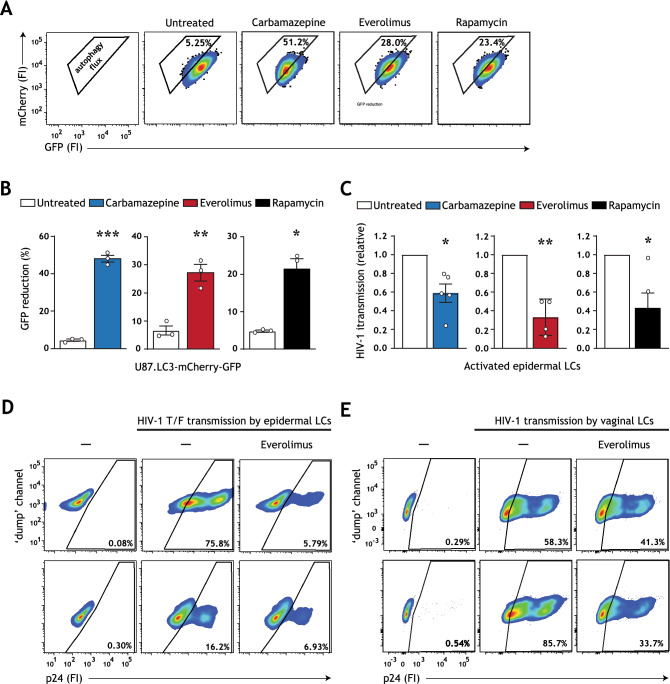
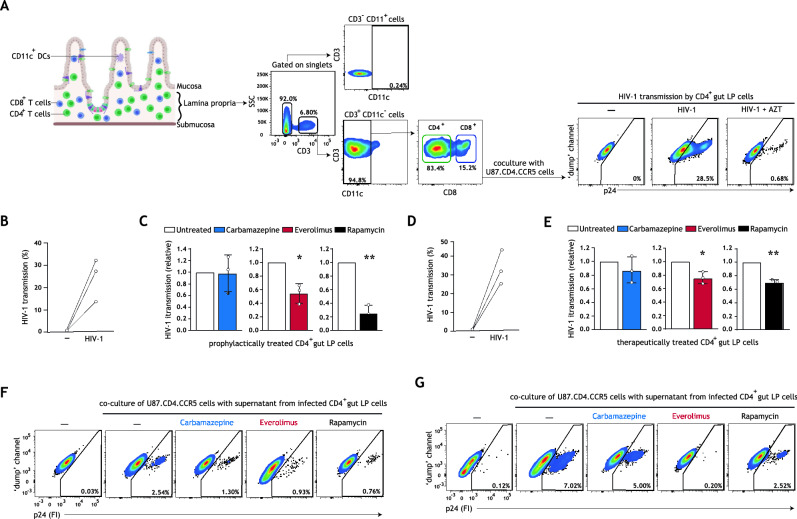
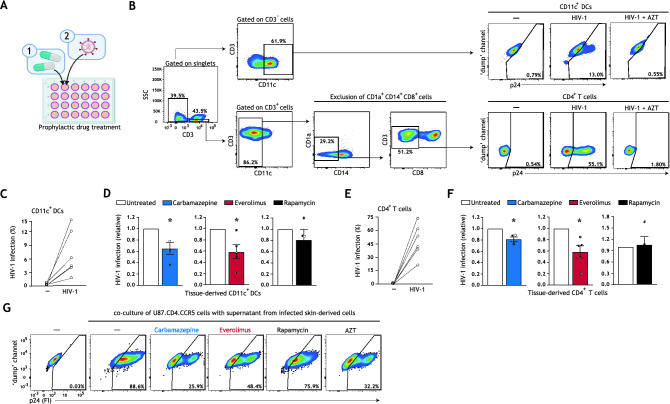
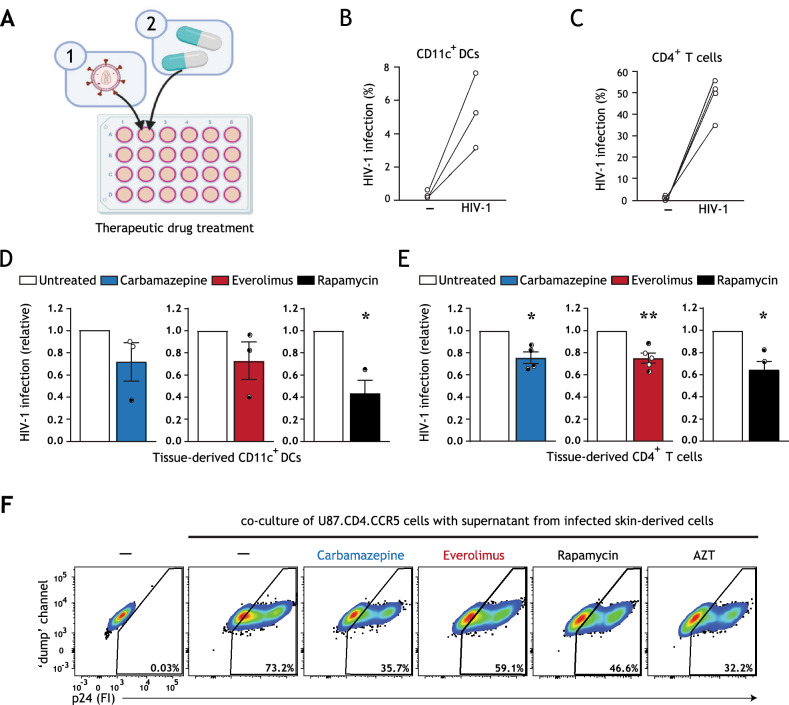
Current direct-acting antiviral therapies are highly effective in suppressing HIV-1 replication. However, mucosal inflammation undermines prophylactic treatment efficacy, and HIV-1 persists in long-lived tissue-derived dendritic cells (DCs) and CD4 T cells of treated patients. Host-directed strategies are an emerging therapeutic approach to improve therapy outcomes in infectious diseases. Autophagy functions as an innate antiviral mechanism by degrading viruses in specialized vesicles. Here, we investigated the impact of pharmaceutically enhancing autophagy on HIV-1 acquisition and viral replication. To this end, we developed a human tissue infection model permitting concurrent analysis of HIV-1 cellular targets ex vivo. Prophylactic treatment with autophagy-enhancing drugs carbamazepine and everolimus promoted HIV-1 restriction in skin-derived CD11c DCs and CD4 T cells. Everolimus also decreased HIV-1 susceptibility to lab-adapted and transmitted/founder HIV-1 strains, and in vaginal Langerhans cells. Notably, we observed cell-specific effects of therapeutic treatment. Therapeutic rapamycin treatment suppressed HIV-1 replication in tissue-derived CD11c DCs, while all selected drugs limited viral replication in CD4 T cells. Strikingly, both prophylactic and therapeutic treatment with everolimus or rapamycin reduced intestinal HIV-1 productive infection. Our findings highlight host autophagy pathways as an emerging target for HIV-1 therapies, and underscore the relevancy of repurposing clinically-approved autophagy drugs to suppress mucosal HIV-1 replication.
目前的直接作用抗病毒疗法在抑制 HIV-1 复制方面非常有效。然而,黏膜炎症会削弱预防性治疗的效果,HIV-1 会在经过治疗的患者的长寿组织衍生树突状细胞(DC)和 CD4 T 细胞中持续存在。宿主定向策略是一种新兴的治疗传染病的方法,可以改善治疗效果。自噬作为一种先天的抗病毒机制,通过在专门的囊泡中降解病毒而起作用。在这里,我们研究了增强自噬对 HIV-1 获得和病毒复制的影响。为此,我们开发了一种人体组织感染模型,允许在体外同时分析 HIV-1 的细胞靶标。自噬增强药物卡马西平和依维莫司的预防性治疗促进了皮肤来源的 CD11c DC 和 CD4 T 细胞中的 HIV-1 限制。依维莫司还降低了实验室适应和传播/原始 HIV-1 株以及阴道朗格汉斯细胞对 HIV-1 的易感性。值得注意的是,我们观察到治疗性治疗的细胞特异性效应。治疗性雷帕霉素治疗抑制了组织衍生的 CD11c DC 中的 HIV-1 复制,而所有选定的药物都限制了 CD4 T 细胞中的病毒复制。引人注目的是,依维莫司或雷帕霉素的预防性和治疗性治疗均降低了肠道 HIV-1 的感染性复制。我们的研究结果强调了宿主自噬途径作为 HIV-1 治疗的一个新兴靶点,并强调了重新利用临床批准的自噬药物来抑制黏膜 HIV-1 复制的相关性。