Radiation Oncology Department, Pitié-Salpêtrière Hospital, AP-HP Sorbonne University, 47-83 Boulevard de l'Hôpital, 75651, Paris Cedex 13, France.
Neurosurgery Department, Pitié-Salpêtrière Hospital, AP-HP Sorbonne University, Paris, France.
Radiat Oncol. 2021 Feb 27;16(1):45. doi: 10.1186/s13014-021-01766-w.
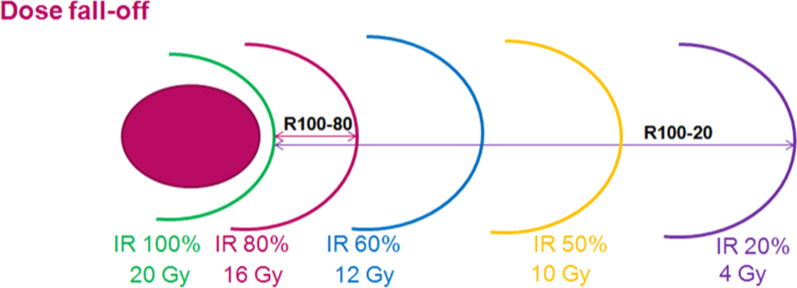
To compare linac-based mono-isocentric radiosurgery with Brainlab Elements Multiple Brain Mets (MBM) SRS and the Gamma Knife using a specific statistical method and to analyze the dosimetric impact of the target volume geometric characteristics. A dose fall-off analysis allowed to evaluate the Gradient Index relevancy for the dose spillage characterization.
Treatments were planned on twenty patients with three to nine brain metastases with MBM 2.0 and GammaPlan 11.0. Ninety-five metastases ranging from 0.02 to 9.61 cc were included. Paddick Index (PI), Gradient Index (GI), dose fall-off, volume of healthy brain receiving more than 12 Gy (V) and DVH were used for the plan comparison according to target volume, major axis diameter and Sphericity Index (SI). The multivariate regression approach allowed to analyze the impact of each geometric characteristic keeping all the others unchanged. A parallel study was led to evaluate the impact of the isodose line (IDL) prescription on the MBM plan quality.
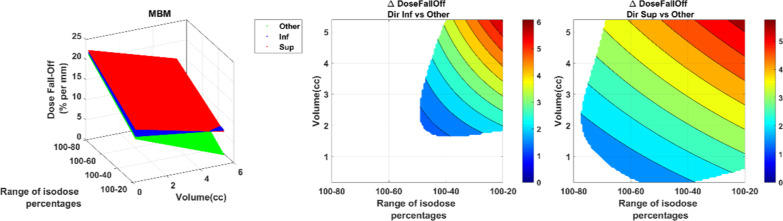
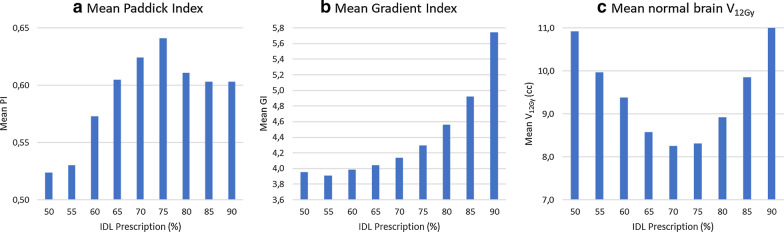
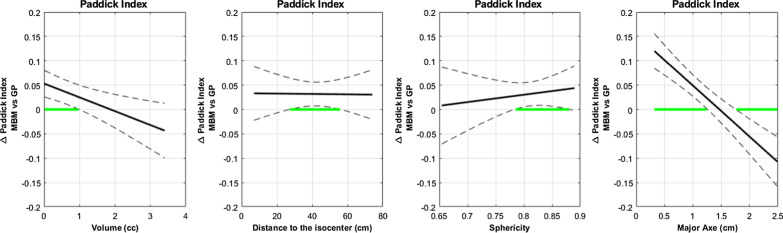
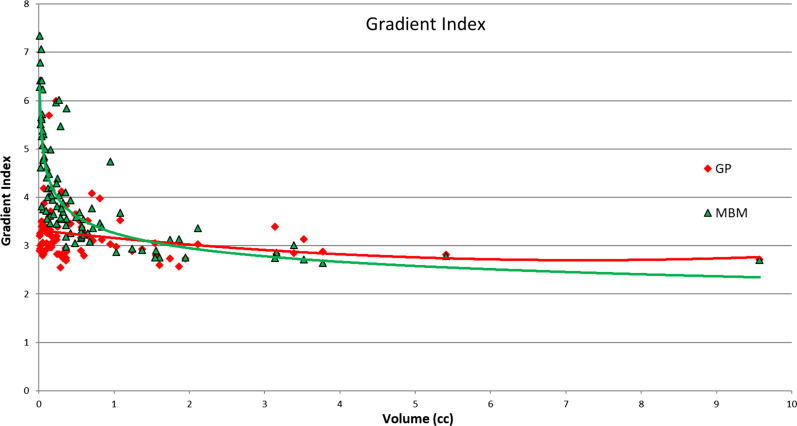
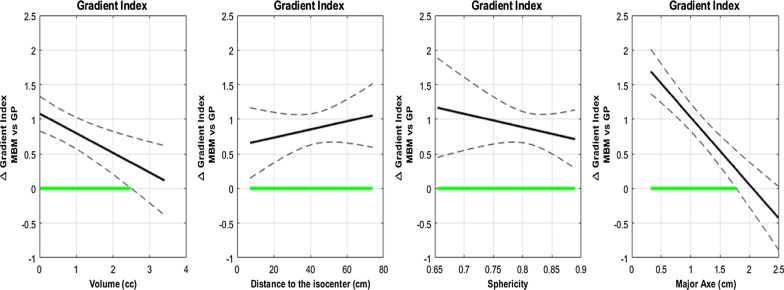
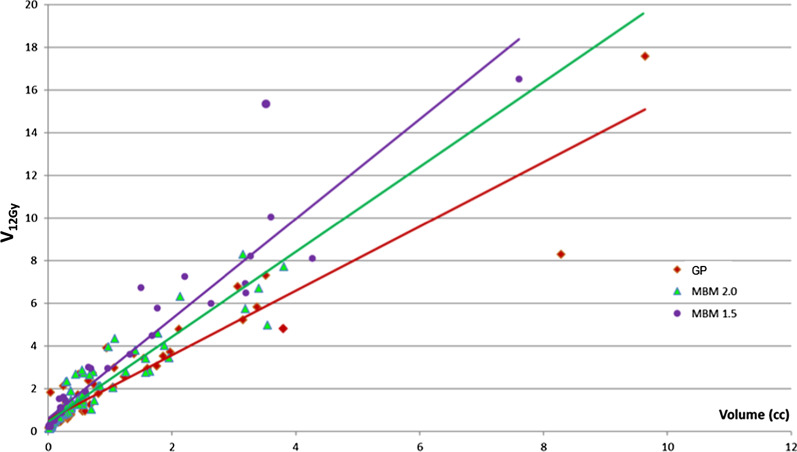
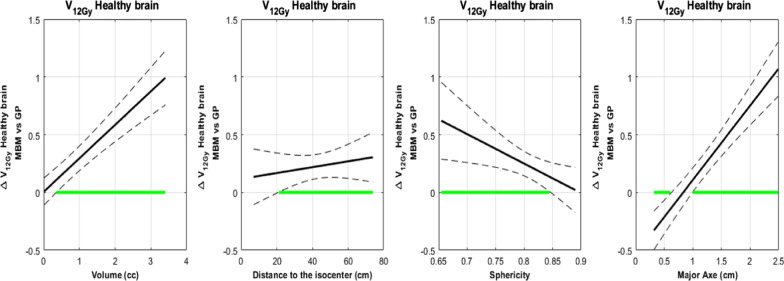
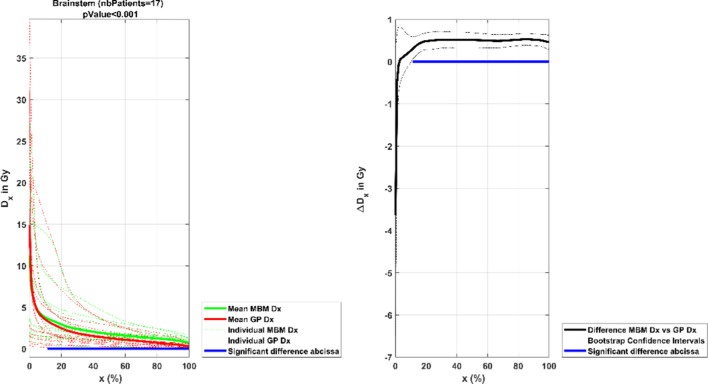
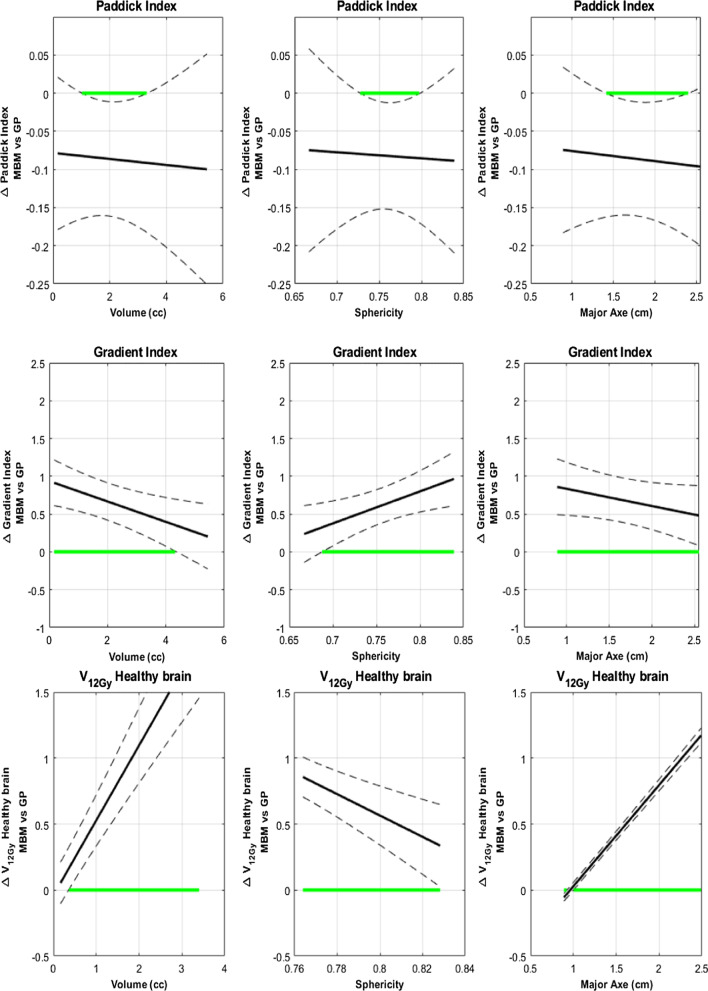
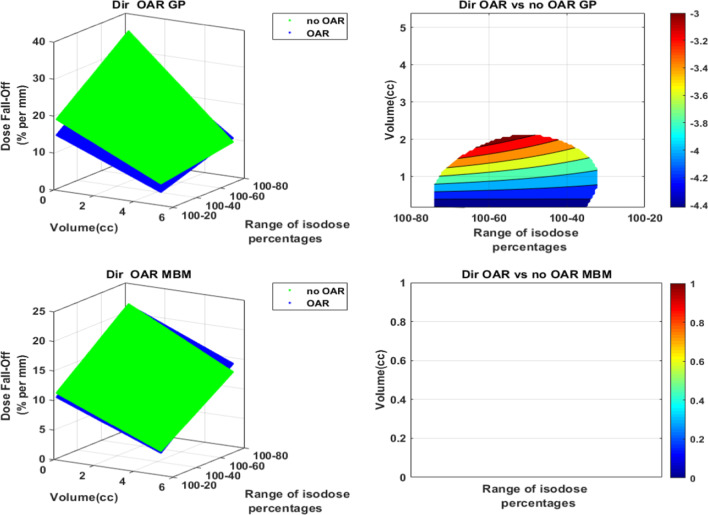
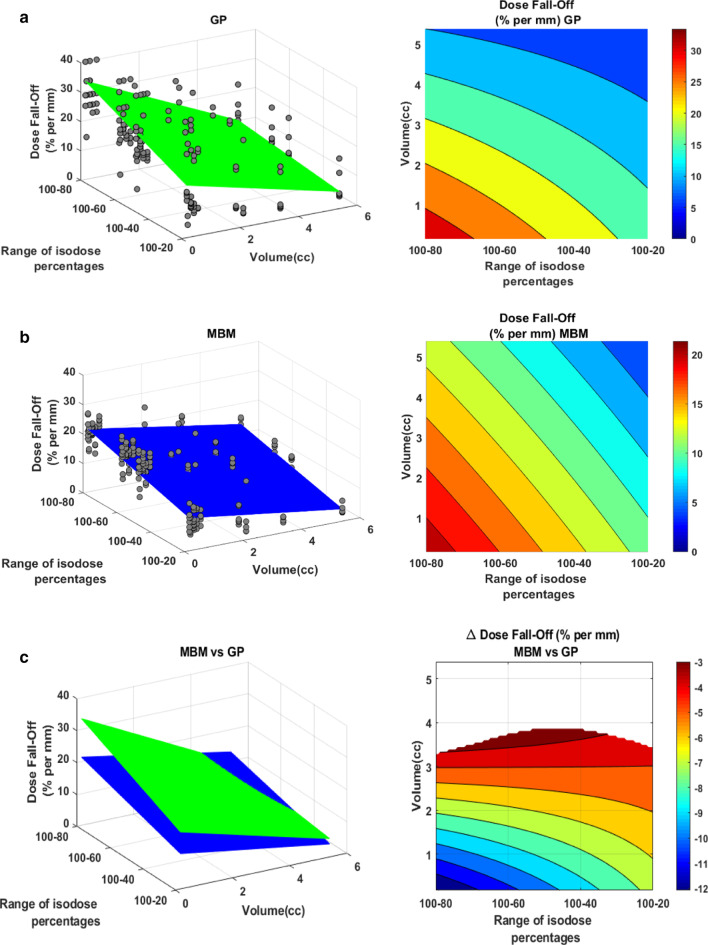
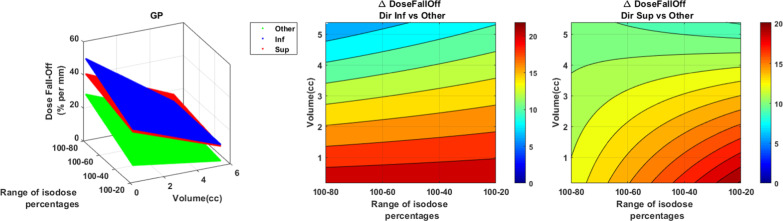
For mono-isocentric linac-based radiosurgery, the IDL around 70-75% was the best compromise found. For both techniques, the GI and the dose fall-off decreased with the target volume. In comparison, PI was slightly improved with MBM for targets < 1 cc or SI > 0.78. GI was improved with GP for targets < 2.5 cc. The V was higher with MBM for lesions > 0.4 cc or SI < 0.84 and exceeded 10 cc for targets > 5 cc against 6.5 cc with GP. The presence of OAR close to the PTV had no impact on the dose fall off values. The dose fall-off was higher for volumes < 3.8 cc with GP which had the sharpest dose fall-off in the infero-superior direction up to 30%/mm. The mean beam-on time was 94 min with GP against 13 min with MBM.
The dose fall-off and the V were more relevant indicators than the GI for the low dose spillage assessment. Both evaluated techniques have comparable plan qualities with a slightly improved selectivity with MBM for smaller lesions but with a healthy tissues sparing slightly favorable to GP at the expense of a considerably longer irradiation time. However, a higher healthy tissue exposure must be considered for large volumes in MBM plans.
使用特定的统计方法比较基于直线加速器的单等中心放射外科与 Brainlab Elements Multiple Brain Mets(MBM)SRS 和伽玛刀,并分析靶区体积几何特征对剂量分布的影响。剂量衰减分析可用于评估梯度指数(Gradient Index,GI)对剂量外溢特征的相关性。
对 20 名 3 至 9 个脑转移瘤患者进行治疗,采用 MBM 2.0 和 GammaPlan 11.0 进行治疗计划。共纳入 95 个转移瘤,范围为 0.02 至 9.61cc。根据靶区体积、长轴直径和球形指数(Sphericity Index,SI),使用 Paddick 指数(Paddick Index,PI)、GI、剂量衰减、健康脑组织接受超过 12Gy(V)的体积(Volume of healthy brain receiving more than 12Gy,V)和剂量-体积直方图(Dose-volume histogram,DVH)进行计划比较。多元回归方法可用于在保持其他因素不变的情况下分析每个几何特征的影响。同时进行了一项平行研究,以评估等剂量线(isodose line,IDL)处方对 MBM 计划质量的影响。
对于基于单等中心直线加速器的放射外科治疗,发现 70-75% IDL 是最佳折衷方案。对于这两种技术,GI 和剂量衰减都随靶区体积的增加而降低。相比之下,对于体积<1cc 或 SI>0.78 的目标,MBM 可略微提高 PI。对于体积<2.5cc 的目标,GP 可提高 GI。对于体积>0.4cc 或 SI<0.84 的病变,MBM 的 V 更高,超过 10cc,而 GP 为 6.5cc。对于靠近 PTV 的 OAR 存在,对剂量衰减值没有影响。对于 GP 来说,体积<3.8cc 的剂量衰减更高,在上下方向上的剂量衰减最陡,可达 30%/mm。GP 的平均照射时间为 94 分钟,而 MBM 为 13 分钟。
在评估低剂量外溢时,剂量衰减和 V 比 GI 更相关。两种评估技术的计划质量相当,对于较小的病变,MBM 略有选择性改善,但以牺牲健康组织为代价,GP 对健康组织的保护略有利,时间成本增加。然而,对于 MBM 计划中的大体积病变,必须考虑更高的健康组织暴露。