Koseki Taiichi, Kakizaki Fujiyasu, Hayashi Shogo, Nishida Naoya, Itoh Masahiro
Department of Anatomy, Tokyo Medical University, Japan.
Department of Rehabilitation, Hiroo Orthopedics, Japan.
J Phys Ther Sci. 2019 Jan;31(1):63-68. doi: 10.1589/jpts.31.63. Epub 2019 Jan 10.
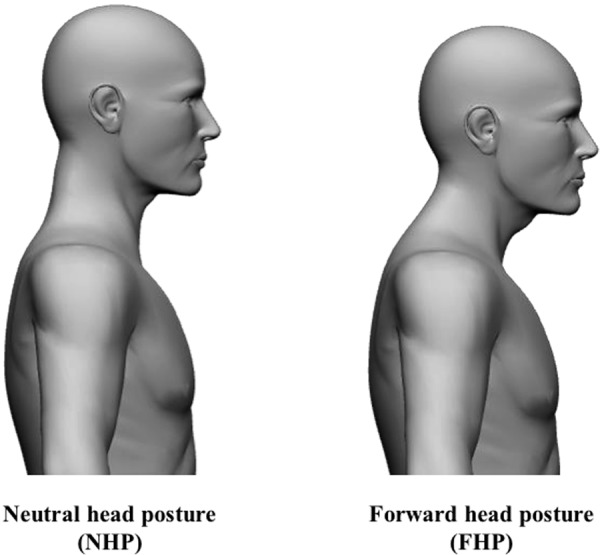
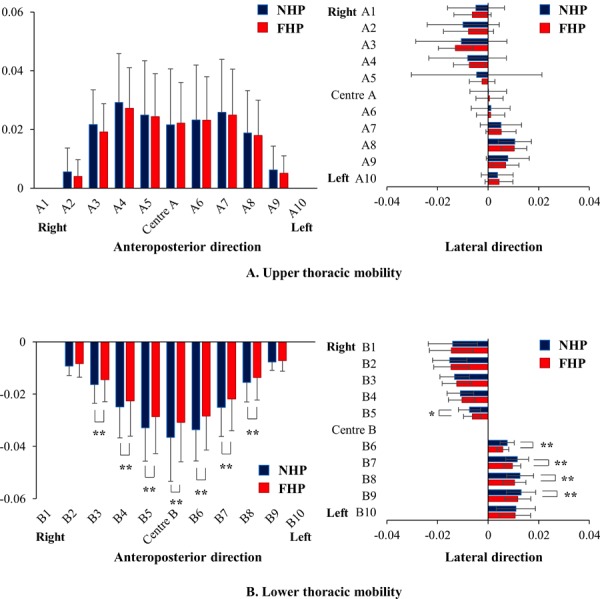
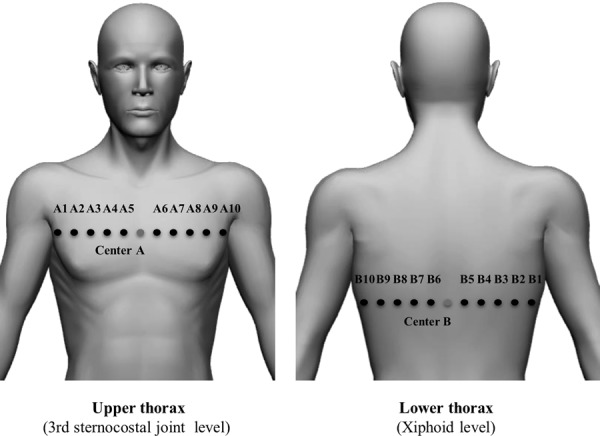
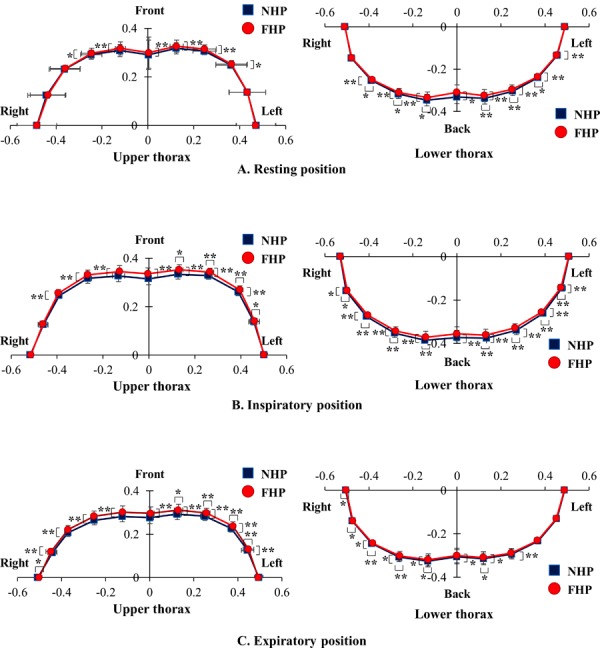
[Purpose] This study investigated the effect of forward head posture on upper and lower thoracic shape in adults to better understand the relationship between a forward head posture and respiratory function. [Participants and Methods] Fifteen healthy males were recruited after obtaining informed consent from all participants. All participants were instructed to respire in both the forward and neutral head postures while seated. Respiratory function was assessed using spirometry. Thoracic shape during respiration was assessed using 23 markers on both the upper and the lower thorax and compared between the 2 postures. [Results] Forced vital capacity, expiratory and inspiratory reserve volumes, forced expiratory volume at 1 second, and the peak flow rate observed with the forward head posture were significantly lower than that with the neutral head posture. The upper thorax showed a greater forward shift and the lower thorax showed a greater forward and inward shift with the forward head posture than with the neutral head posture. No significant difference in upper thoracic mobility was observed during respiration between the forward head posture and the neutral head posture. However, mobility of the lower thorax during respiration was significantly reduced with the forward head posture. [Conclusion] The forward head posture causes expansion of the upper thorax and contraction of the lower thorax, and these morphological changes cause decreased respiratory function.
[目的] 本研究调查了成年人头部前倾姿势对胸廓上下部形态的影响,以更好地理解头部前倾姿势与呼吸功能之间的关系。[参与者与方法] 在获得所有参与者的知情同意后,招募了15名健康男性。所有参与者均被要求在就座时分别以前倾和中立头部姿势呼吸。使用肺活量计评估呼吸功能。使用胸廓上下部的23个标记评估呼吸过程中的胸廓形态,并在两种姿势之间进行比较。[结果] 头部前倾姿势下观察到的用力肺活量、呼气和吸气储备量、1秒用力呼气量以及峰值流速均显著低于中立头部姿势。与中立头部姿势相比,头部前倾姿势下上胸部向前移位更大,下胸部向前和向内移位更大。在呼吸过程中,头部前倾姿势和中立头部姿势之间上胸部活动度未观察到显著差异。然而,头部前倾姿势下呼吸时下胸部的活动度显著降低。[结论] 头部前倾姿势导致上胸部扩张和下胸部收缩,这些形态变化导致呼吸功能下降。