Yan Zhongrui, Shi Xianjing, Wang Hui, Si Cuiping, Liu Qian, Du Yifeng
Departments of Neurology, Shandong Provincial Hospital, Cheeloo College of Medicine, Shandong University, Jinan, China.
Department of Neurology, Jining No. 1 People's Hospital, Jining, China.
Front Cell Neurosci. 2021 Feb 10;15:629356. doi: 10.3389/fncel.2021.629356. eCollection 2021.
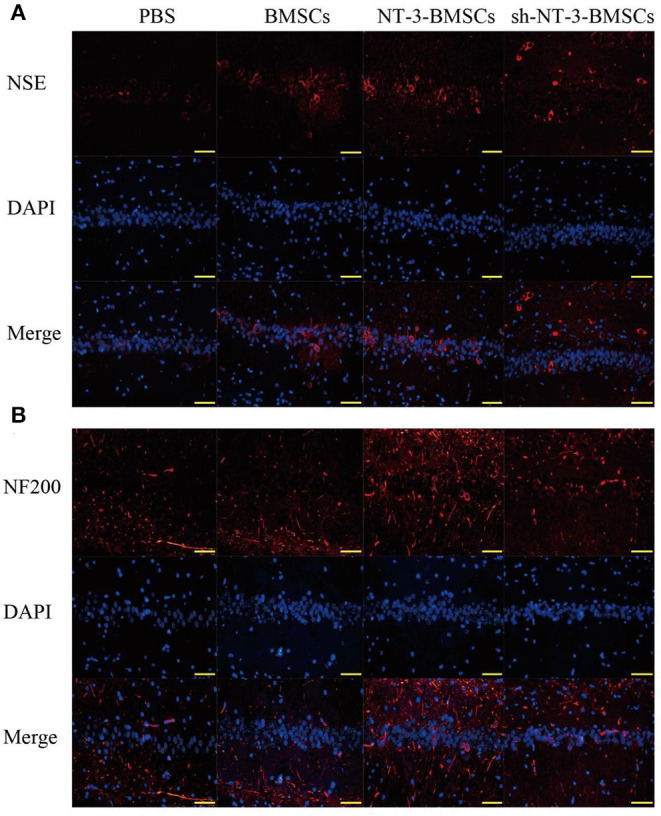
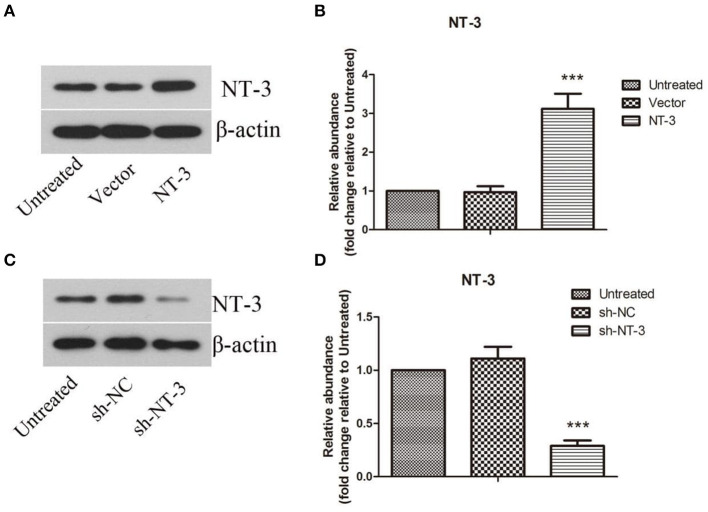
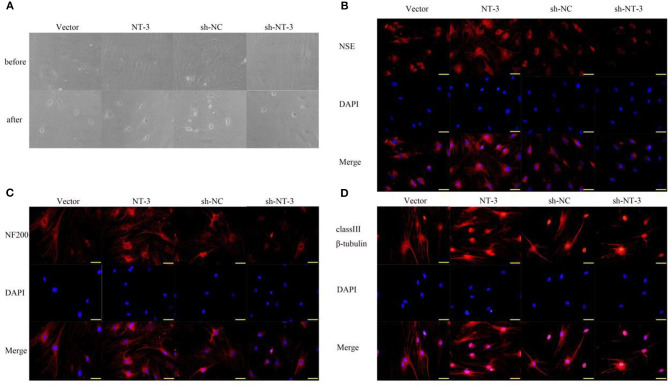
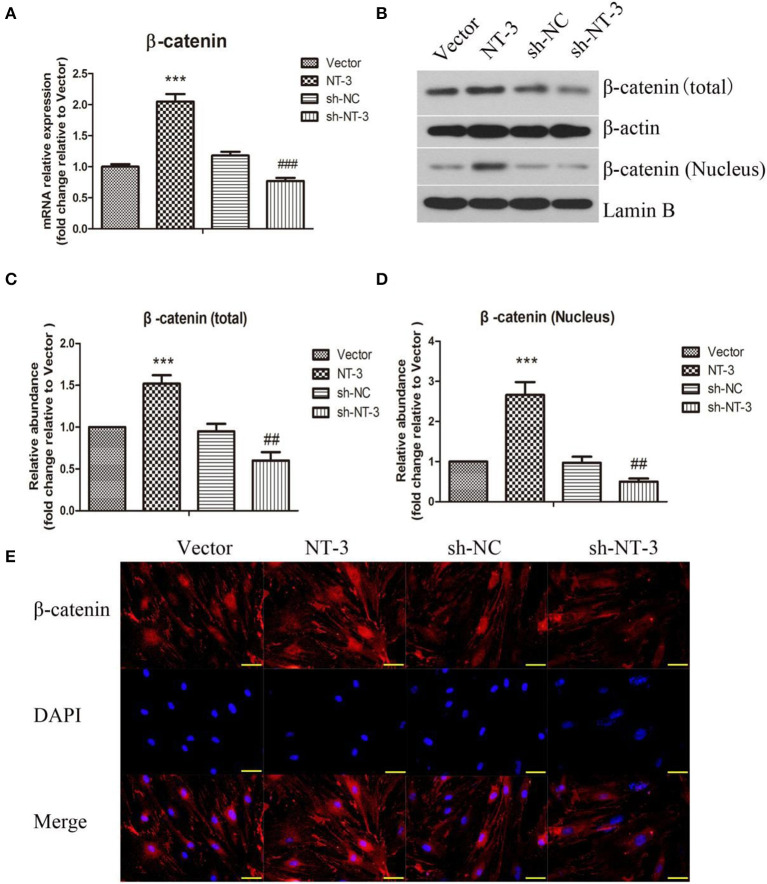
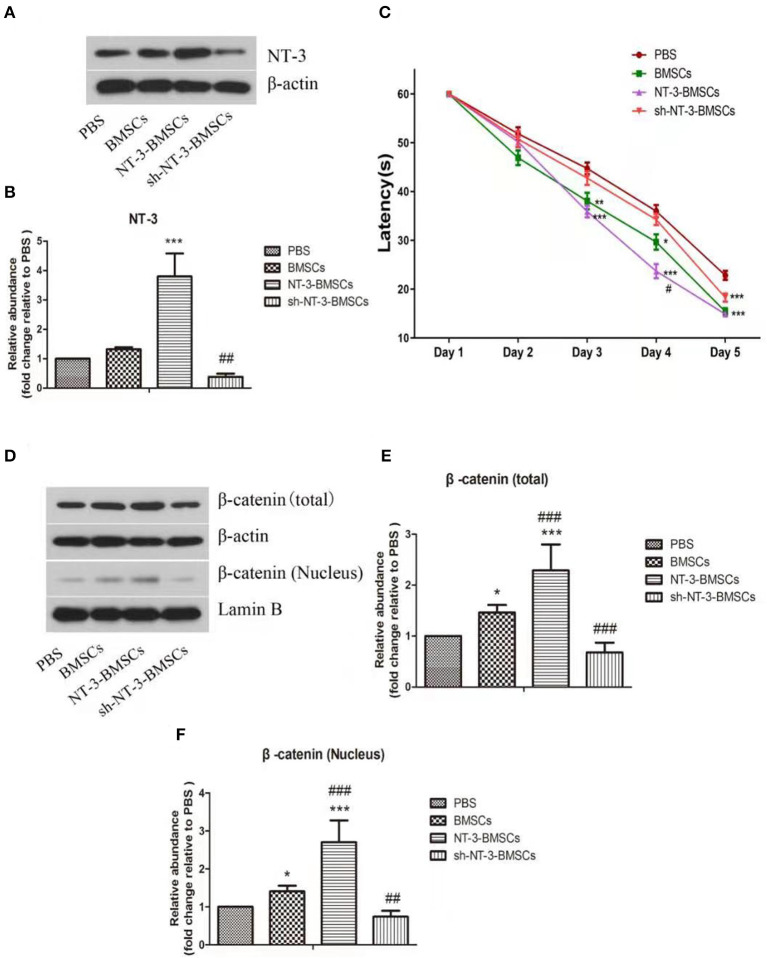
Transplantation of bone marrow-derived mesenchymal stem cells (BMSCs) has the potential to be developed into an effective treatment for neurodegenerative diseases such as Alzheimer's disease (AD). However, the therapeutic effects of BMSCs are limited by their low neural differentiation rate. We transfected BMSCs with neurotrophin-3 (NT-3), a neurotrophic factor that promotes neuronal differentiation, and investigated the effects of NT-3 gene overexpression on the differentiation of BMSCs into neurons and . We further studied the possible molecular mechanisms. We found that overexpression of NT-3 promoted the differentiation of BMSCs into neurons and and improved cognitive function in rats with experimental AD. By contrast, silencing NT-3 inhibited the differentiation of BMSCs and decreased cognitive function in rats with AD. The Wnt/β-catenin signaling pathway was involved in the mechanism by which NT-3 gene modification influenced the neuronal differentiation of BMSCs and . Our findings support the prospect of using NT-3-transduced BMSCs for the development of novel therapies for AD.
骨髓间充质干细胞(BMSCs)移植有潜力发展成为治疗神经退行性疾病如阿尔茨海默病(AD)的有效方法。然而,BMSCs的治疗效果受到其低神经分化率的限制。我们用神经生长因子-3(NT-3)转染BMSCs,NT-3是一种促进神经元分化的神经营养因子,并研究了NT-3基因过表达对BMSCs向神经元分化的影响。我们进一步研究了可能的分子机制。我们发现NT-3的过表达促进了BMSCs向神经元的分化,并改善了实验性AD大鼠的认知功能。相比之下,沉默NT-3会抑制BMSCs的分化,并降低AD大鼠的认知功能。Wnt/β-连环蛋白信号通路参与了NT-3基因修饰影响BMSCs向神经元分化的机制。我们的研究结果支持了使用NT-3转导的BMSCs开发AD新疗法的前景。