Kalane Prasad, Patil Sarika, Patil B P, Sharma Davinder Pal
Anubhuti Research Centre, Pune, India.
Department of Electronics and Telecommunication Engineering, Sinhgad College of Engineering, Savitribai Phule Pune University, Pune, India.
Biomed Signal Process Control. 2021 May;67:102518. doi: 10.1016/j.bspc.2021.102518. Epub 2021 Feb 20.
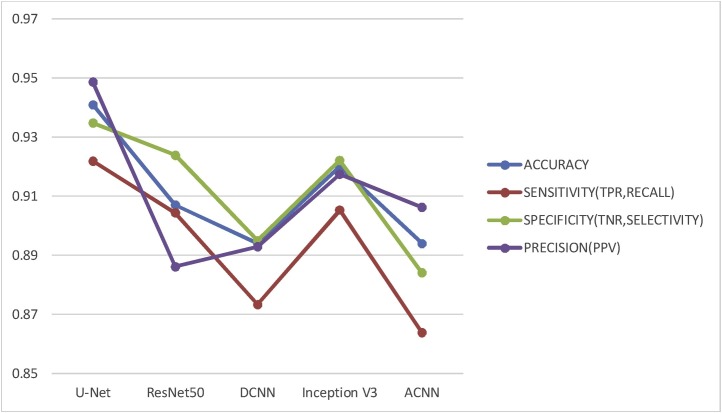
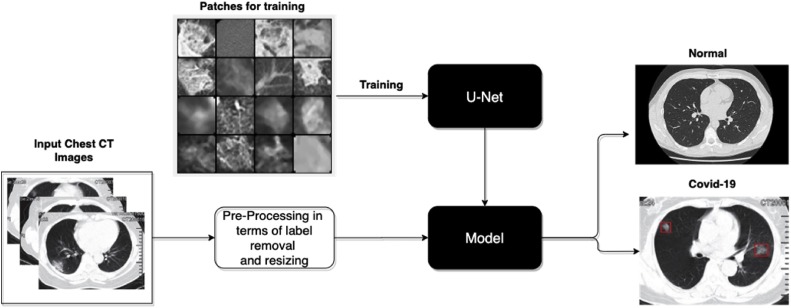
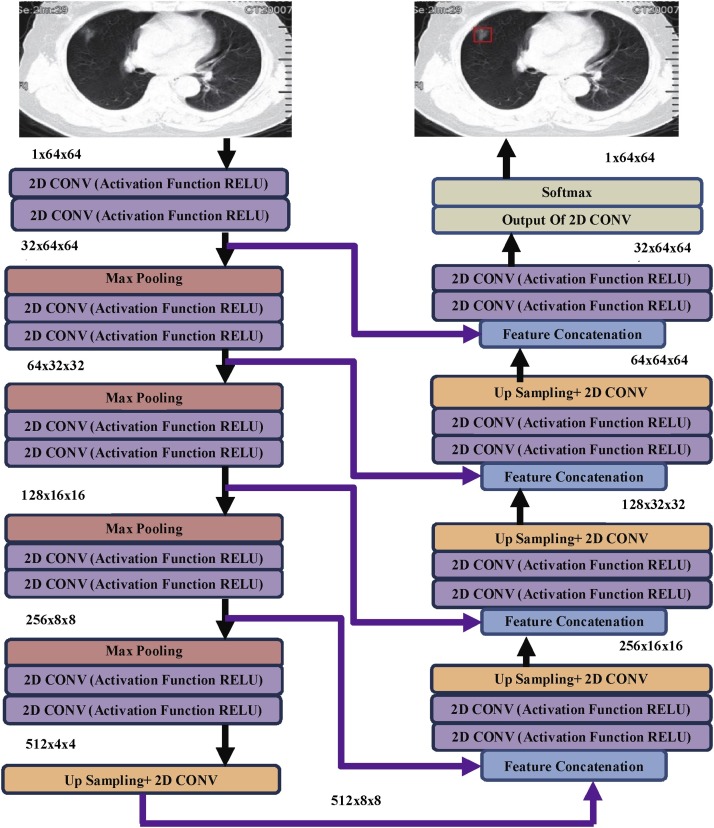
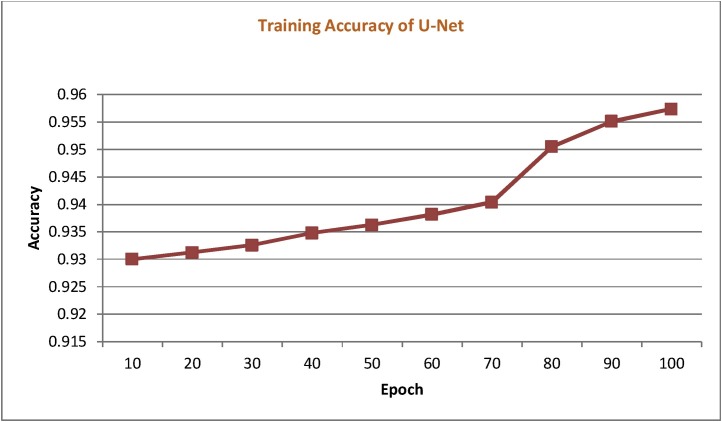
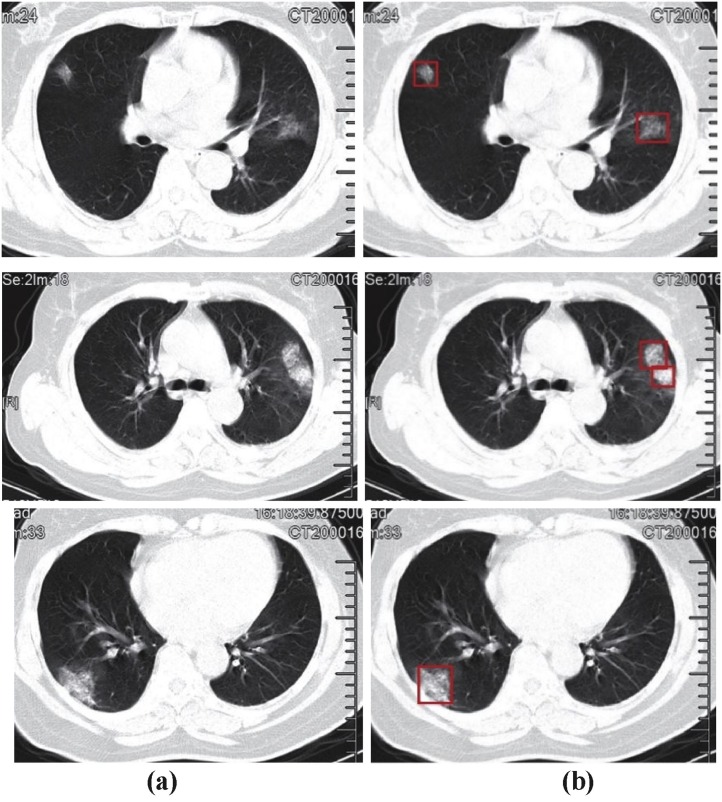
The severe acute respiratory syndrome coronavirus 2, called a SARS-CoV-2 virus, emerged from China at the end of 2019, has caused a disease named COVID-19, which has now evolved as a pandemic. Amongst the detected Covid-19 cases, several cases are also found asymptomatic. The presently available Reverse Transcription - Polymerase Chain Reaction (RT-PCR) system for detecting COVID-19 lacks due to limited availability of test kits and relatively low positive symptoms in the early stages of the disease, urging the need for alternative solutions. The tool based on Artificial Intelligence might help the world to develop an additional COVID-19 disease mitigation policy. In this paper, an automated Covid-19 detection system has been proposed, which uses indications from Computer Tomography (CT) images to train the new powered deep learning model- U-Net architecture. The performance of the proposed system has been evaluated using 1000 Chest CT images. The images were obtained from three different sources - Two different GitHub repository sources and the Italian Society of Medical and Interventional Radiology's excellent collection. Out of 1000 images, 552 images were of normal persons, and 448 images were obtained from COVID-19 affected people. The proposed algorithm has achieved a sensitivity and specificity of 94.86% and 93.47% respectively, with an overall accuracy of 94.10%. The U-Net architecture used for Chest CT image analysis has been found effective. The proposed method can be used for primary screening of COVID-19 affected persons as an additional tool available to clinicians.
严重急性呼吸综合征冠状病毒2(称为SARS-CoV-2病毒)于2019年底在中国出现,引发了一种名为COVID-19的疾病,目前已演变成一场大流行。在检测出的COVID-19病例中,也发现了几例无症状病例。由于检测试剂盒供应有限且疾病早期阳性症状相对较少,目前用于检测COVID-19的逆转录-聚合酶链反应(RT-PCR)系统存在不足,因此迫切需要替代解决方案。基于人工智能的工具可能有助于全球制定额外的COVID-19疾病缓解政策。本文提出了一种自动化的COVID-19检测系统,该系统利用计算机断层扫描(CT)图像的指征来训练新的强大深度学习模型——U-Net架构。使用1000张胸部CT图像对所提出系统的性能进行了评估。这些图像来自三个不同的来源——两个不同的GitHub存储库来源以及意大利医学和介入放射学会的优秀图集。在1000张图像中,552张是正常人的图像,448张是来自COVID-19感染者的图像。所提出的算法分别实现了94.86%的灵敏度和93.47%的特异性,总体准确率为94.10%。已发现用于胸部CT图像分析的U-Net架构是有效的。所提出的方法可作为临床医生可用的额外工具,用于对COVID-19感染者进行初步筛查。