Johnson Sarah A, Prenni Jessica E, Heuberger Adam L, Isweiri Hanan, Chaparro Jacqueline M, Newman Steven E, Uchanski Mark E, Omerigic Heather M, Michell Kiri A, Bunning Marisa, Foster Michelle T, Thompson Henry J, Weir Tiffany L
Department of Food Science and Human Nutrition, Colorado State University, Fort Collins, CO, USA.
Department of Horticulture and Landscape Architecture, Colorado State University, Fort Collins, CO, USA.
Curr Dev Nutr. 2020 Dec 18;5(2):nzaa180. doi: 10.1093/cdn/nzaa180. eCollection 2021 Feb.
Microgreens are the young leafy greens of many vegetables, herbs, grains, and flowers with potential to promote human health and sustainably diversify the global food system. For successful further integration into the global food system and evaluation of their health impacts, it is critical to elucidate and optimize their nutritional quality.
We aimed to comprehensively evaluate the metabolite and mineral contents of 6 microgreen species, and the influence of maturity on their contents.
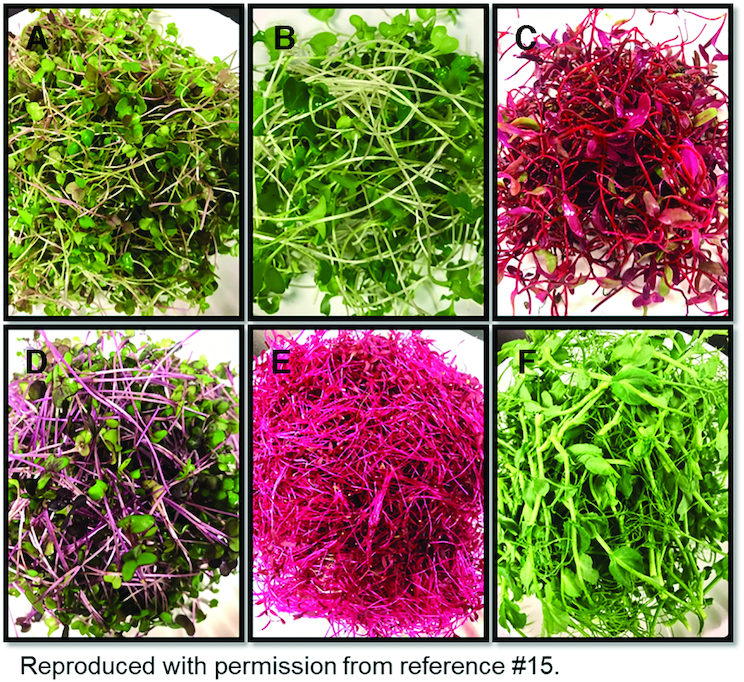
Plant species evaluated were from the Brassicaceae (arugula, broccoli, and red cabbage), Amaranthaceae (red beet and red amaranth), and Fabaceae (pea) plant families. Nontargeted metabolomics and ionomics analyses were performed to examine the metabolites and minerals, respectively, in each microgreen species and its mature counterpart.
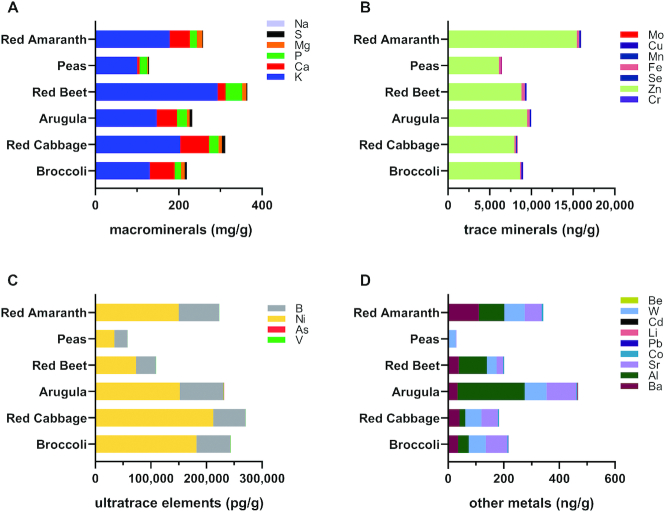
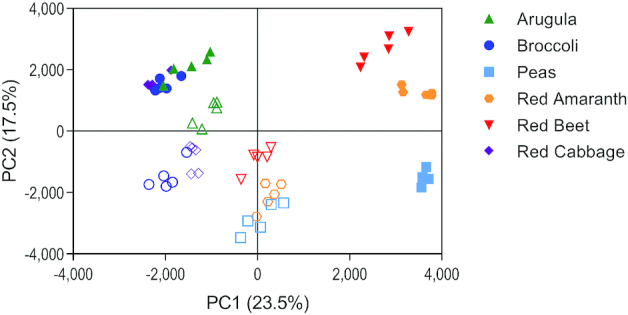
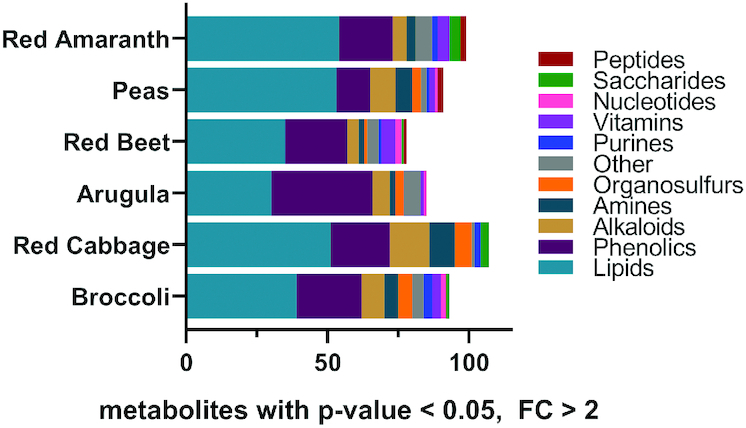
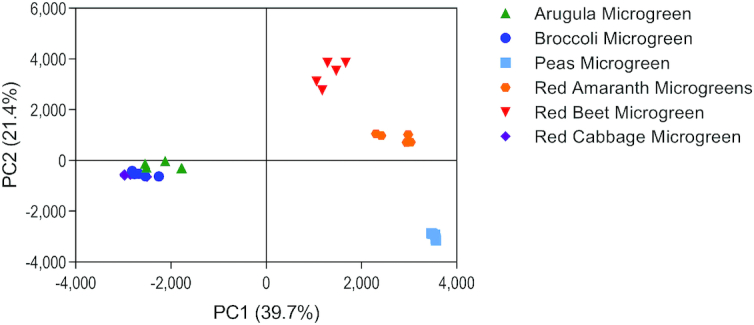
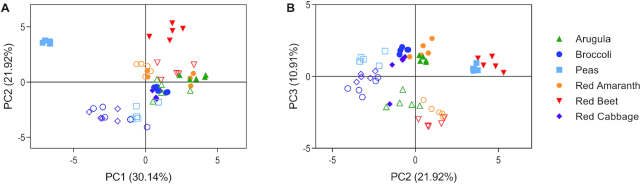
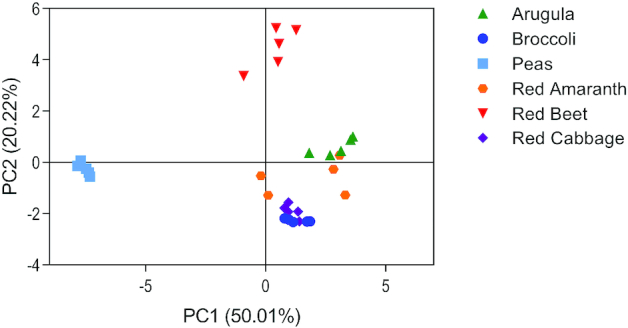
Nontargeted metabolomics analysis detected 3321 compounds, 1263 of which were annotated and included nutrients and bioactive compounds. Ionomics analysis detected and quantified 26 minerals including macrominerals, trace minerals, ultratrace minerals, and other metals. Principal component analysis indicated that microgreens have distinct metabolite and mineral profiles compared with one another and with their mature counterparts. Several compounds were higher ( < 0.05; fold change ≥2) in microgreens compared with their mature counterparts, whereas some were not different or lower. In many cases, compounds that were higher in microgreens compared with the mature counterpart were also unique to that microgreen species.
These data provide evidence for the nutritional quality of microgreens, and can inform future research and development aimed at characterizing and optimizing microgreen nutritional quality and health impacts.
微型蔬菜是许多蔬菜、香草、谷物和花卉的幼嫩多叶部分,具有促进人类健康和使全球粮食系统可持续多样化的潜力。为了成功地进一步融入全球粮食系统并评估其对健康的影响,阐明并优化其营养质量至关重要。
我们旨在全面评估6种微型蔬菜的代谢物和矿物质含量,以及成熟度对其含量的影响。
评估的植物物种来自十字花科(芝麻菜、西兰花和红甘蓝)、苋科(红甜菜和红苋菜)和豆科(豌豆)植物科。分别进行非靶向代谢组学和离子组学分析,以检测每种微型蔬菜及其成熟对应物中的代谢物和矿物质。
非靶向代谢组学分析检测到3321种化合物,其中1263种得到注释,包括营养物质和生物活性化合物。离子组学分析检测并定量了26种矿物质,包括常量矿物质、微量矿物质、超微量矿物质和其他金属。主成分分析表明,微型蔬菜彼此之间以及与其成熟对应物相比,具有不同的代谢物和矿物质特征。与成熟对应物相比,微型蔬菜中的几种化合物含量更高(<0.05;变化倍数≥2),而有些则没有差异或更低。在许多情况下,与成熟对应物相比,微型蔬菜中含量较高的化合物也是该微型蔬菜物种所特有的。
这些数据为微型蔬菜的营养质量提供了证据,并可为未来旨在表征和优化微型蔬菜营养质量及其对健康影响的研究与开发提供参考。