School of Health Sciences, University of Canterbury - Te Whare Wānanga o Waitaha, Private Bag 4800, Christchurch, 8140, New Zealand.
Department of Medicine, University of Otago, Christchurch, New Zealand.
Sci Rep. 2021 Mar 1;11(1):4877. doi: 10.1038/s41598-021-83778-w.
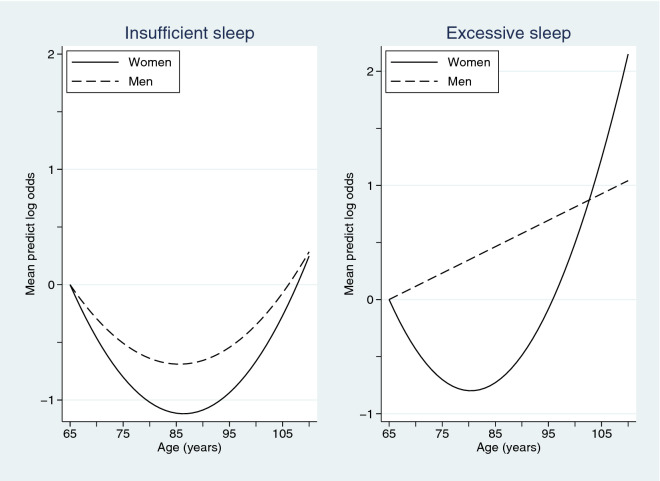
Sleep problems, loneliness and social isolation often increase with age, significantly impacting older adults' health and wellbeing. Yet general population health empirical evidence is surprisingly scant. Using the largest national database to date, cross-sectional and longitudinal analyses was undertaken on 140,423 assessments from 95,045 (women: 61.0%) community living older adults aged ≥ 65 years having standardised home care assessments between 1 July 2012 and 31 May 2018 to establish the prevalence and relationships between insufficient sleep, excessive sleep, loneliness and social isolation. At first assessment, insufficient sleep (women: 12.4%, men: 12.7%) was more commonly reported than excessive sleep (women: 4.7%, men: 7.6%). Overall, 23.6% of women and 18.9% of men reported feeling lonely, while 53.8% women and 33.8% men were living alone. In adjusted longitudinal analyses, those who were lonely and socially isolated were more likely to experience insufficient sleep. Respondents with excessive sleep were more likely to live with others. Both loneliness and social isolation contributed to insufficient sleep, synergistically. Loneliness, social isolation and health-concerns may affect the restorative properties of sleep over and above the effects of ageing. Further research is warranted.
睡眠问题、孤独和社会隔离随着年龄的增长而增加,对老年人的健康和幸福有重大影响。然而,一般人群健康的实证证据却非常稀缺。本研究使用迄今为止最大的国家数据库,对 2012 年 7 月 1 日至 2018 年 5 月 31 日期间接受标准化家庭护理评估的 140423 名年龄≥65 岁、居住在社区的 95045 名(女性:61.0%)老年人的 140423 项评估进行了横断面和纵向分析,以确定睡眠不足、睡眠过多、孤独和社会隔离的流行率及其之间的关系。在首次评估中,睡眠不足(女性:12.4%,男性:12.7%)比睡眠过多(女性:4.7%,男性:7.6%)更为常见。总体而言,23.6%的女性和 18.9%的男性感到孤独,而 53.8%的女性和 33.8%的男性独居。在调整后的纵向分析中,孤独和社会隔离的人更有可能出现睡眠不足。睡眠过多的人更有可能与他人同住。孤独和社会隔离都会导致睡眠不足,两者具有协同作用。孤独、社会隔离和健康问题可能会影响睡眠的恢复能力,这超出了年龄的影响。需要进一步的研究。