Instituto de Alta Investigación, Universidad de Tarapacá, Arica, Arica 1000000, Chile.
Oncol Rep. 2021 Apr;45(4). doi: 10.3892/or.2021.7971. Epub 2021 Mar 2.
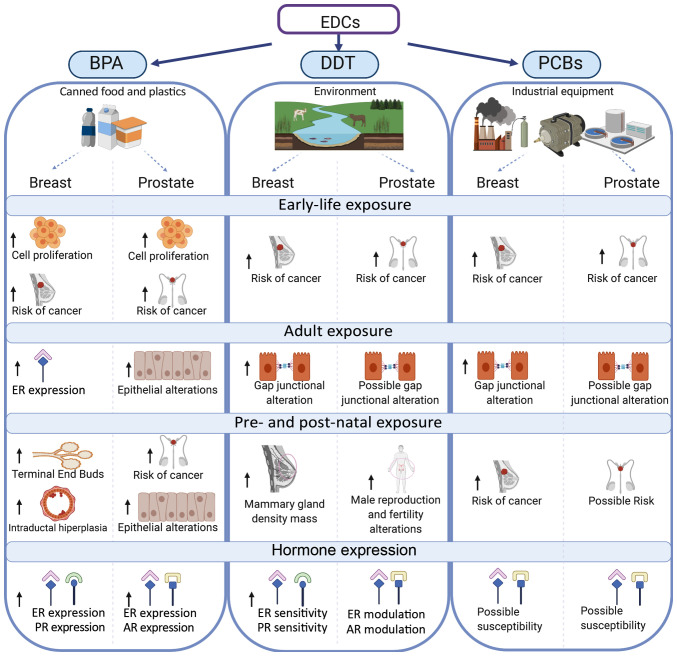
Environmental endocrine disruptor chemicals are substances that can alter the homeostasis of the endocrine system in living organisms. They can be released from several products used in daily activities. Once in the organism, they can disrupt the endocrine function by mimicking or blocking naturally occurring hormones due to their similar chemical structure. This endocrine disruption is the most important cause of the well‑known hormone‑associate types of cancer. Additionally, it is decisive to determine the susceptibility of each organ to these compounds. Therefore, the present review aimed to summarize the effect of different environmental substances such as bisphenol A, dichlorodiphenyltrichloroethane and polychlorinated biphenyls in both the mammary and the prostate tissues. These organs were chosen due to their association with the hormonal system and their common features in carcinogenic mechanisms. Outcomes derived from the present review may provide evidence that should be considered in future debates regarding the effects of endocrine disruptors on carcinogenesis.
环境内分泌干扰物是指能够改变生物体内内分泌系统稳态的物质。它们可以从日常生活中使用的几种产品中释放出来。一旦进入生物体,由于其相似的化学结构,它们可以通过模拟或阻断天然存在的激素来干扰内分泌功能。这种内分泌干扰是众所周知的激素相关癌症的最重要原因。此外,确定每个器官对这些化合物的敏感性也很关键。因此,本综述旨在总结不同环境物质(如双酚 A、二氯二苯三氯乙烷和多氯联苯)对乳腺和前列腺组织的影响。选择这些器官是因为它们与激素系统有关,并且在致癌机制中有共同的特征。本综述得出的结果可能为未来关于内分泌干扰物对致癌作用影响的辩论提供应考虑的证据。