Dental School, National and Kapodistrian University of Athens, Athens, Greece.
Department of Medical and Surgical Specialties, Radiological Sciences and Public Health-Medical Oncology, University of Brescia, ASST-Spedali Civili, Brescia, Italy.
Support Care Cancer. 2021 Oct;29(10):5701-5709. doi: 10.1007/s00520-021-06048-5. Epub 2021 Mar 1.
To discuss the role of benzydamine in the prevention and treatment of radiation-induced oral mucositis (OM) in head and neck (H&N) cancer patients. This document represents an expert opinion paper on indications and key-role aspects in OM pathogenesis, prevention and treatment.
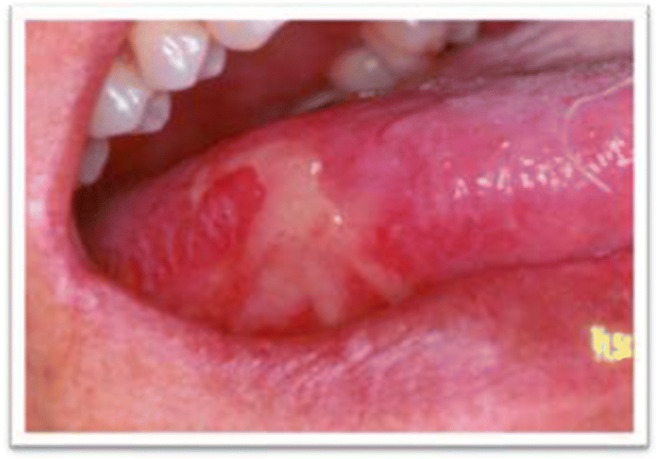
OM represents a common side effect of chemotherapy (CHT) and radiotherapy (RT). It consists in a painful erythema involving the oral cavity mucosa, which may progress to ulceration. Five biologically dynamic phases are considered crucial in mucositis: "initiation, signalling, amplification, ulceration and healing". Oral environment and microbiota are fundamental in mucositis development being involved in susceptibility to infections and in ulceration consequences. Different agents against mucositis have been studied and the use of benzydamine is strongly supported in literature. The Multinational Association of Supportive Care in Cancer and International Society for Oral Oncology (MASCC/ISOO) guidelines recommend its use for the prevention of OM in H&N patients undergoing RT and RT/CHT.
Benzydamine is a local anti-inflammatory drug with analgesic properties. It can decrease TNF-α, IL-1β and prostaglandin synthesis, also inhibiting leukocyte-endothelial interactions, neutrophil degranulation, vasodilation and vascular permeability. Literature agrees on the beneficial effects of benzydamine in preventing and reducing oral mucositis severity in H&N cancer patients undergoing RT/CHT.
Mucositis represents a major concern in H&N cancer patients and a clinical and economical issue. A multimodal and multidisciplinary approach is needed for its management. International guidelines recommend benzydamine for OM prevention and treatment in H&N cancer patients, but further "real world" trials should be designed.
讨论苯佐卡因在预防和治疗头颈部(H&N)癌症患者放射性口腔黏膜炎(OM)中的作用。本文代表了一篇关于 OM 发病机制、预防和治疗的适应症和关键作用方面的专家意见文件。
OM 是化疗(CHT)和放疗(RT)的常见副作用。它表现为口腔腔黏膜的疼痛性红斑,可能进展为溃疡。五个生物学动态阶段被认为在黏膜炎发病机制中至关重要:“启动、信号、放大、溃疡和愈合”。口腔环境和微生物群在黏膜炎的发展中起着至关重要的作用,它们参与了感染的易感性和溃疡的后果。已经研究了多种治疗黏膜炎的药物,苯佐卡因的使用在文献中得到了强有力的支持。多国支持治疗癌症协会和国际口腔肿瘤协会(MASCC/ISOO)指南建议在 H&N 患者接受 RT 和 RT/CHT 时使用它来预防 OM。
苯佐卡因是一种具有镇痛作用的局部抗炎药。它可以减少 TNF-α、IL-1β 和前列腺素的合成,还可以抑制白细胞-内皮相互作用、中性粒细胞脱颗粒、血管扩张和血管通透性。文献一致认为苯佐卡因在预防和减轻接受 RT/CHT 的 H&N 癌症患者口腔黏膜炎的严重程度方面具有有益作用。
黏膜炎是 H&N 癌症患者的一个主要关注点,也是一个临床和经济问题。需要采取多模式和多学科的方法来管理它。国际指南建议在 H&N 癌症患者中使用苯佐卡因预防和治疗 OM,但应设计进一步的“真实世界”试验。