Sun Jiaqi, Yang Junzheng, Miao Xiaoli, Loh Horace H, Pei Duanqing, Zheng Hui
Bioland Laboratory (Guangzhou Regenerative Medicine and Health Guangdong Laboratory), #188 Kaiyuan Ave., Science City, Huangpu District, Guangzhou, 510700, China.
CAS Key Laboratory of Regenerative Biology, Guangzhou Institutes of Biomedicine and Health, Chinese Academy of Sciences, Guangzhou, 510530, China.
Cell Regen. 2021 Mar 2;10(1):7. doi: 10.1186/s13619-020-00070-4.
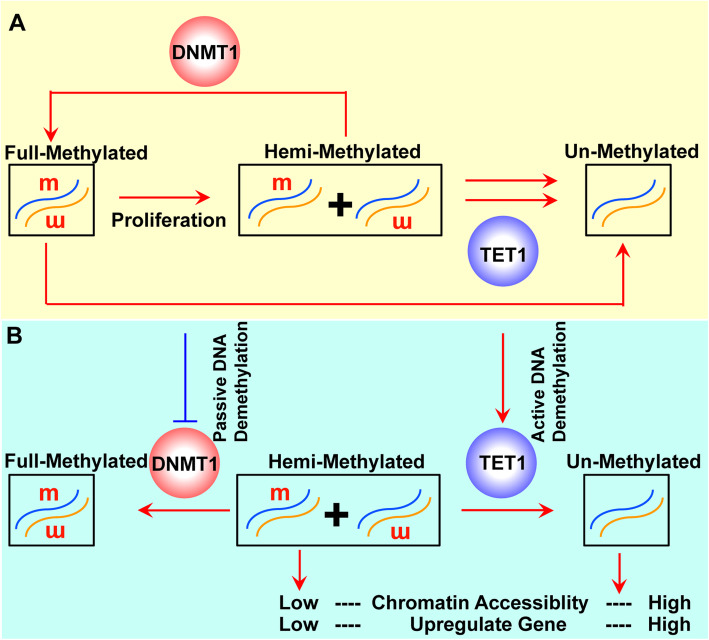
Epigenetic modifications, namely non-coding RNAs, DNA methylation, and histone modifications such as methylation, phosphorylation, acetylation, ubiquitylation, and sumoylation play a significant role in brain development. DNA methyltransferases, methyl-CpG binding proteins, and ten-eleven translocation proteins facilitate the maintenance, interpretation, and removal of DNA methylation, respectively. Different forms of methylation, including 5-methylcytosine, 5-hydroxymethylcytosine, and other oxidized forms, have been detected by recently developed sequencing technologies. Emerging evidence suggests that the diversity of DNA methylation patterns in the brain plays a key role in fine-tuning and coordinating gene expression in the development, plasticity, and disorders of the mammalian central nervous system. Neural stem cells (NSCs), originating from the neuroepithelium, generate neurons and glial cells in the central nervous system and contribute to brain plasticity in the adult mammalian brain.
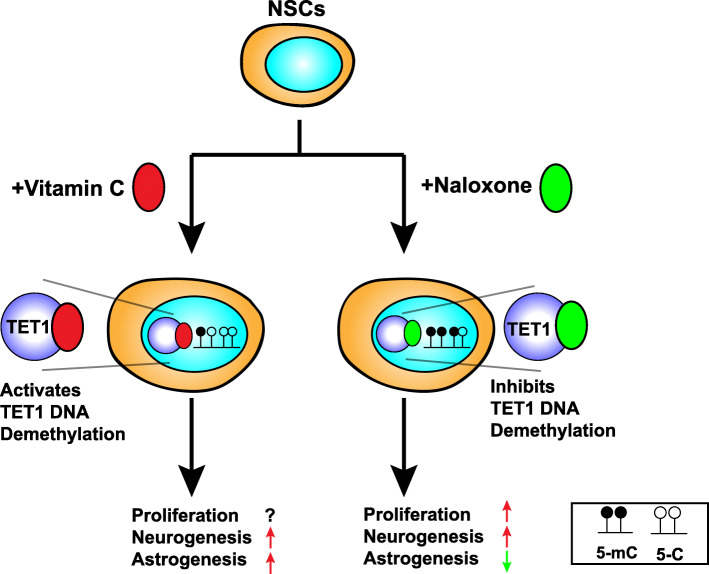
Here, we summarized recent research in proteins responsible for the establishment, maintenance, interpretation, and removal of DNA methylation and those involved in the regulation of the proliferation and differentiation of NSCs. In addition, we discussed the interactions of chemicals with epigenetic pathways to regulate NSCs as well as the connections between proteins involved in DNA methylation and human diseases.
Understanding the interplay between DNA methylation and NSCs in a broad biological context can facilitate the related studies and reduce potential misunderstanding.
表观遗传修饰,即非编码RNA、DNA甲基化以及诸如甲基化、磷酸化、乙酰化、泛素化和类泛素化等组蛋白修饰,在大脑发育中发挥着重要作用。DNA甲基转移酶、甲基CpG结合蛋白和10-11易位蛋白分别促进DNA甲基化的维持、解读和去除。通过最近开发的测序技术已检测到不同形式的甲基化,包括5-甲基胞嘧啶、5-羟甲基胞嘧啶和其他氧化形式。新出现的证据表明,大脑中DNA甲基化模式的多样性在哺乳动物中枢神经系统的发育、可塑性和疾病中对基因表达的微调与协调起着关键作用。神经干细胞起源于神经上皮,在中枢神经系统中生成神经元和胶质细胞,并有助于成年哺乳动物大脑的可塑性。
在此,我们总结了近期关于负责DNA甲基化建立、维持、解读和去除的蛋白质以及参与神经干细胞增殖和分化调控的蛋白质的研究。此外,我们还讨论了化学物质与表观遗传途径相互作用以调控神经干细胞的情况,以及参与DNA甲基化的蛋白质与人类疾病之间的联系。
在广泛的生物学背景下理解DNA甲基化与神经干细胞之间的相互作用,有助于相关研究并减少潜在的误解。