Shenzhen Key Laboratory of Microbial Genetic Engineering, College of Life Sciences and Oceanology, Shenzhen University, Shenzhen, Guangdong, China.
Shandong Provincial Key Laboratory of Energy Genetics, Key Laboratory of Biofuels, Qingdao Engineering Research Center of Biomass Resources and Environment, Qingdao Institute of Bioenergy and Bioprocess Technology, Chinese Academy of Sciences, Qingdao, Shandong, China.
Microb Biotechnol. 2021 May;14(3):1084-1106. doi: 10.1111/1751-7915.13776. Epub 2021 Mar 2.
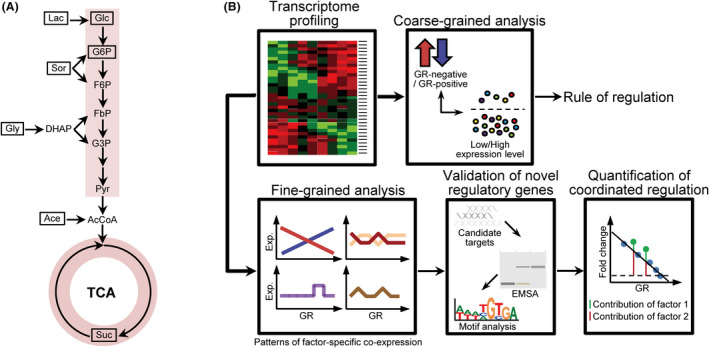
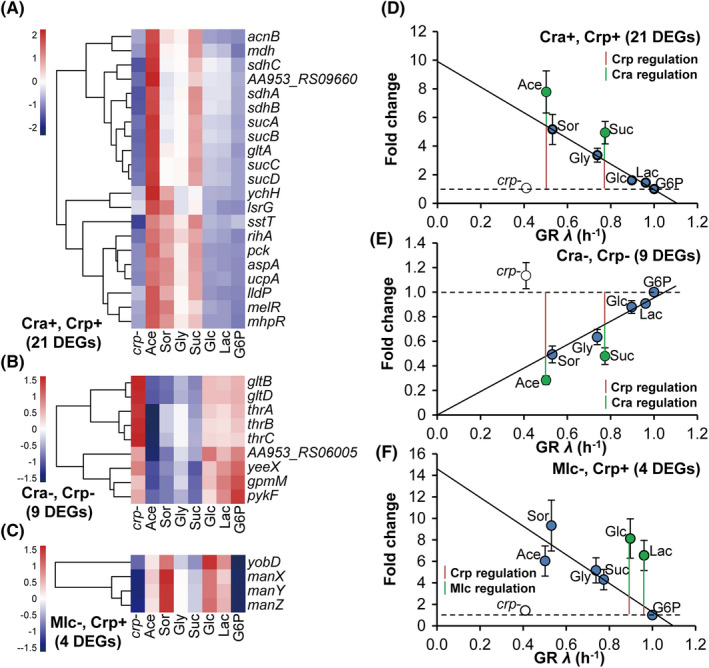
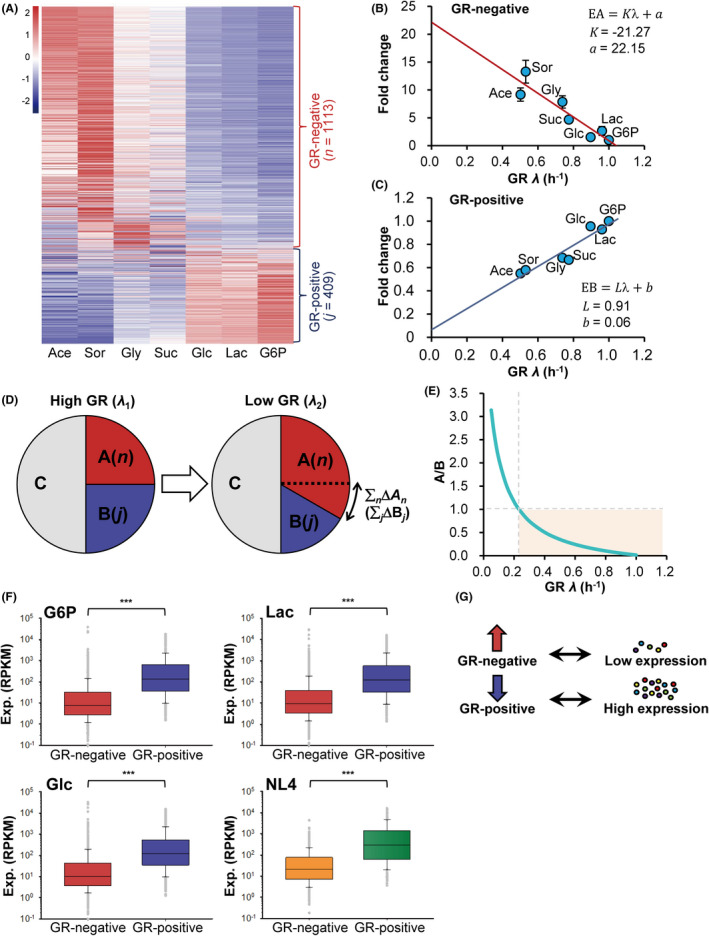
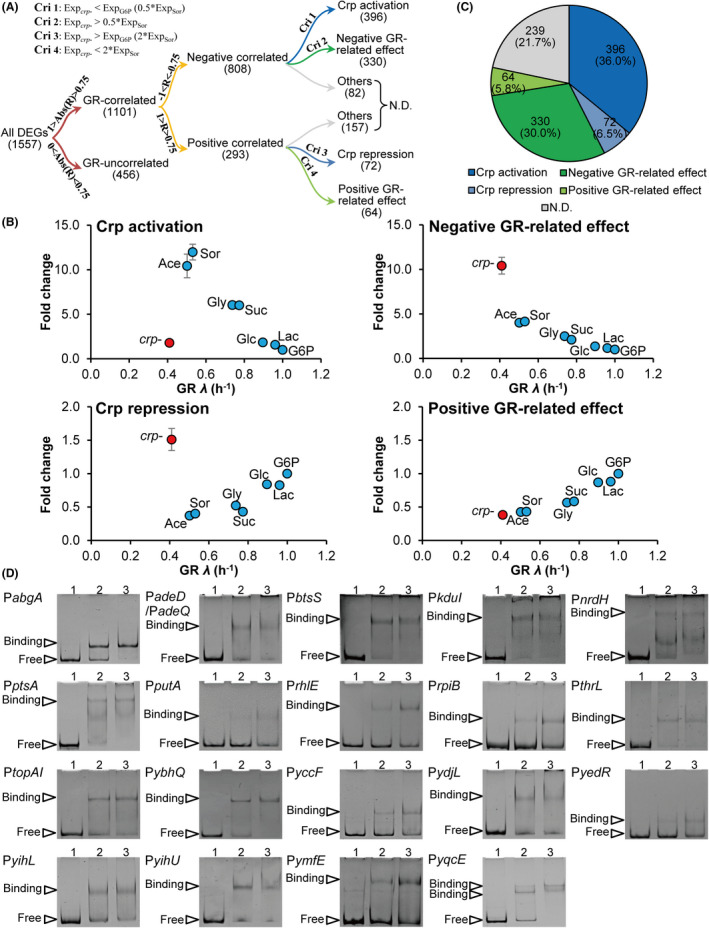
How bacteria adjust gene expression to cope with variable environments remains open to question. Here, we investigated the way global gene expression changes in E. coli correlated with the metabolism of seven carbon substrates chosen to trigger a large panel of metabolic pathways. Coarse-grained analysis of gene co-expression identified a novel regulation pattern: we established that the gene expression trend following immediately the reduction of growth rate (GR) was correlated to its initial expression level. Subsequent fine-grained analysis of co-expression demonstrated that the Crp regulator, coupled with a change in GR, governed the response of most GR-dependent genes. By contrast, the Cra, Mlc and Fur regulators governed the expression of genes responding to non-glycolytic substrates, glycolytic substrates or phosphotransferase system transported sugars following an idiosyncratic way. This work allowed us to expand additional genes in the panel of gene complement regulated by each regulator and to elucidate the regulatory functions of each regulator comprehensively. Interestingly, the bulk of genes controlled by Cra and Mlc were, respectively, co-regulated by Crp- or GR-related effect and our quantitative analysis showed that each factor took turns to work as the primary one or contributed equally depending on the conditions.
细菌如何调整基因表达以应对多变的环境仍然是一个悬而未决的问题。在这里,我们研究了大肠杆菌中全局基因表达变化与七种选择的碳底物代谢之间的关系,这些底物被用来触发大量代谢途径。基因共表达的粗粒度分析确定了一种新的调控模式:我们发现,生长速率(GR)降低后基因表达趋势与其初始表达水平相关。随后对共表达的精细分析表明,CRP 调节因子与 GR 的变化共同控制了大多数依赖 GR 的基因的响应。相比之下,Cra、Mlc 和 Fur 调节因子以特有的方式控制了响应非糖酵解底物、糖酵解底物或磷酸转移酶系统运输糖的基因的表达。这项工作使我们能够扩展每个调节因子调控的基因补充面板中的其他基因,并全面阐明每个调节因子的调节功能。有趣的是,Cra 和 Mlc 控制的大部分基因分别受到 Crp 或 GR 相关效应的共调控,我们的定量分析表明,每个因子轮流作为主要因子发挥作用,或者根据条件平等地发挥作用。