Li Chun, Zhang Runxiang, Wei Haidong, Wang Yanan, Chen Yongjie, Zhang Hengyi, Li Xiang, Liu Honggui, Li Jianhong, Bao Jun
College of Life Science, Northeast Agricultural University, Harbin 150030, China.
College of Animal Science and Technology, Northeast Agricultural University, 150030 Harbin, China; Key Laboratory of Chicken Genetics and Breeding, Ministre of Agriculture and Rural Affaris, 150030 Harbin, China.
Poult Sci. 2021 Mar;100(3):100939. doi: 10.1016/j.psj.2020.12.036. Epub 2020 Dec 19.
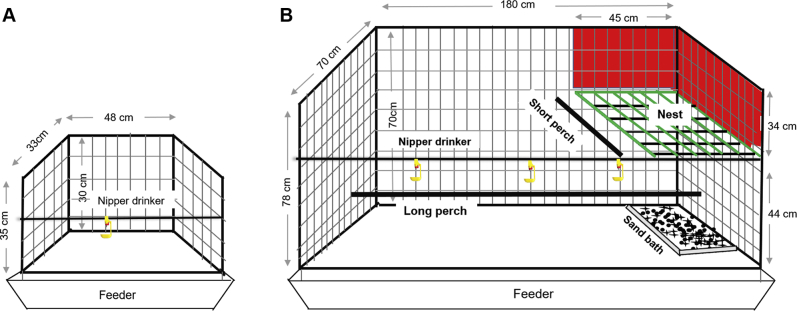
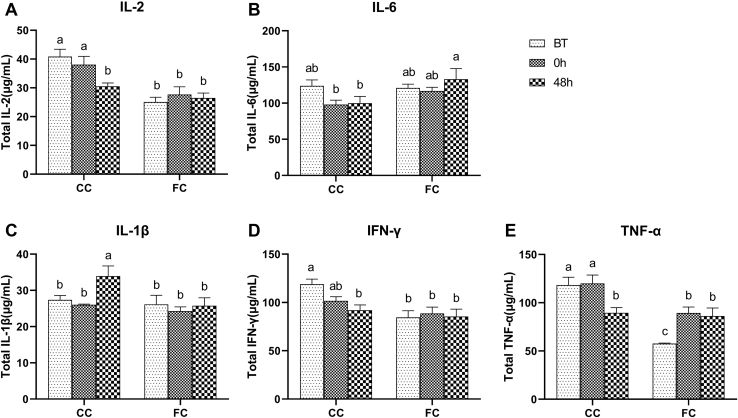
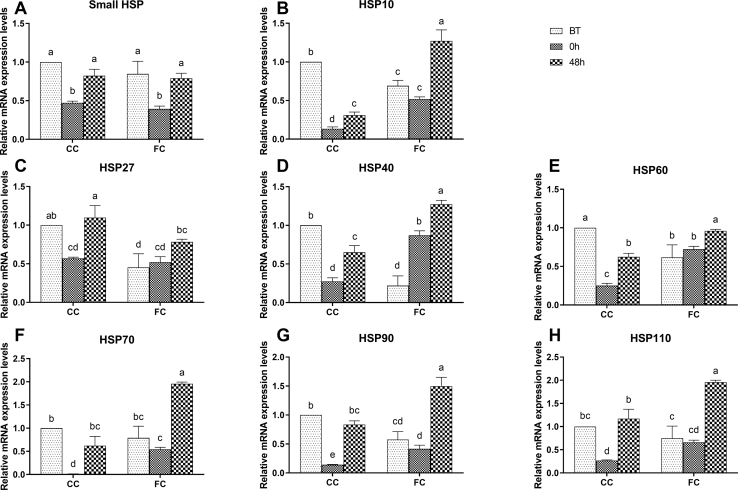
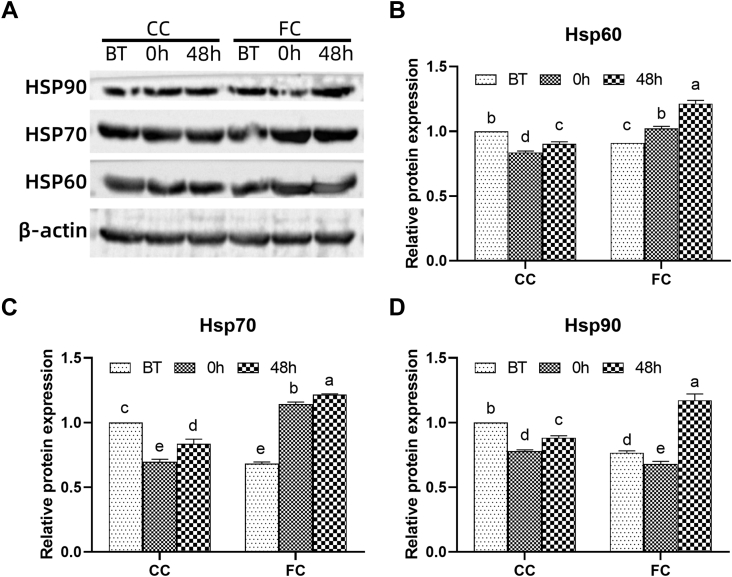
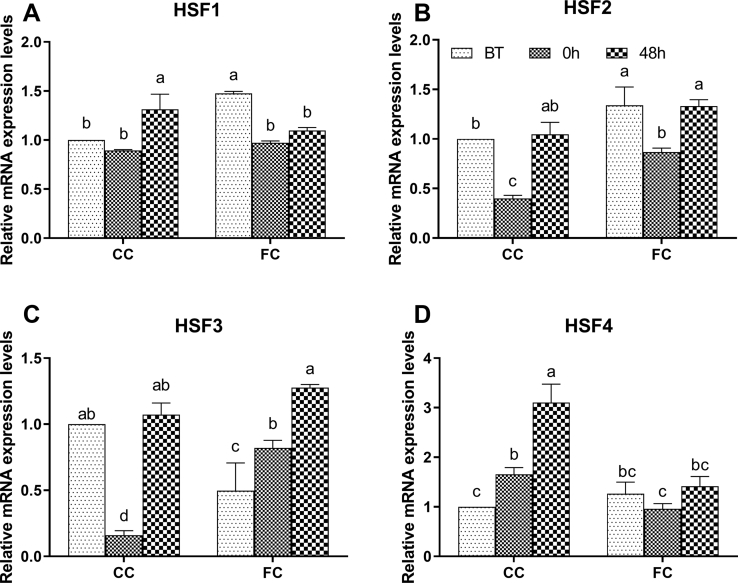
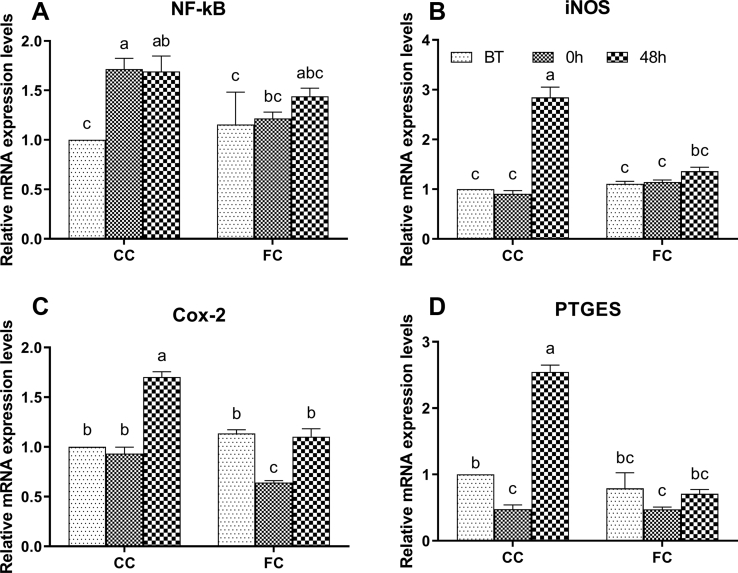
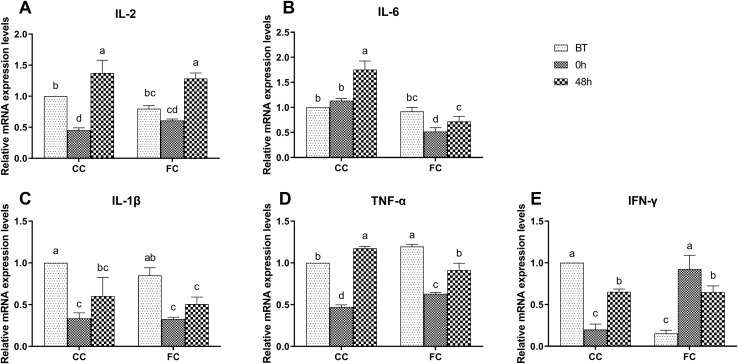
An enriched environment can promote adaptability of animals to cope with complex environments. A total of 18-week-old 216 laying hens were randomly divided into 2 groups; of which, one group was housed in conventional battery cages (CC, n = 36), and the others were housed in furnished cages (FC, n = 180). At the end of 64 wk of age, 24 chickens of each group were selected for 4-hour transport treatment. The spleen tissues of laying hens were collected before transportation (BT), immediately after transportation, and at 48 h after transportation to detect the expression of the heat shock protective response signaling pathway and inflammatory factors. Serum samples were collected to detect the content of immune cytokines. Transport stress decreased heat shock proteins (HSP; including Small HSP, HSP27, HSP40, HSP60, HS70, HSP90, HSP110) in the CC group (P < 0.05), whereas there was no significant difference in the expression of HSP (except for Small HSP and HSP40) in the FC group (P > 0.05) immediately after transportation. At 48 h after transportation, mRNA levels of HSP (except for Small HSP and HSP40) in the FC group were upregulated, which were higher than those at BT (P < 0.05). The changes in HSP60, HSP70, and HSP90 protein levels had similar tendencies. The results showed that housing in furnished cages alleviated the inhibition of expression of HSP in the hens' spleen induced by transport stress. In addition, the hens housed in the FC group had lower expression levels of proinflammatory factors (nuclear transcription factor-kappa B, inducible nitric oxide synthase, cyclooxygenase-2, prostaglandin E synthase, inflammatory cytokines [IL-1β and IL-6], and tumor necrosis factor alpha) (P < 0.05). We suggest that the enriched environment can reduce transport stress damage in laying hens and improve resistance to transport stress by regulating expression of heat shock response proteins and inflammatory cytokines.
丰富的环境可以促进动物适应复杂环境的能力。将18周龄的216只蛋鸡随机分为2组;其中一组饲养在传统层叠式鸡笼(CC组,n = 36)中,另一组饲养在装备笼(FC组,n = 180)中。在64周龄结束时,每组选取24只鸡进行4小时的运输处理。在运输前(BT)、运输结束后立即以及运输后48小时采集蛋鸡的脾脏组织,以检测热休克保护反应信号通路和炎症因子的表达。采集血清样本以检测免疫细胞因子的含量。运输应激降低了CC组热休克蛋白(HSP;包括小分子HSP、HSP27、HSP40、HSP60、HS70、HSP90、HSP110)的表达(P < 0.05),而运输结束后立即检测时,FC组HSP(除小分子HSP和HSP40外)的表达无显著差异(P > 0.05)。运输后48小时,FC组HSP(除小分子HSP和HSP40外)的mRNA水平上调,高于BT时的水平(P < 0.05)。HSP60、HSP70和HSP90蛋白水平的变化趋势相似。结果表明,饲养在装备笼中可减轻运输应激对母鸡脾脏中HSP表达的抑制。此外,FC组母鸡促炎因子(核转录因子-κB、诱导型一氧化氮合酶、环氧化酶-2、前列腺素E合酶、炎性细胞因子[IL-1β和IL-6]以及肿瘤坏死因子α)的表达水平较低(P < 0.05)。我们认为,丰富的环境可以减少蛋鸡的运输应激损伤,并通过调节热休克反应蛋白和炎性细胞因子的表达来提高对运输应激的抵抗力。