Department of Biosciences, COMSATS University Islamabad, Chak Shahzad, Islamabad 45550, Pakistan.
Institute of Medical Research and Medical Plants Studies, Yaounde 1457, Cameroon.
Int J Environ Res Public Health. 2021 Feb 26;18(5):2310. doi: 10.3390/ijerph18052310.
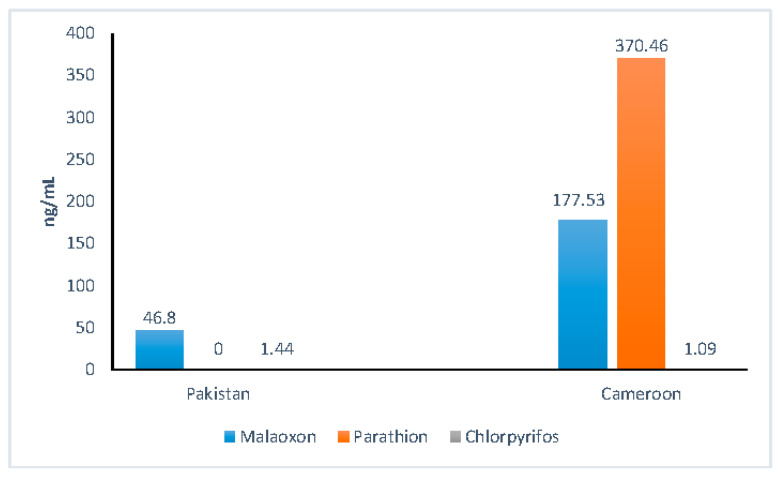
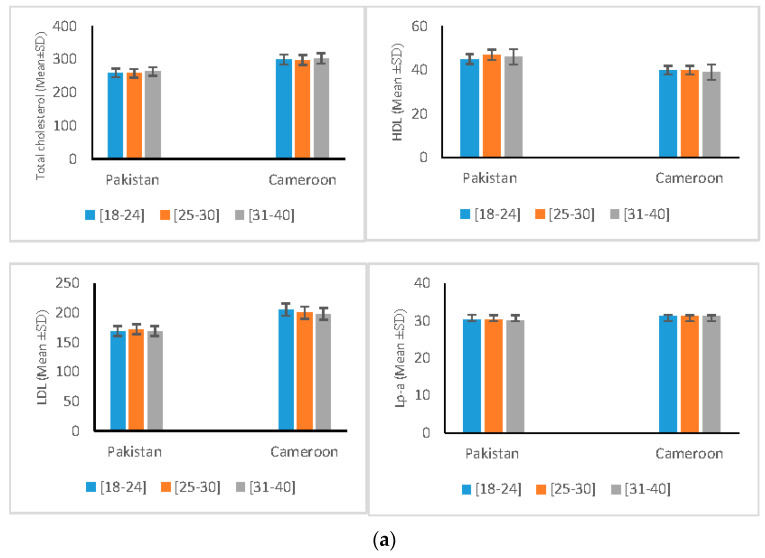
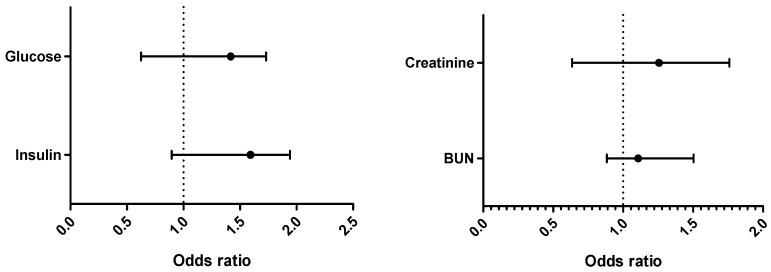
(1) Background: Organophosphorus pesticides (OPPs) are major chemicals used in agriculture for eradication of insecticides/pesticides. Unfortunately, the longtime exposure of human beings to OPPs could lead to metabolic disorder such as high blood pressure, hyperglycemia, overweight or dyslipidemia. The aim of this research is to evaluate the possible metabolic dysregulations as a consequence of chronic OPPs exposure to individuals in Cameroon and Pakistan. (2) Methods: Blood samples were collected from 300 participants in each country, into ethylenediaminetetraacetic acid (EDTA) tubes. The samples were extracted with solid phase extraction (methanol/water) for analysis of OPPs with gas chromatography mass spectrometry. The spectrophotometry and Enzyme Linked ImmunoSorbent Assay (ELISA) were used to measure the hepatic, renal, pancreatic and cardiovascular functions. The atherogenic index (AI) was also determined in OPPs exposed and nonexposed cohorts. (3) Results: The results showed the presence of malathion, parathion and chlorpyrifos OPPs residues in Cameroonians, and malathion and chlorpyrifos in Pakistani samples, respectively. Elevated Body Mass Index (BMI), insulin, blood glucose, dyslipidemia and hypertension were noted in OPPs chronic exposed groups. In addition, dysregulated liver and kidney function profiles were observed in all participants regardless of gender and age groups. (4) Conclusions: The study concludes that both the study cohorts showed several metabolic dysregulations attributable to chronic exposure to a mixture of OPPs which may provide precursors for establishment of metabolic syndrome and other chronic diseases. Further different extended population-based studies are suggested to understand the differential metabolic dysfunctions caused by structurally different OPPs mixtures exposure.
(1)背景:有机磷农药(OPPs)是农业中用于消灭杀虫剂/农药的主要化学品。不幸的是,人类长时间接触 OPPs 可能导致代谢紊乱,如高血压、高血糖、超重或血脂异常。本研究旨在评估喀麦隆和巴基斯坦个体长期接触 OPPs 可能导致的代谢失调。(2)方法:从每个国家的 300 名参与者中采集血液样本,放入乙二胺四乙酸(EDTA)管中。使用固相萃取(甲醇/水)提取样本,并用气相色谱质谱法分析 OPPs。分光光度法和酶联免疫吸附测定(ELISA)用于测量肝、肾、胰腺和心血管功能。还测定了暴露和未暴露于 OPPs 的队列的致动脉粥样硬化指数(AI)。(3)结果:结果显示喀麦隆人血液中存在马拉硫磷、对硫磷和毒死蜱 OPPs 残留,巴基斯坦人血液中存在马拉硫磷和毒死蜱。在 OPPs 慢性暴露组中,体重指数(BMI)、胰岛素、血糖、血脂异常和高血压均升高。此外,无论性别和年龄组如何,所有参与者的肝功能和肾功能谱均出现失调。(4)结论:该研究得出结论,两个研究队列均显示出几种代谢失调,这归因于长期接触混合 OPPs,这可能为代谢综合征和其他慢性疾病的建立提供了前体。建议进一步开展不同的基于人群的扩展研究,以了解结构不同的 OPPs 混合物暴露引起的不同代谢功能障碍。