Department of Molecular Biosciences, School of Veterinary Medicine, University of California Davis, Davis, CA 95616, USA.
Division of Gastroenterology and Hepatology, Department of Internal Medicine, School of Medicine (V.M.), University of California Davis, Sacramento, CA 95817, USA.
Nutrients. 2021 Feb 26;13(3):760. doi: 10.3390/nu13030760.
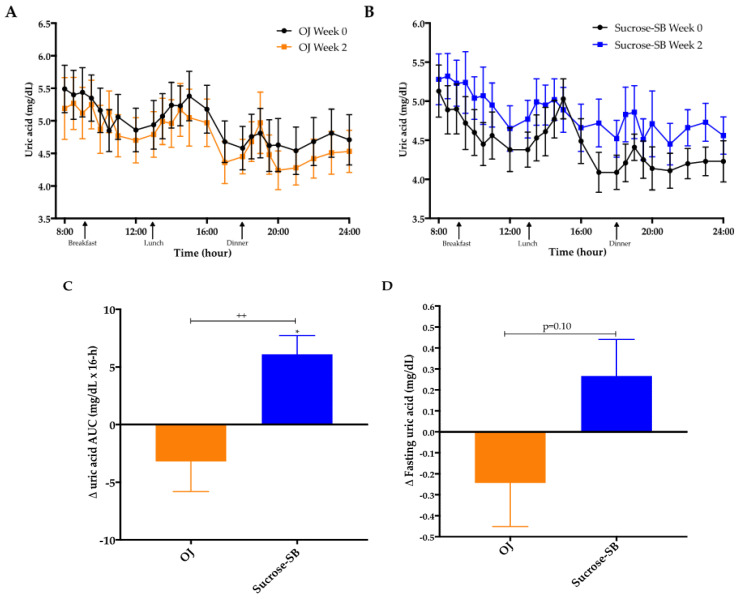
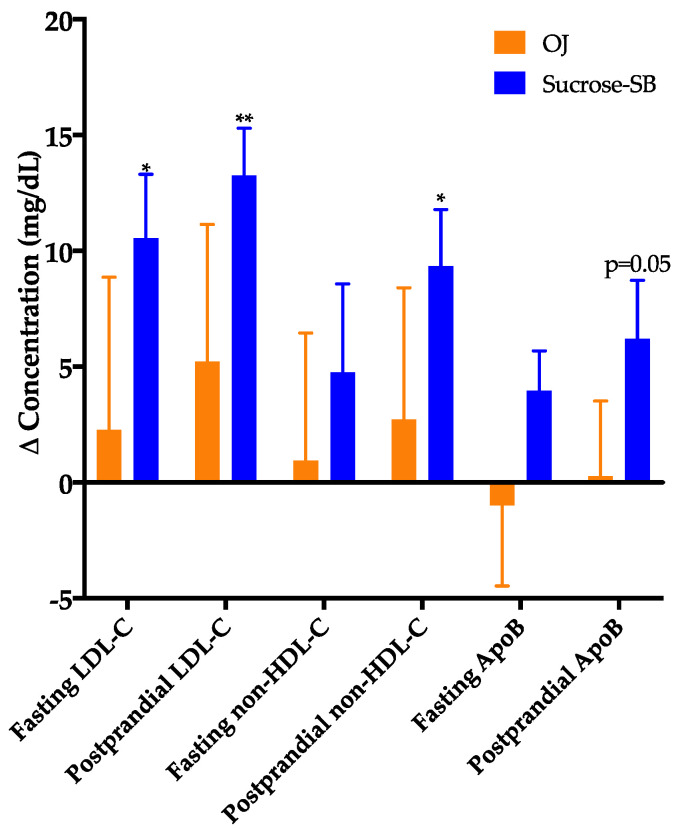
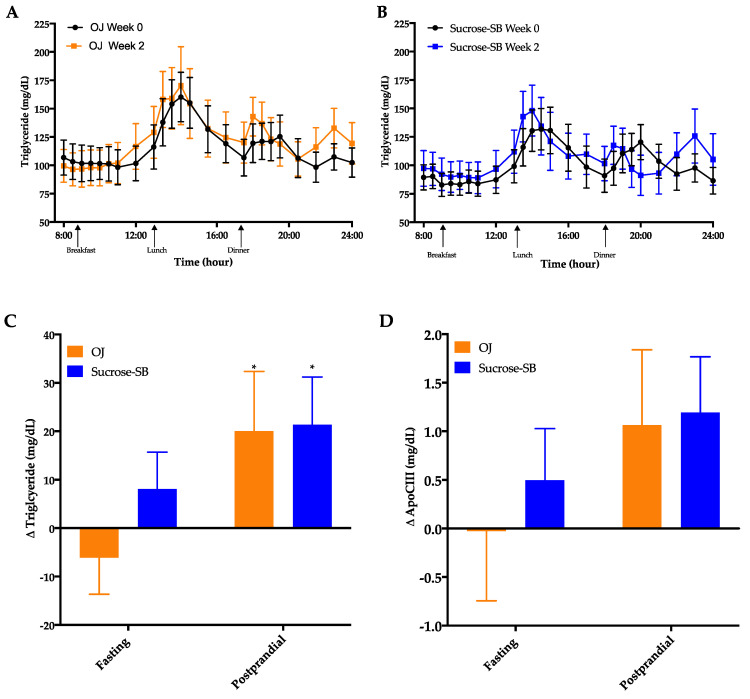
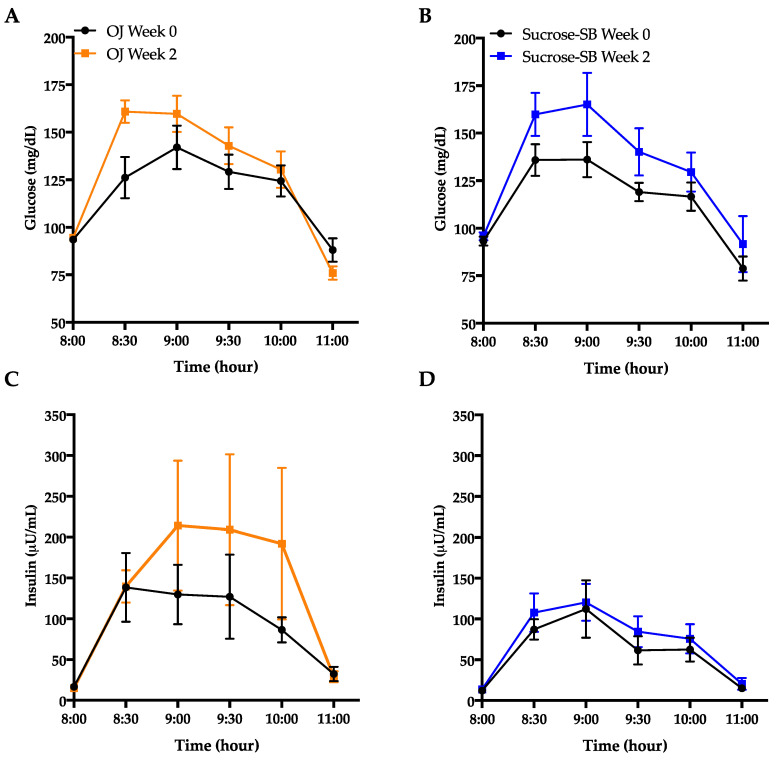
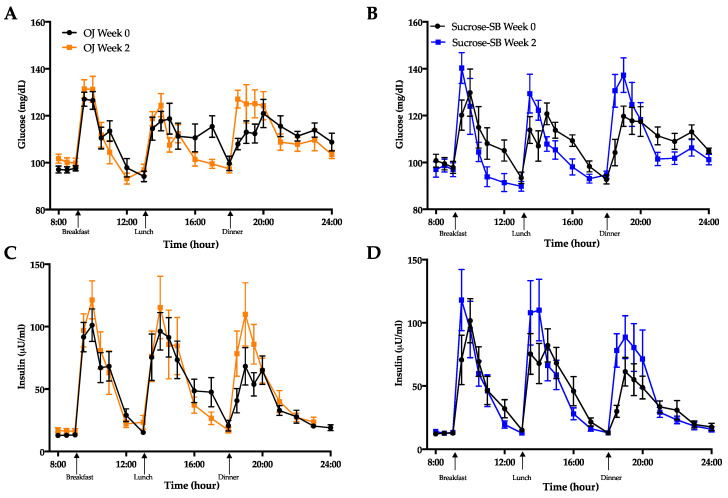
Overconsumption of sugar-sweetened beverages increases risk factors associated with cardiometabolic disease, in part due to hepatic fructose overload. However, it is not clear whether consumption of beverages containing fructose as naturally occurring sugar produces equivalent metabolic dysregulation as beverages containing added sugars. We compared the effects of consuming naturally-sweetened orange juice (OJ) or sucrose-sweetened beverages (sucrose-SB) for two weeks on risk factors for cardiometabolic disease. Healthy, overweight women ( = 20) were assigned to consume either 3 servings of 100% orange juice or sucrose-SB/day. We conducted 16-hour serial blood collections and 3-h oral glucose tolerance tests during a 30-h inpatient visit at baseline and after the 2-week diet intervention. The 16-h area under the curve (AUC) for uric acid increased in subjects consuming sucrose-SB compared with subjects consuming OJ. Unlike sucrose-SB, OJ did not significantly increase fasting or postprandial lipoproteins. Consumption of both beverages resulted in reductions in the Matsuda insulin sensitivity index (OJ: -0.40 ± 0.18, = 0.04 within group; sucrose-SB: -1.0 ± 0.38, = 0.006 within group; = 0.53 between groups). Findings from this pilot study suggest that consumption of OJ at levels above the current dietary guidelines for sugar intake does not increase plasma uric acid concentrations compared with sucrose-SB, but appears to lead to comparable decreases of insulin sensitivity.
过量摄入含糖饮料会增加与心脏代谢疾病相关的风险因素,部分原因是肝脏果糖过载。然而,目前尚不清楚饮用含有果糖的天然糖饮料是否会产生与添加糖饮料等同的代谢失调。我们比较了饮用天然甜橙汁(OJ)或蔗糖甜饮料(蔗糖-SB)两周对心脏代谢疾病风险因素的影响。健康、超重的女性(n=20)被分配每天饮用 3 份 100%橙汁或蔗糖-SB。我们在基线和 2 周饮食干预后进行了 30 小时住院期间的 16 小时连续血液采集和 3 小时口服葡萄糖耐量试验。与饮用 OJ 的受试者相比,饮用蔗糖-SB 的受试者血尿酸 16 小时 AUC 增加。与蔗糖-SB 不同,OJ 不会显著增加空腹或餐后脂蛋白。饮用两种饮料均可降低 Matsuda 胰岛素敏感性指数(OJ:-0.40±0.18,组内 = 0.04;蔗糖-SB:-1.0±0.38,组内 = 0.006;组间 = 0.53)。这项初步研究的结果表明,与蔗糖-SB 相比,摄入橙汁水平高于目前的糖摄入量饮食指南不会增加血浆尿酸浓度,但似乎会导致胰岛素敏感性的类似降低。