Mesquita Paulo H C, Lamb Donald A, Godwin Joshua S, Osburn Shelby C, Ruple Bradley A, Moore Johnathon H, Vann Christopher G, Huggins Kevin W, Fruge Andrew D, Young Kaelin C, Kavazis Andreas N, Roberts Michael D
School of Kinesiology, Auburn University, Auburn, AL 36849, USA.
Department of Nutrition, Dietetics and Hospitality Management, Auburn University, Auburn, AL 36849, USA.
Antioxidants (Basel). 2021 Feb 26;10(3):350. doi: 10.3390/antiox10030350.
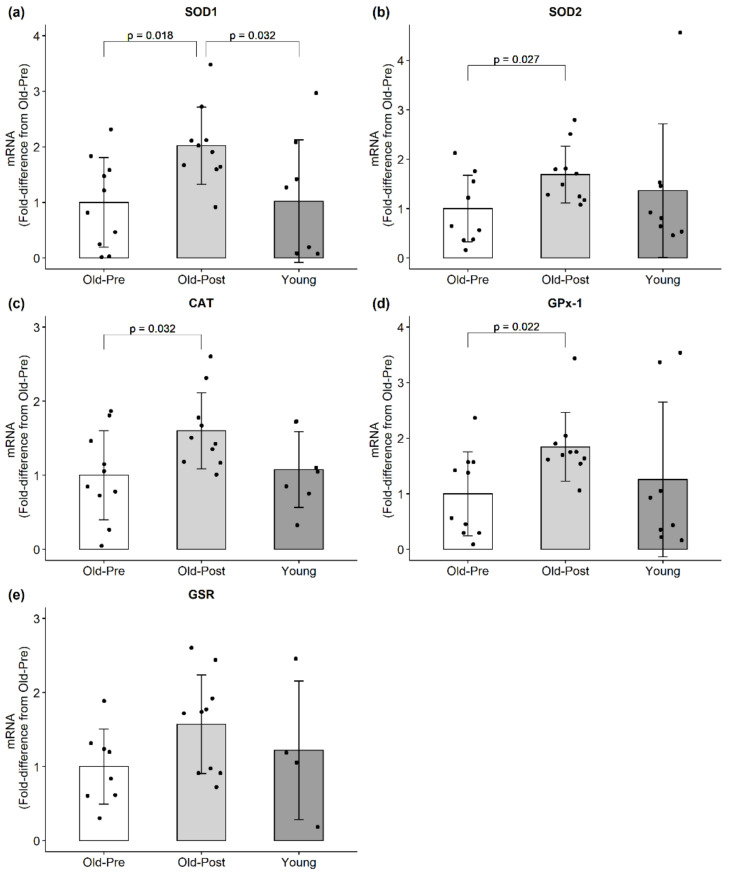
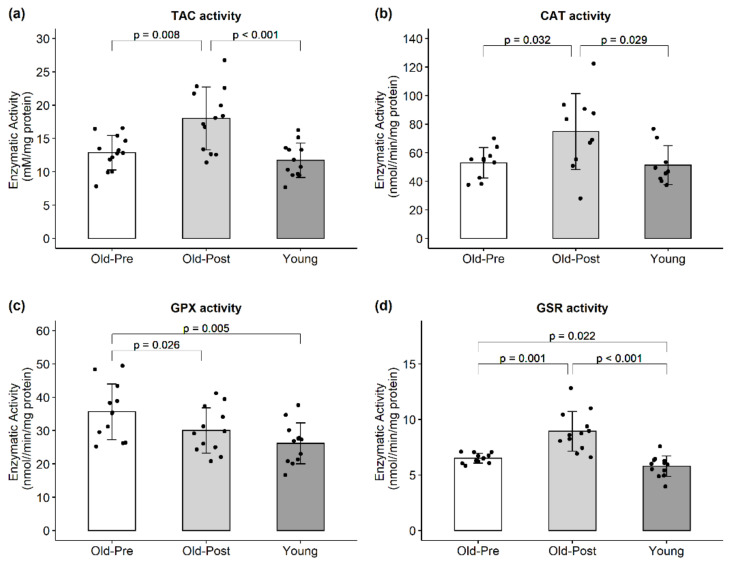
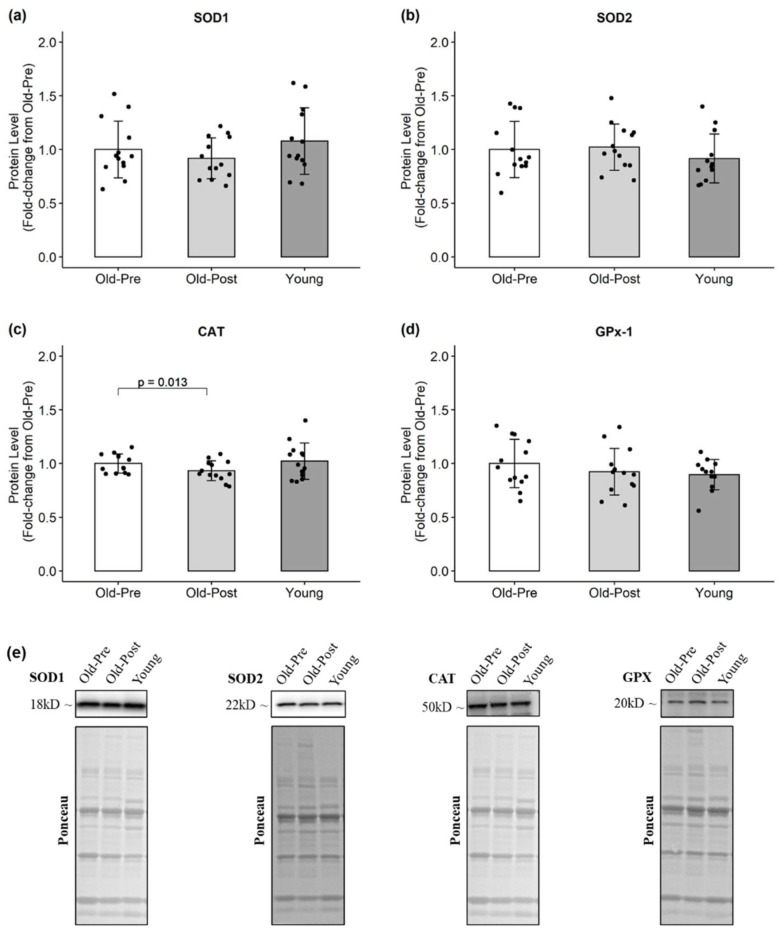
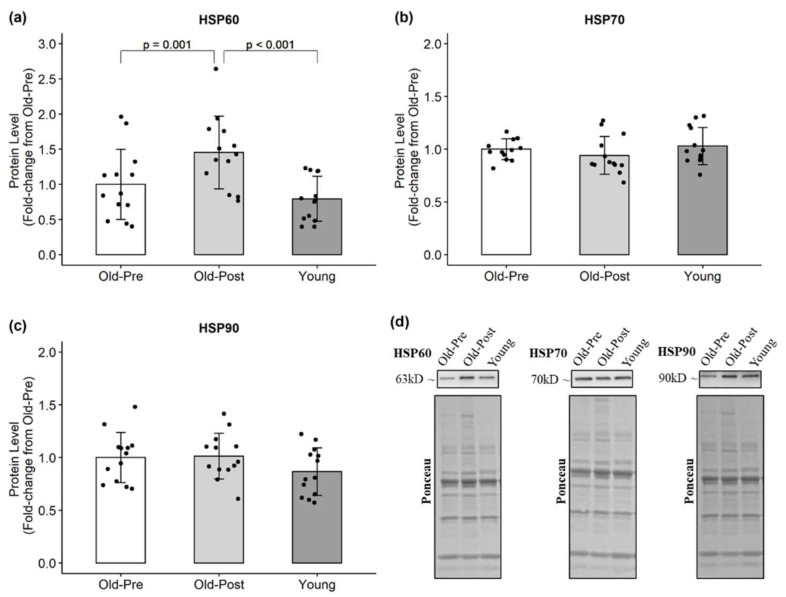
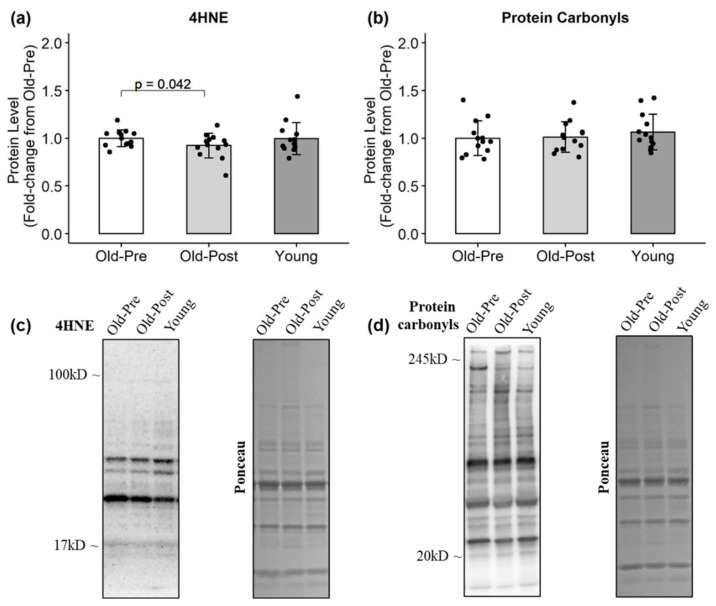
The aim of this study was to investigate the effects of resistance training (RT) on the redox status of skeletal muscle in older adults. Thirteen males aged 64 ± 9 years performed full-body RT 2x/week for 6 weeks. Muscle biopsies were obtained from the vastus lateralis prior to and following RT. The mRNA, protein, and enzymatic activity levels of various endogenous antioxidants were determined. In addition, skeletal muscle 4-hydroxynonenal and protein carbonyls were determined as markers of oxidative damage. Protein levels of heat shock proteins (HSPs) were also quantified. RT increased mRNA levels of all assayed antioxidant genes, albeit protein levels either did not change or decreased. RT increased total antioxidant capacity, catalase, and glutathione reductase activities, and decreased glutathione peroxidase activity. Lipid peroxidation also decreased and HSP60 protein increased following RT. In summary, 6 weeks of RT decreased oxidative damage and increased antioxidant enzyme activities. Our results suggest the older adult responses to RT involve multi-level (transcriptional, post-transcriptional, and post-translational) control of the redox status of skeletal muscle.
本研究的目的是调查抗阻训练(RT)对老年人骨骼肌氧化还原状态的影响。13名年龄在64±9岁的男性,每周进行2次全身抗阻训练,共持续6周。在抗阻训练前后,从股外侧肌获取肌肉活检样本。测定了各种内源性抗氧化剂的mRNA、蛋白质和酶活性水平。此外,测定了骨骼肌4-羟基壬烯醛和蛋白质羰基作为氧化损伤的标志物。还对热休克蛋白(HSPs)的蛋白质水平进行了定量分析。抗阻训练增加了所有检测的抗氧化基因的mRNA水平,尽管蛋白质水平要么没有变化,要么有所下降。抗阻训练增加了总抗氧化能力、过氧化氢酶和谷胱甘肽还原酶的活性,并降低了谷胱甘肽过氧化物酶的活性。抗阻训练后脂质过氧化也减少,HSP60蛋白增加。总之,6周的抗阻训练减少了氧化损伤,增加了抗氧化酶的活性。我们的结果表明,老年人对抗阻训练的反应涉及骨骼肌氧化还原状态的多层次(转录、转录后和翻译后)控制。