Parry Hailey A, Mobley C Brooks, Mumford Petey W, Romero Matthew A, Haun Cody T, Zhang Yufeng, Roberson Paul A, Zempleni Janos, Ferrando Arny A, Vechetti Ivan J, McCarthy John J, Young Kaelin C, Roberts Michael D, Kavazis Andreas N
School of Kinesiology, Auburn University, Auburn, AL, United States.
Department of Physiology, University of Kentucky College of Medicine, Lexington, KY, United States.
Front Physiol. 2019 Apr 16;10:436. doi: 10.3389/fphys.2019.00436. eCollection 2019.
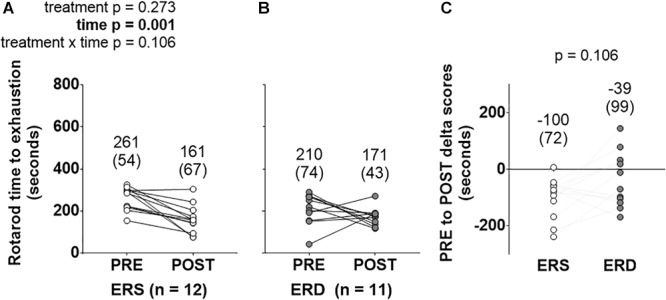
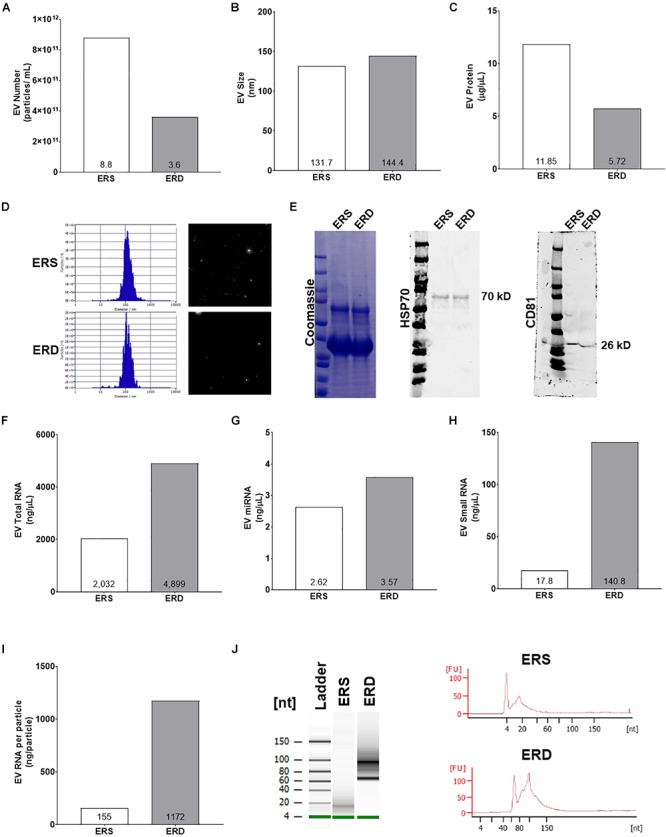
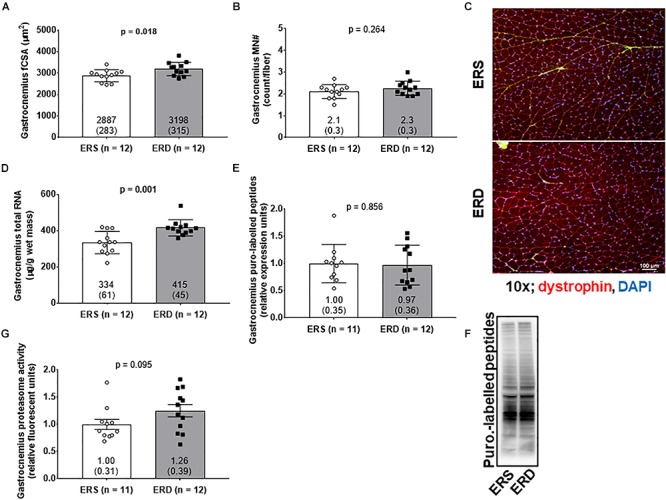
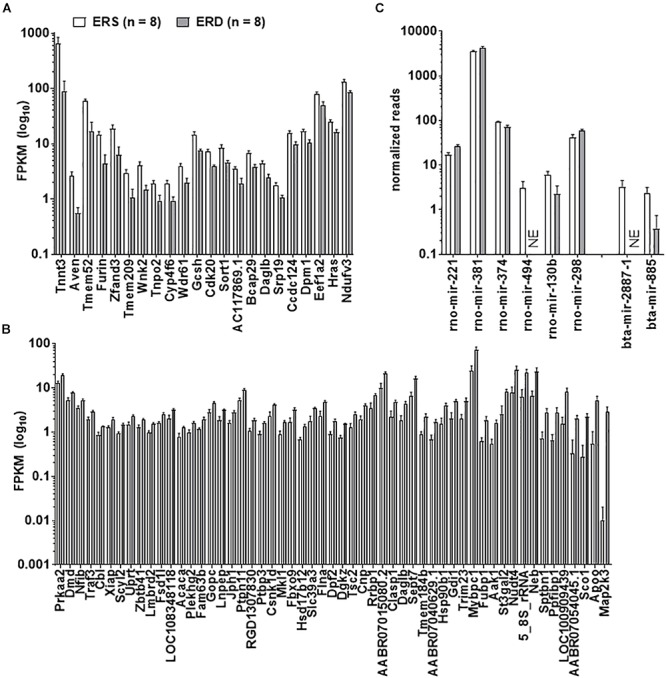
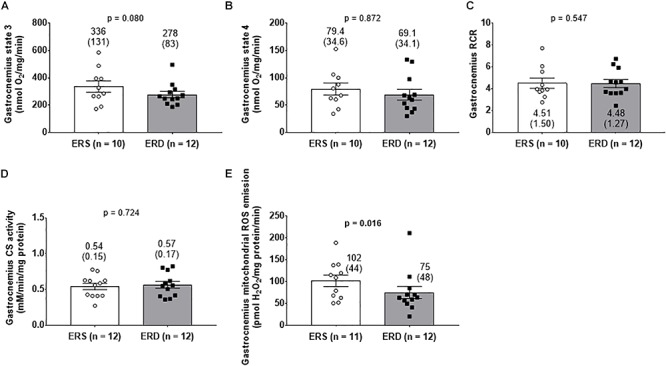
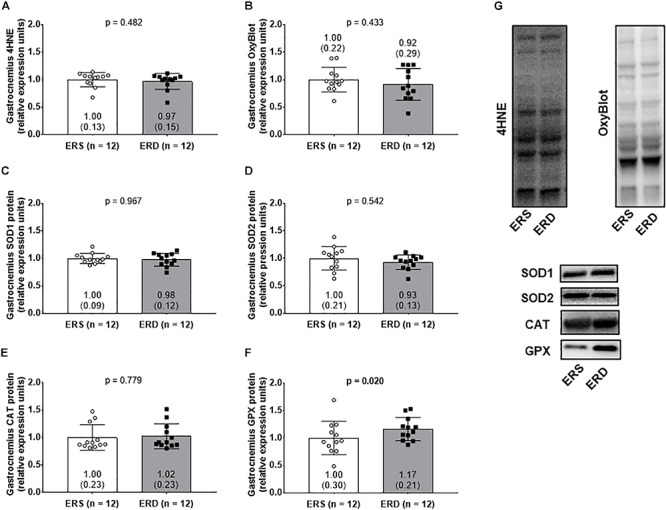
The current study investigated how bovine milk extracellular vesicles (EVs) affected rotarod performance and biomarkers of skeletal muscle physiology in young, growing rats. Twenty-eight-day Fisher 344 rats were provided an AIN-93G-based diet for 4 weeks that either remained unadulterated [EVs and RNA-sufficient (ERS; = 12)] or was sonicated [EVs and RNA-depleted (ERD; = 12)]. Prior to (PRE) and on the last day of the intervention (POST), animals were tested for maximal rotarod performance. Following the feeding period, the gastrocnemius muscle was analyzed at the histological, biochemical, and molecular levels and was also used to measure mitochondrial function and reactive oxygen species (ROS) emission. A main effect of time was observed for rotarod time (PRE > POST, = 0.001). Terminal gastrocnemius mass was unaffected by diet, although gastrocnemius muscle fiber cross sectional area was 11% greater ( = 0.018) and total RNA (a surrogate of ribosome density) was 24% greater ( = 0.001) in ERD. Transcriptomic analysis of the gastrocnemius indicated that 22 mRNAs were significantly greater in ERS versus ERD ( < 0.01), whereas 55 mRNAs were greater in ERD versus ERS ( < 0.01). There were no differences in gastrocnemius citrate synthase activity or mitochondrial coupling (respiratory control ratio), although mitochondrial ROS production was lower in ERD gastrocnemius ( = 0.016), which may be explained by an increase in glutathione peroxidase protein levels ( = 0.020) in ERD gastrocnemius. Dietary EVs profiling confirmed that sonication in the ERD diet reduced EVs content by ∼60%. Our findings demonstrate that bovine milk EVs depletion through sonication elicits anabolic and transcriptomic effects in the gastrocnemius muscle of rapidly maturing rats. While this did not translate into a functional outcome between diets (i.e., rotarod performance), longer feeding periods may be needed to observe such functional effects.
本研究调查了牛乳细胞外囊泡(EVs)如何影响幼龄生长大鼠的转棒试验表现及骨骼肌生理生物标志物。28日龄的Fisher 344大鼠被给予基于AIN-93G的饮食4周,饮食要么保持未掺假状态[EVs和RNA充足(ERS;n = 12)],要么经过超声处理[EVs和RNA耗尽(ERD;n = 12)]。在干预前(PRE)和干预最后一天(POST),对动物进行最大转棒试验表现测试。喂食期结束后,对腓肠肌进行组织学、生化和分子水平分析,并用于测量线粒体功能和活性氧(ROS)释放。观察到转棒时间存在时间主效应(PRE > POST,P = 0.001)。尽管ERD组腓肠肌纤维横截面积大11%(P = 0.018)且总RNA(核糖体密度的替代指标)大24%(P = 0.001),但终末腓肠肌质量不受饮食影响。腓肠肌转录组分析表明,与ERD组相比,ERS组有22种mRNA显著更高(P < 0.01),而与ERS组相比,ERD组有55种mRNA更高(P < 0.01)。腓肠肌柠檬酸合酶活性或线粒体偶联(呼吸控制率)无差异,尽管ERD组腓肠肌线粒体ROS产生较低(P = 0.016),这可能由ERD组腓肠肌谷胱甘肽过氧化物酶蛋白水平升高(P = 0.020)来解释。饮食EVs分析证实,ERD饮食中的超声处理使EVs含量降低约60%。我们的研究结果表明,通过超声处理耗尽牛乳EVs会在快速成熟大鼠的腓肠肌中引发合成代谢和转录组效应。虽然这并未转化为不同饮食之间的功能结果(即转棒试验表现),但可能需要更长的喂食期来观察到这种功能效应。