Division of Epidemiology, Vanderbilt University Medical Center, Nashville, Tennessee, USA
Instituto Nacional de Infectologia Evandro Chagas, Rio de Janeiro, Brazil.
BMJ Open. 2021 Mar 2;11(3):e044687. doi: 10.1136/bmjopen-2020-044687.
To systematically review and critically evaluate prediction models developed to predict tuberculosis (TB) treatment outcomes among adults with pulmonary TB.
Systematic review.
PubMed, Embase, Web of Science and Google Scholar were searched for studies published from 1 January 1995 to 9 January 2020.
Studies that developed a model to predict pulmonary TB treatment outcomes were included. Study screening, data extraction and quality assessment were conducted independently by two reviewers. Study quality was evaluated using the Prediction model Risk Of Bias Assessment Tool. Data were synthesised with narrative review and in tables and figures.
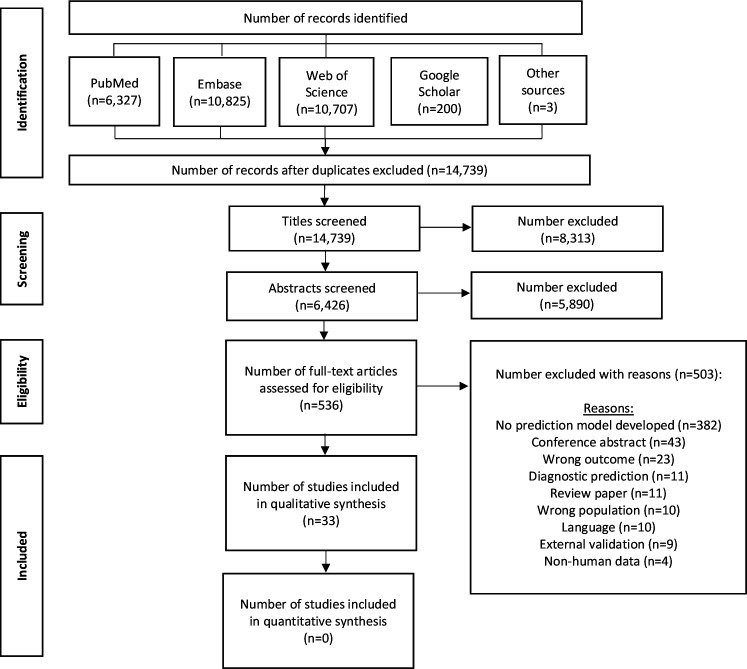
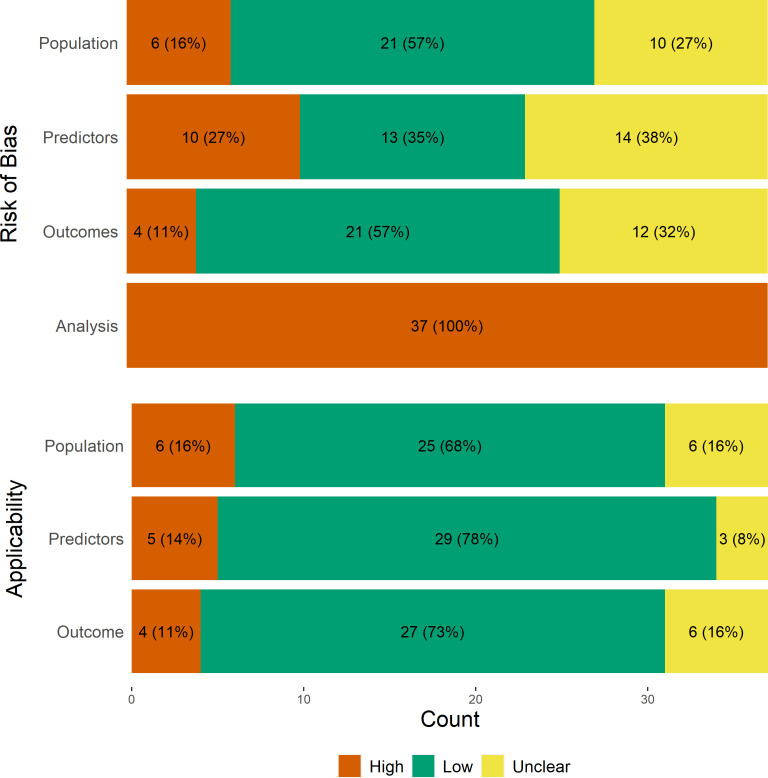
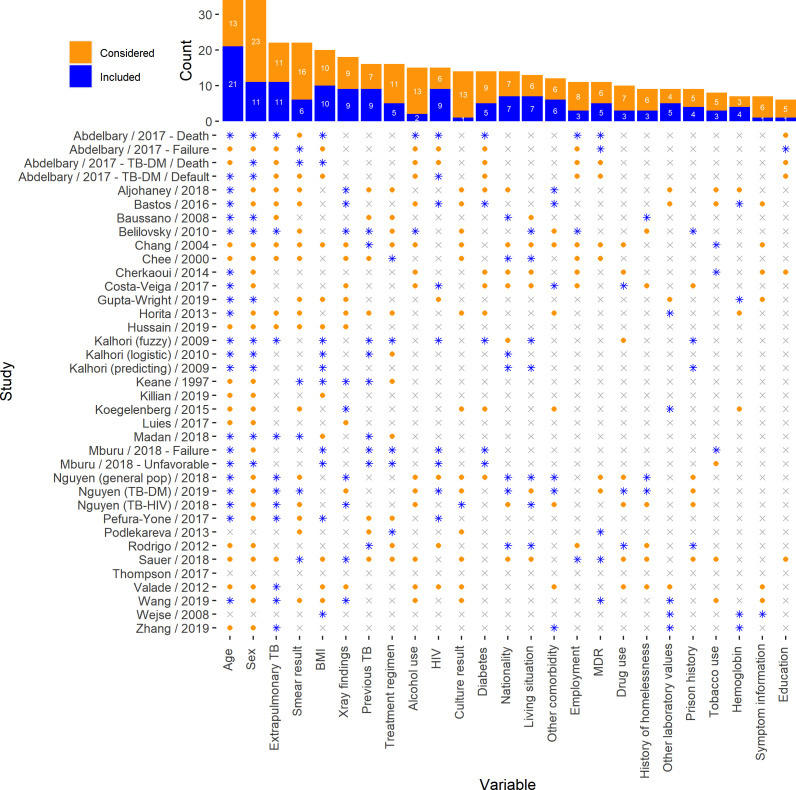
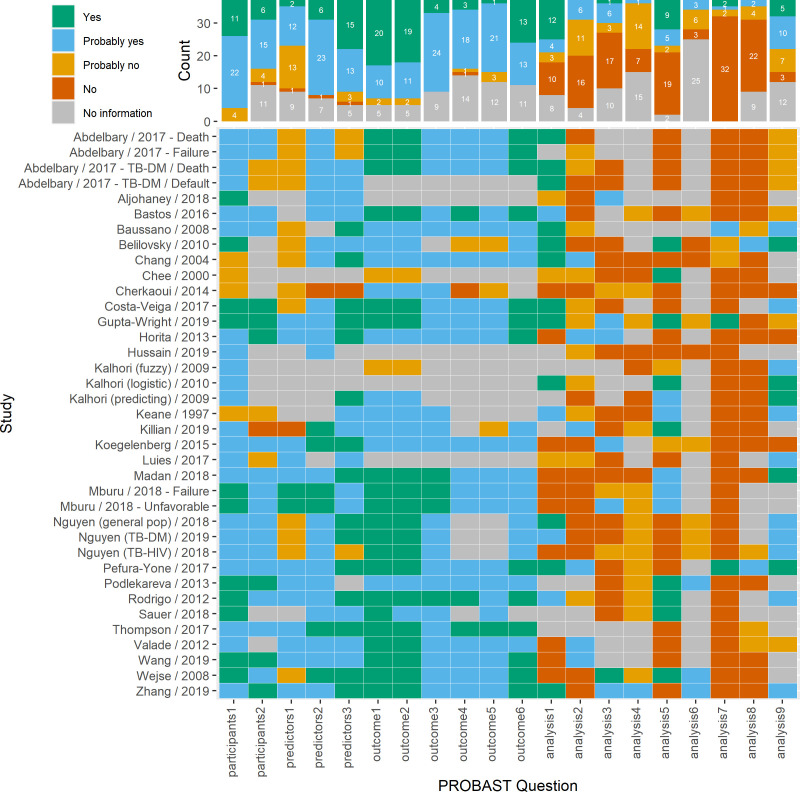
14 739 articles were identified, 536 underwent full-text review and 33 studies presenting 37 prediction models were included. Model outcomes included death (n=16, 43%), treatment failure (n=6, 16%), default (n=6, 16%) or a composite outcome (n=9, 25%). Most models (n=30, 81%) measured discrimination (median c-statistic=0.75; IQR: 0.68-0.84), and 17 (46%) reported calibration, often the Hosmer-Lemeshow test (n=13). Nineteen (51%) models were internally validated, and six (16%) were externally validated. Eighteen (54%) studies mentioned missing data, and of those, half (n=9) used complete case analysis. The most common predictors included age, sex, extrapulmonary TB, body mass index, chest X-ray results, previous TB and HIV. Risk of bias varied across studies, but all studies had high risk of bias in their analysis.
TB outcome prediction models are heterogeneous with disparate outcome definitions, predictors and methodology. We do not recommend applying any in clinical settings without external validation, and encourage future researchers adhere to guidelines for developing and reporting of prediction models.
The study was registered on the international prospective register of systematic reviews PROSPERO (CRD42020155782).
系统评价和批判性评估预测模型,以预测成人肺结核(TB)治疗结果。
系统评价。
从 1995 年 1 月 1 日至 2020 年 1 月 9 日,在 PubMed、Embase、Web of Science 和 Google Scholar 上搜索研究。
纳入了开发预测肺结核治疗结果模型的研究。由两名评审员独立进行研究筛选、数据提取和质量评估。使用预测模型风险偏倚评估工具评估研究质量。使用叙述性综述以及表格和图形综合数据。
共确定了 14739 篇文章,对 536 篇进行了全文审查,纳入了 33 项研究,共提出 37 个预测模型。模型结局包括死亡(n=16,43%)、治疗失败(n=6,16%)、失访(n=6,16%)或复合结局(n=9,25%)。大多数模型(n=30,81%)测量了区分度(中位数 c 统计量=0.75;IQR:0.68-0.84),17 项(46%)报告了校准情况,通常是 Hosmer-Lemeshow 检验(n=13)。19 项(51%)模型进行了内部验证,6 项(16%)进行了外部验证。18 项(54%)研究提到了缺失数据,其中一半(n=9)使用完全病例分析。最常见的预测因素包括年龄、性别、肺外结核、体重指数、胸部 X 射线结果、既往结核病和 HIV。研究之间的偏倚风险存在差异,但所有研究在分析中都存在高偏倚风险。
TB 结局预测模型存在异质性,结局定义、预测因素和方法各不相同。我们不建议在没有外部验证的情况下将其应用于临床实践中,并鼓励未来的研究人员遵守开发和报告预测模型的指南。
该研究在国际前瞻性系统评价注册库 PROSPERO(CRD42020155782)中进行了注册。