Department of Biology, Massachusetts Institute of Technology, Cambridge, United States.
The Shmunis School of Biomedicine and Cancer Research, Faculty of Life Sciences, Tel Aviv University, Tel Aviv, Israel.
Elife. 2021 Mar 3;10:e65924. doi: 10.7554/eLife.65924.
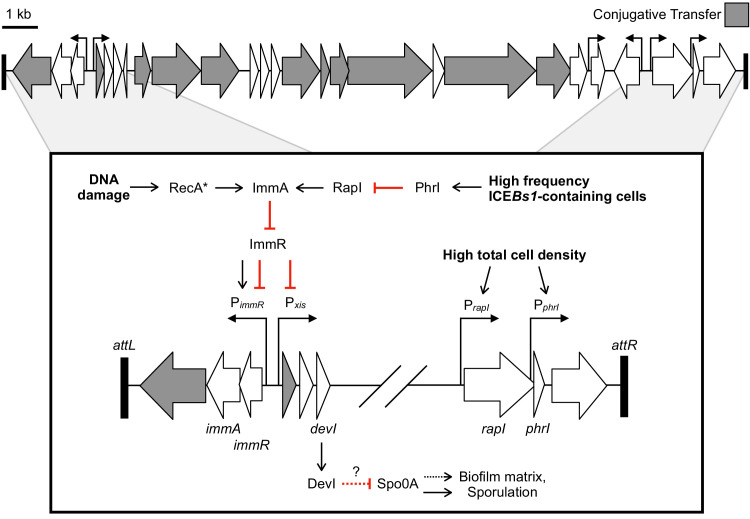
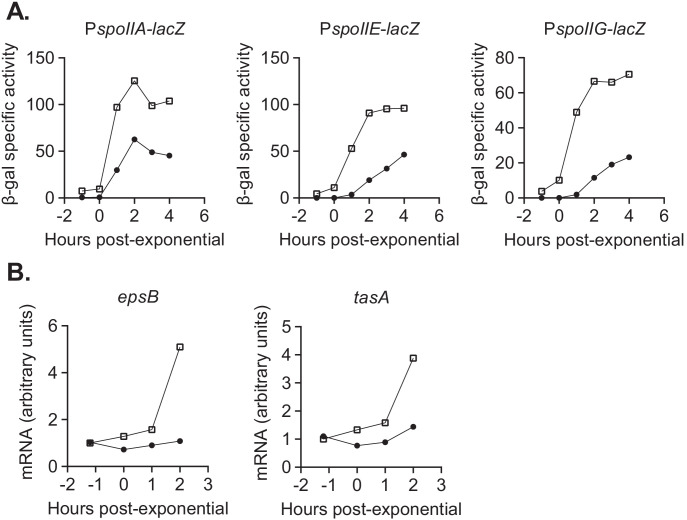
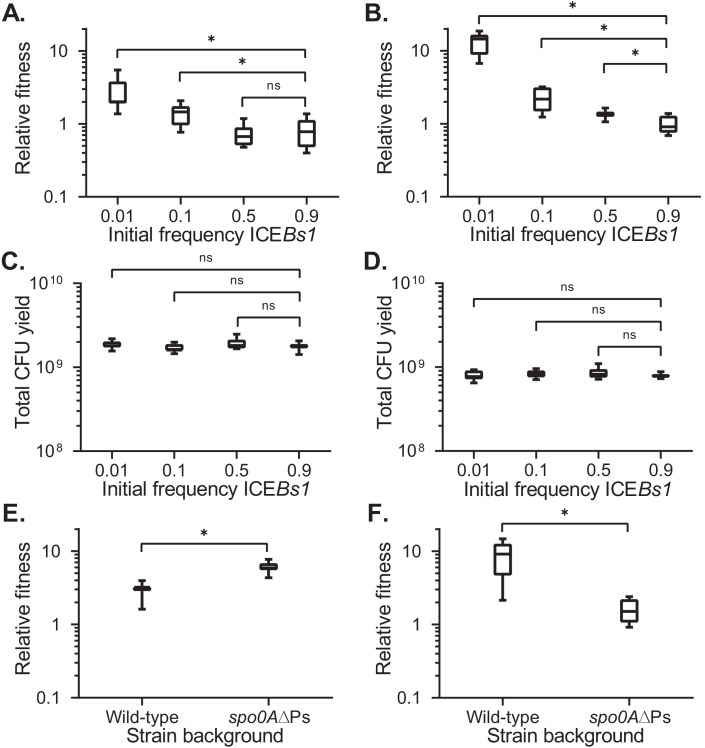
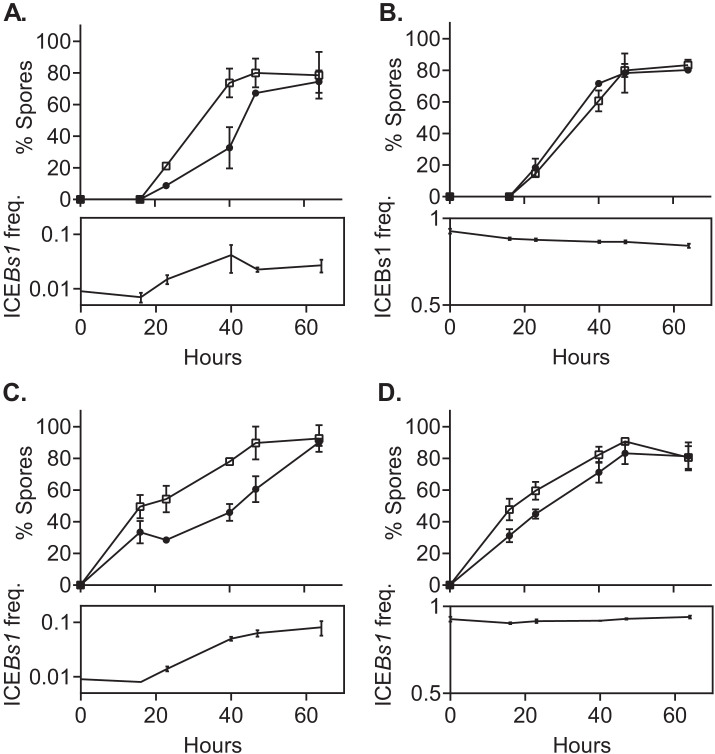
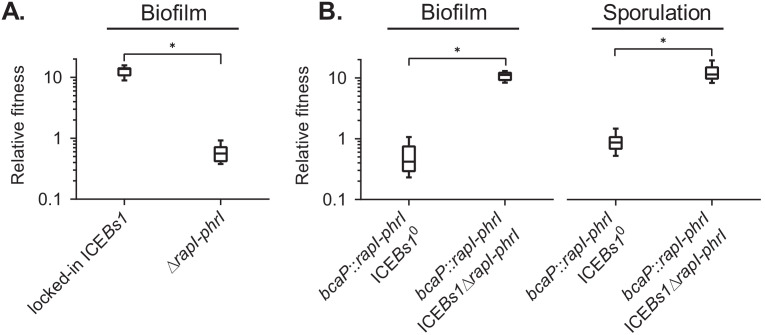
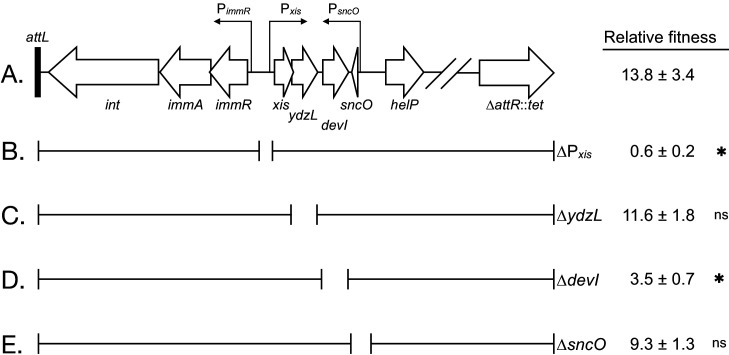
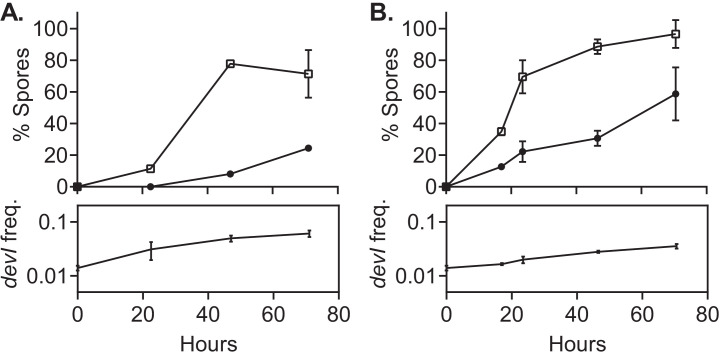
Horizontal gene transfer is a major force in bacterial evolution. Mobile genetic elements are responsible for much of horizontal gene transfer and also carry beneficial cargo genes. Uncovering strategies used by mobile genetic elements to benefit host cells is crucial for understanding their stability and spread in populations. We describe a benefit that ICE, an integrative and conjugative element of , provides to its host cells. Activation of ICE conferred a frequency-dependent selective advantage to host cells during two different developmental processes: biofilm formation and sporulation. These benefits were due to inhibition of biofilm-associated gene expression and delayed sporulation by ICE-containing cells, enabling them to exploit their neighbors and grow more prior to development. A single ICE gene, (formerly ), was both necessary and sufficient for inhibition of development. Manipulation of host developmental programs allows ICE to increase host fitness, thereby increasing propagation of the element.
水平基因转移是细菌进化的主要力量。移动遗传元件是导致水平基因转移的主要原因,同时也携带有益的货物基因。揭示移动遗传元件利用宿主细胞的策略对于理解它们在种群中的稳定性和传播至关重要。我们描述了一个整合和共轭元件(ICE)为其宿主细胞提供的好处。在两个不同的发育过程中:生物膜形成和孢子形成,ICE 的激活赋予了宿主细胞频率依赖性的选择优势。这些好处归因于 ICE 含有细胞抑制生物膜相关基因表达和延迟孢子形成,使它们能够利用其邻居并在发育之前更多地生长。单个 ICE 基因(以前称为)对于抑制发育是必要和充分的。操纵宿主发育程序允许 ICE 增加宿主适应性,从而增加元件的传播。