Department of General Surgery and Specialties, University Federico II of Naples, Naples, Italy.
Department of Emergency Surgery, Policlinico Universitario Di Monserrato, Azienda Ospedaliero-Universitaria Di Cagliari, Cagliari, Italy.
Updates Surg. 2021 Apr;73(2):731-744. doi: 10.1007/s13304-021-01010-w. Epub 2021 Mar 3.
The spread of the SARS-CoV2 virus, which causes COVID-19 disease, profoundly impacted the surgical community. Recommendations have been published to manage patients needing surgery during the COVID-19 pandemic. This survey, under the aegis of the Italian Society of Endoscopic Surgery, aims to analyze how Italian surgeons have changed their practice during the pandemic.
The authors designed an online survey that was circulated for completion to the Italian departments of general surgery registered in the Italian Ministry of Health database in December 2020. Questions were divided into three sections: hospital organization, screening policies, and safety profile of the surgical operation. The investigation periods were divided into the Italian pandemic phases I (March-May 2020), II (June-September 2020), and III (October-December 2020).
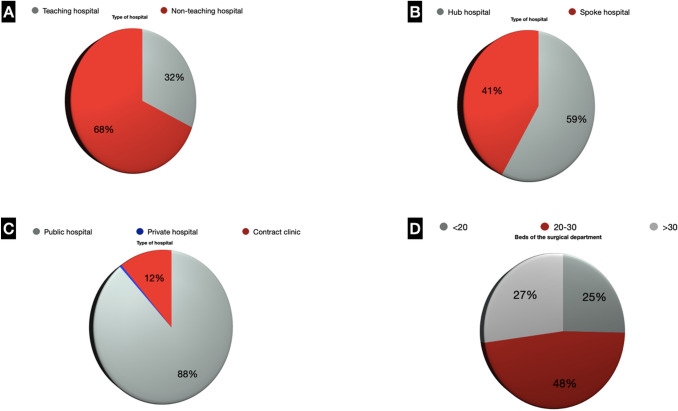
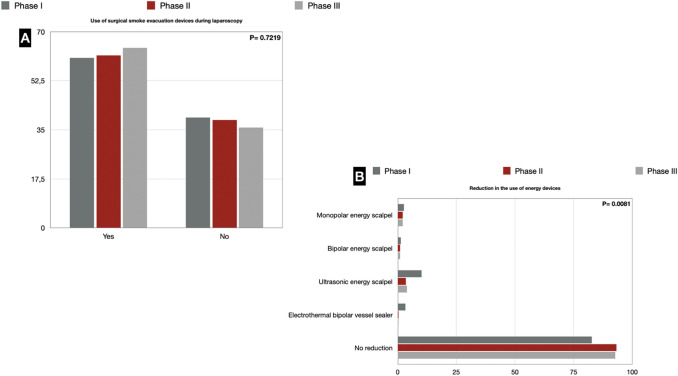
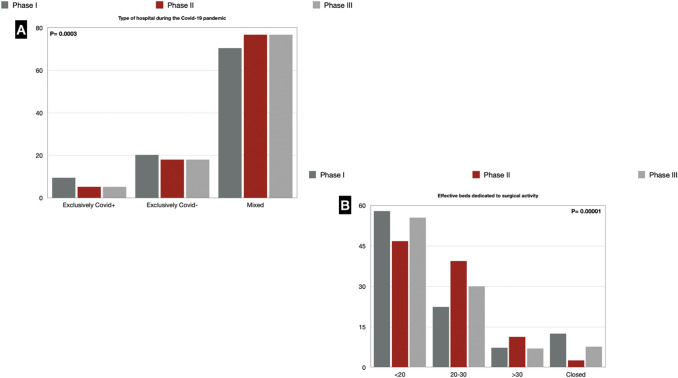
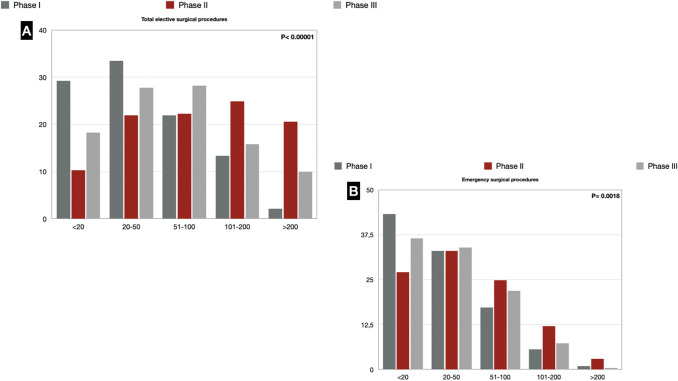
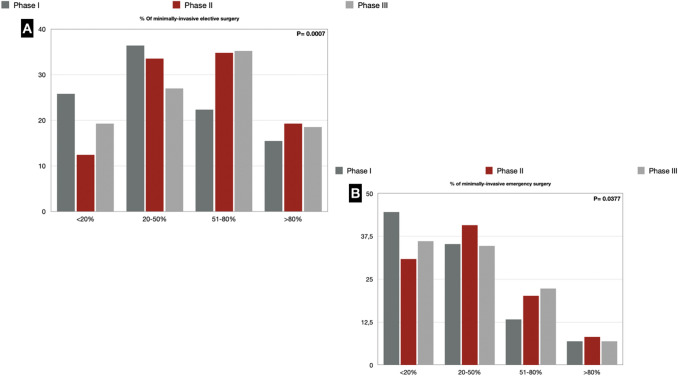
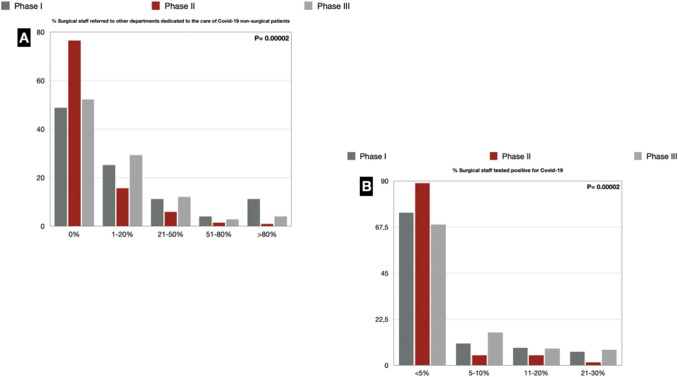
Of 447 invited departments, 226 answered the survey. Most hospitals were treating both COVID-19-positive and -negative patients. The reduction in effective beds dedicated to surgical activity was significant, affecting 59% of the responding units. 12.4% of the respondents in phase I, 2.6% in phase II, and 7.7% in phase III reported that their surgical unit had been closed. 51.4%, 23.5%, and 47.8% of the respondents had at least one colleague reassigned to non-surgical COVID-19 activities during the three phases. There has been a reduction in elective (> 200 procedures: 2.1%, 20.6% and 9.9% in the three phases, respectively) and emergency (< 20 procedures: 43.3%, 27.1%, 36.5% in the three phases, respectively) surgical activity. The use of laparoscopy also had a setback in phase I (25.8% performed less than 20% of elective procedures through laparoscopy). 60.6% of the respondents used a smoke evacuation device during laparoscopy in phase I, 61.6% in phase II, and 64.2% in phase III. Almost all responders (82.8% vs. 93.2% vs. 92.7%) in each analyzed period did not modify or reduce the use of high-energy devices.
This survey offers three faithful snapshots of how the surgical community has reacted to the COVID-19 pandemic during its three phases. The significant reduction in surgical activity indicates that better health policies and more evidence-based guidelines are needed to make up for lost time and surgery not performed during the pandemic.
导致 COVID-19 疾病的 SARS-CoV2 病毒的传播对外科界产生了深远的影响。已经发布了有关在 COVID-19 大流行期间管理需要手术的患者的建议。这项调查是在意大利内窥镜外科学会的支持下进行的,旨在分析意大利外科医生在大流行期间如何改变他们的实践。
作者设计了一份在线调查,该调查于 2020 年 12 月分发给意大利卫生部数据库中注册的普通外科意大利部门。问题分为三个部分:医院组织、筛查政策和手术安全状况。调查期间分为意大利大流行阶段 I(2020 年 3 月至 5 月)、阶段 II(2020 年 6 月至 9 月)和阶段 III(2020 年 10 月至 12 月)。
在 447 个受邀部门中,有 226 个部门回答了调查。大多数医院都在治疗 COVID-19 阳性和阴性患者。专门用于外科活动的有效床位减少了 59%,影响了 59%的答复单位。在第一阶段,有 12.4%的受访者、第二阶段有 2.6%的受访者和第三阶段有 7.7%的受访者报告说他们的外科病房已经关闭。在三个阶段中,分别有 51.4%、23.5%和 47.8%的受访者至少有一位同事被重新分配到非外科 COVID-19 活动中。择期手术(>200 例:三个阶段分别为 2.1%、20.6%和 9.9%)和急诊手术(<20 例:三个阶段分别为 43.3%、27.1%和 36.5%)的手术活动有所减少。腹腔镜的使用在第一阶段也有所倒退(25.8%的患者通过腹腔镜进行的择期手术不到 20%)。第一阶段有 60.6%的受访者在腹腔镜手术中使用烟雾排空装置,第二阶段有 61.6%,第三阶段有 64.2%。在每个分析阶段,几乎所有受访者(82.8%比 93.2%比 92.7%)都没有修改或减少高能设备的使用。
这项调查提供了外科界在大流行的三个阶段中应对 COVID-19 大流行的三个真实快照。外科活动的显著减少表明,需要更好的卫生政策和更多基于证据的指南来弥补失去的时间和大流行期间未进行的手术。