Phan Thu, Fay Elizabeth J, Lee Zion, Aron Stephanie, Hu Wei-Shou, Langlois Ryan A
Department of Chemical Engineering and Materials Sciences, University of Minnesota, Minneapolis, MN, United States of America.
Biochemistry, Molecular Biology and Biophysics Graduate Program, University of Minnesota, Minneapolis MN, United States of America.
J Virol. 2021 Apr 26;95(10). doi: 10.1128/JVI.02102-20. Epub 2021 Mar 3.
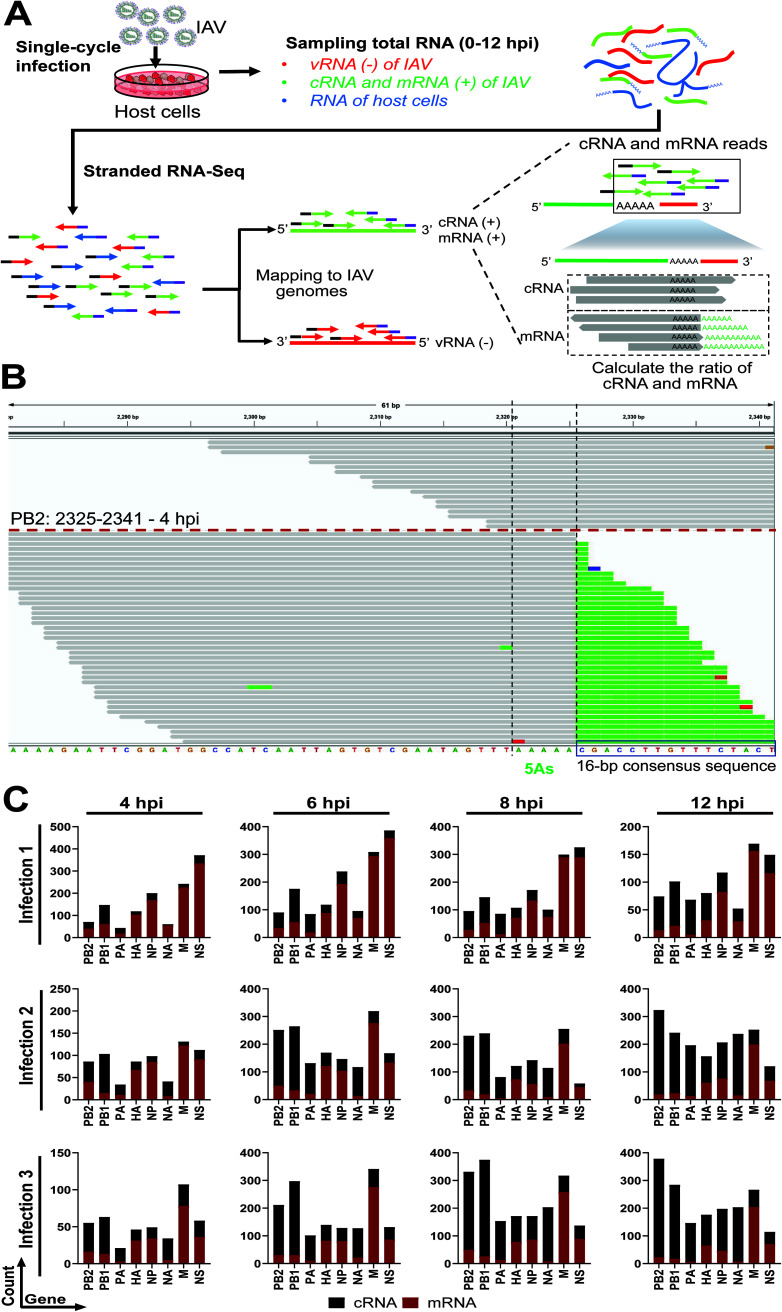
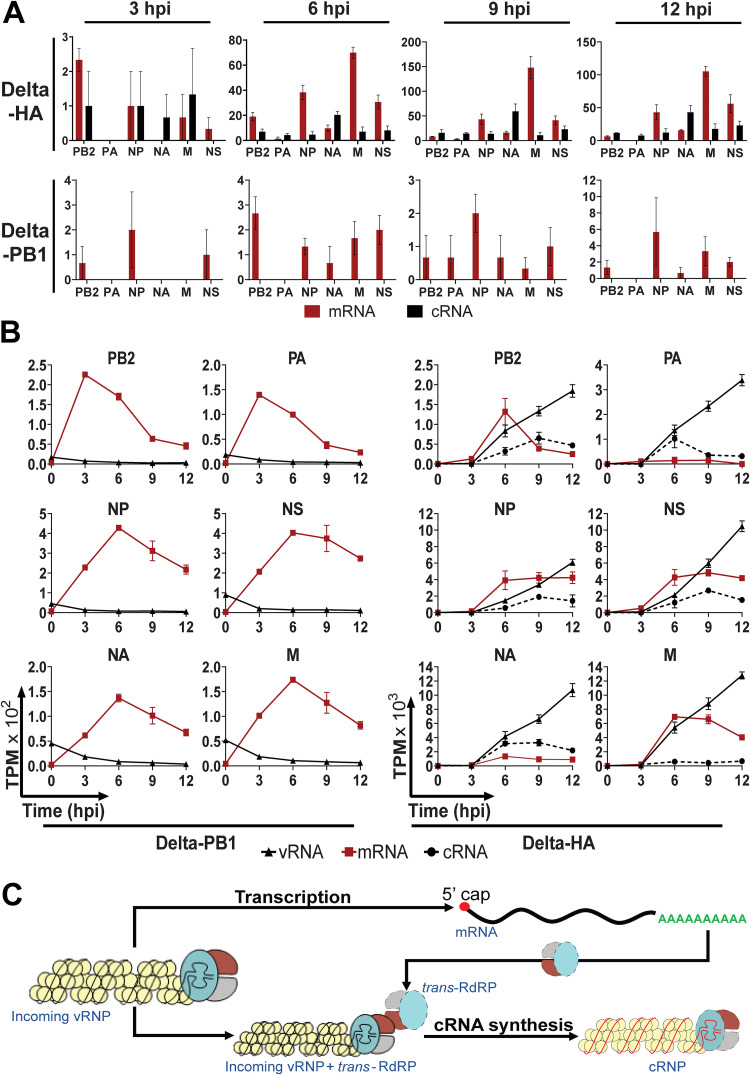
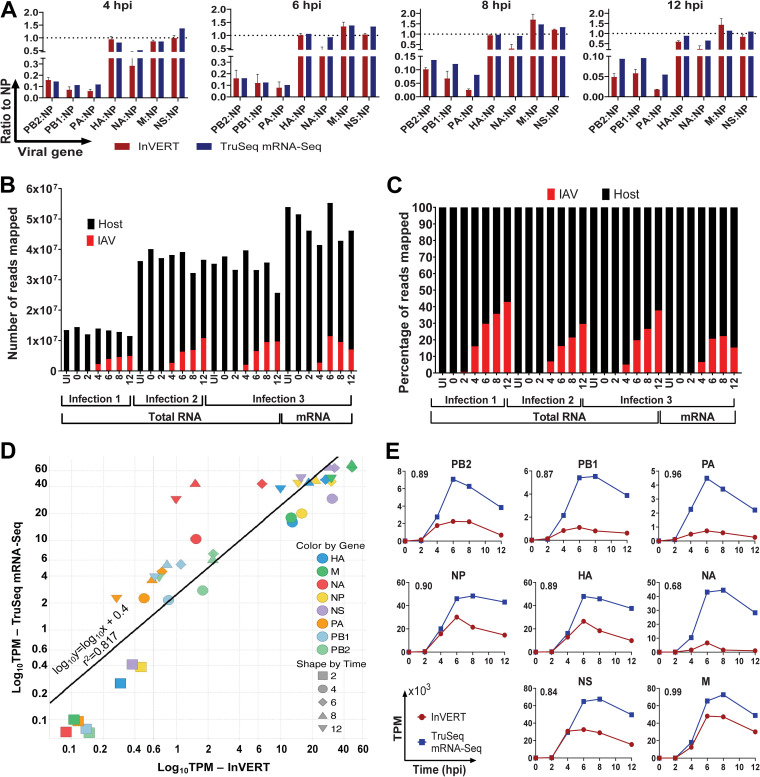
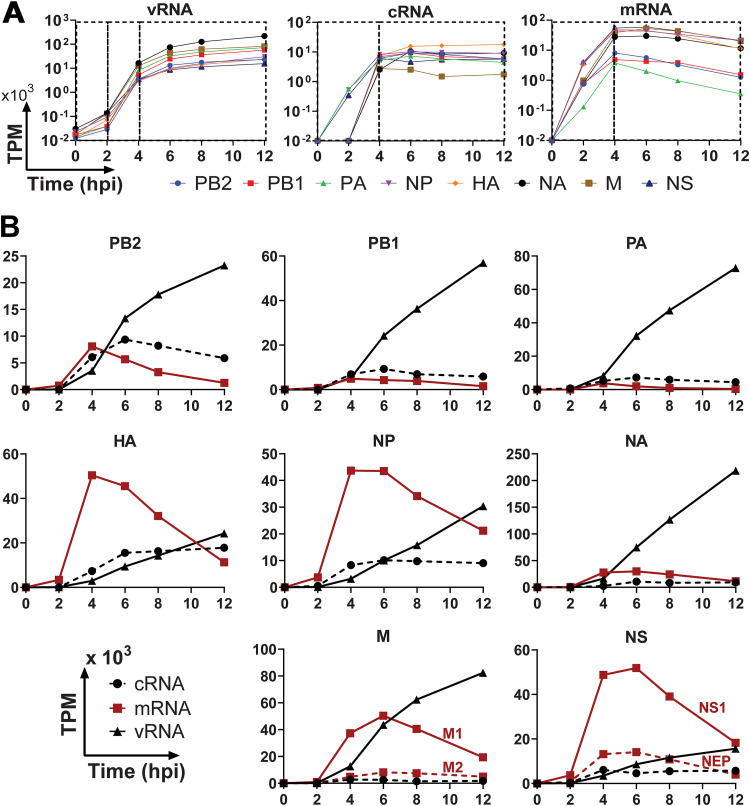
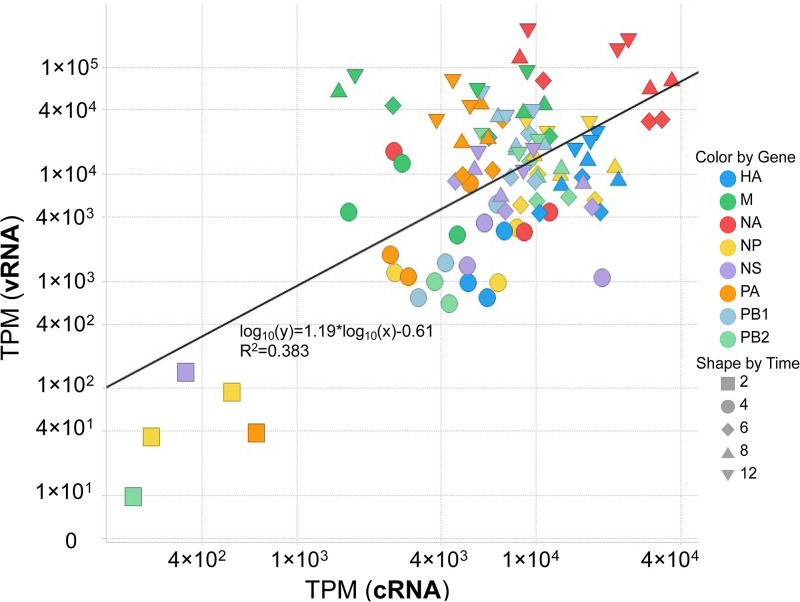
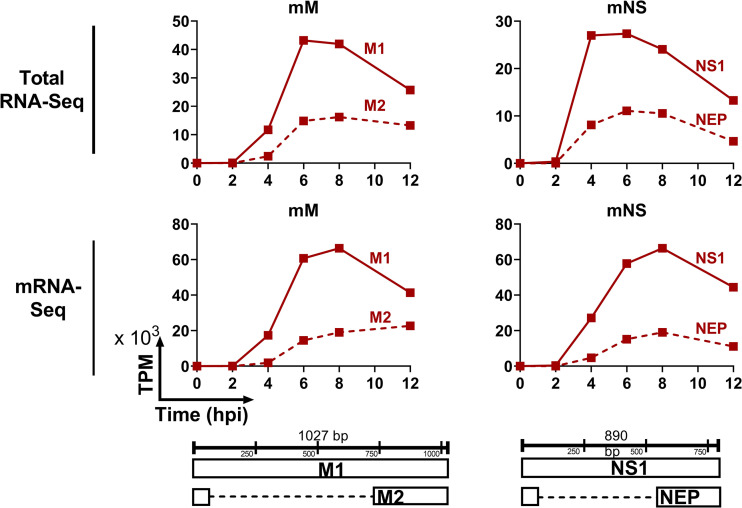
Influenza A virus (IAV) is a segmented negative-sense RNA virus and is the cause of major epidemics and pandemics. The replication of IAV is complex, involving the production of three distinct RNA species; mRNA, cRNA, and vRNA for all eight genome segments. While understanding IAV replication kinetics is important for drug development and improving vaccine production, current methods for studying IAV kinetics has been limited by the ability to detect all three different RNA species in a scalable manner. Here we report the development of a novel pipeline using total stranded RNA-Seq, which we named Influenza Virus Enumerator of RNA Transcripts (InVERT), that allows for the simultaneous quantification of all three RNA species produced by IAV. Using InVERT, we provide a full landscape of the IAV replication kinetics and found that different groups of viral genes follow different kinetics. The segments coding for RNA-dependent RNA Polymerase (RdRP) produced more vRNA than mRNA while some other segments (NP, NS, HA) consistently made more mRNA than vRNA. vRNA expression levels did not correlate with cRNA expression, suggesting complex regulation of vRNA synthesis. Furthermore, by studying the kinetics of a virus lacking the capacity to generate new polymerase complexes, we found evidence that further supports the model that cRNA synthesis requires newly synthesized RdRP and that incoming RdRP can only generate mRNA. Overall, InVERT is a powerful tool for quantifying IAV RNA species to elucidate key features of IAV replication.Influenza A virus (IAV) is a respiratory pathogen that has caused significant mortality throughout history and remains a global threat to human health. Although much is known about IAV replication, the regulation of IAV replication dynamics is not completely understood. This is due in part to both technical limitations and the complexity of the virus replication, which has a segmented genome and produces three distinct RNA species for each gene segment. We developed a new approach that allows the methodical study of IAV replication kinetics, shedding light on many interesting features of IAV replication biology. This study advances our understanding of the kinetics of IAV replication and will help to facilitate future research in the field.
甲型流感病毒(IAV)是一种分节段的负链RNA病毒,是重大流行病和大流行的病原体。IAV的复制过程复杂,涉及产生三种不同的RNA种类:所有八个基因组节段的信使核糖核酸(mRNA)、互补核糖核酸(cRNA)和病毒核糖核酸(vRNA)。虽然了解IAV复制动力学对药物开发和改进疫苗生产很重要,但目前研究IAV动力学的方法受到以可扩展方式检测所有三种不同RNA种类能力的限制。在此,我们报告了一种使用全链RNA测序的新型流程的开发,我们将其命名为RNA转录本流感病毒计数法(InVERT),该方法能够同时定量IAV产生的所有三种RNA种类。使用InVERT,我们提供了IAV复制动力学的全貌,并发现不同组的病毒基因遵循不同的动力学。编码RNA依赖性RNA聚合酶(RdRP)的节段产生的vRNA比mRNA多,而其他一些节段(核蛋白(NP)、非结构蛋白(NS)、血凝素(HA))产生的mRNA始终比vRNA多。vRNA表达水平与cRNA表达不相关,表明vRNA合成存在复杂调控。此外,通过研究缺乏产生新聚合酶复合物能力的病毒的动力学,我们发现了进一步支持该模型的证据,即cRNA合成需要新合成的RdRP,而进入的RdRP只能产生mRNA。总体而言,InVERT是一种用于定量IAV RNA种类以阐明IAV复制关键特征的强大工具。甲型流感病毒(IAV)是一种呼吸道病原体,在历史上已导致大量死亡,并且仍然是对人类健康的全球威胁。尽管对IAV复制了解很多,但对IAV复制动态的调控尚未完全理解。这部分是由于技术限制和病毒复制的复杂性,其具有分节段基因组,并且每个基因节段产生三种不同的RNA种类。我们开发了一种新方法,能够系统地研究IAV复制动力学,揭示了IAV复制生物学的许多有趣特征。这项研究推进了我们对IAV复制动力学的理解,并将有助于推动该领域未来的研究。