Department of Microbiology, University of Illinois at Urbana-Champaign, Urbana, Illinois, United States of America.
Carl R. Woese Institute for Genomic Biology, University of Illinois at Urbana-Champaign, Urbana, Illinois, United States of America.
PLoS Pathog. 2020 Jul 2;16(7):e1008671. doi: 10.1371/journal.ppat.1008671. eCollection 2020 Jul.
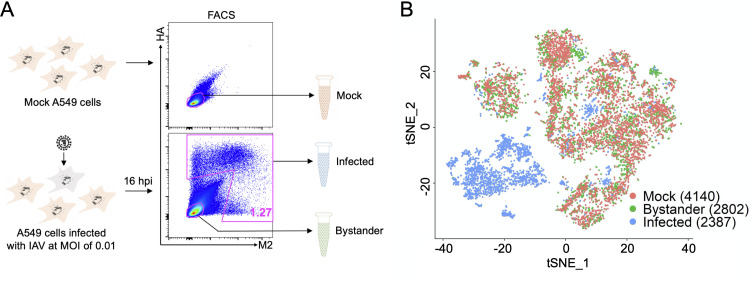
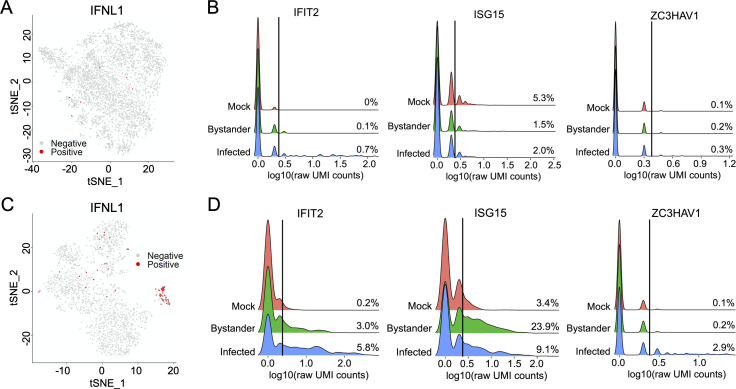
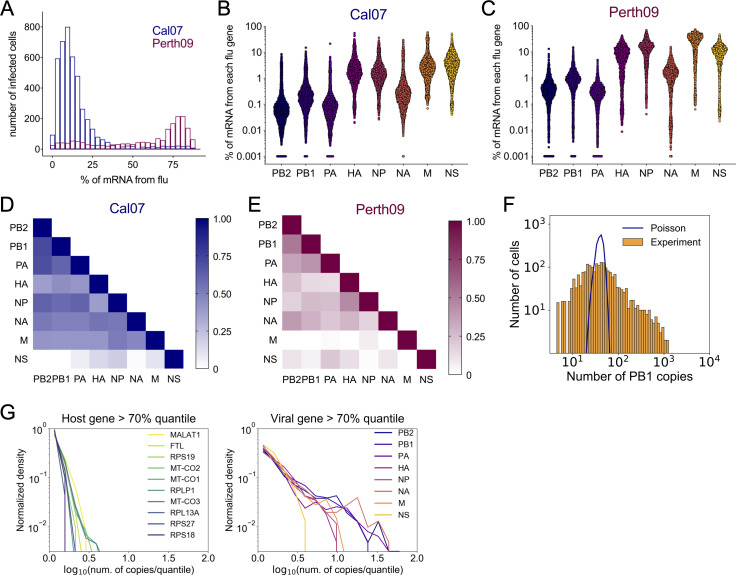
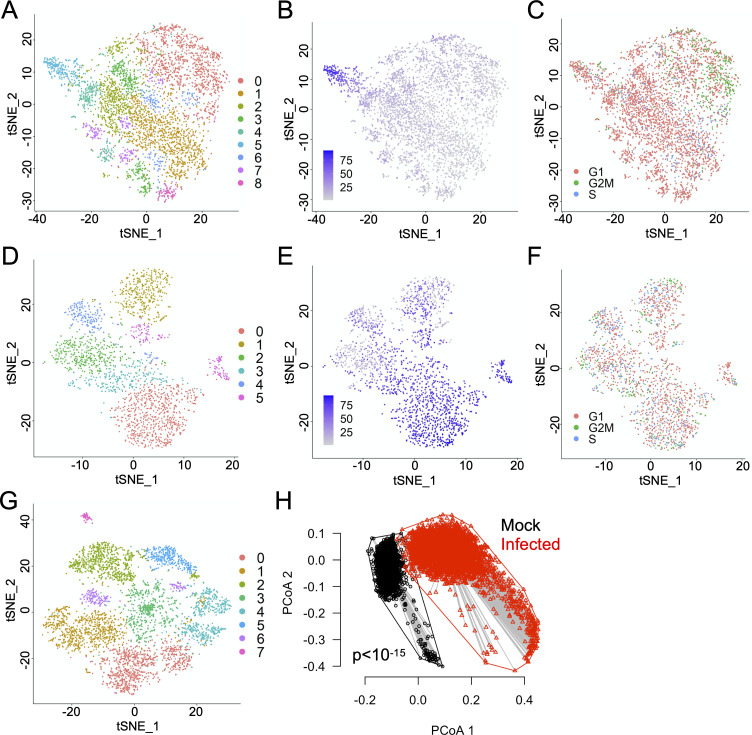
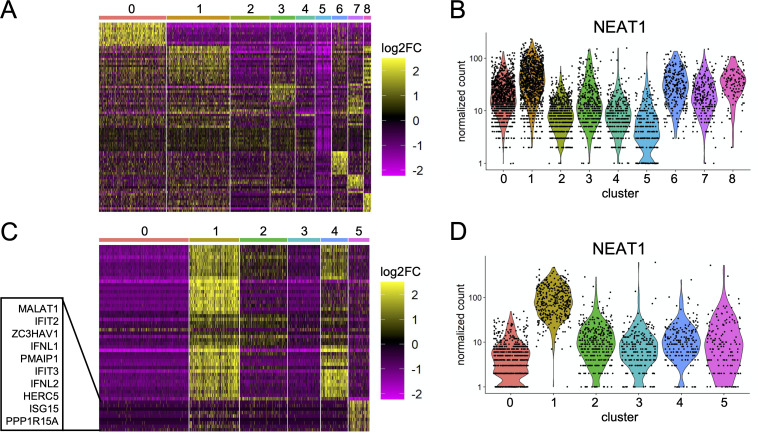
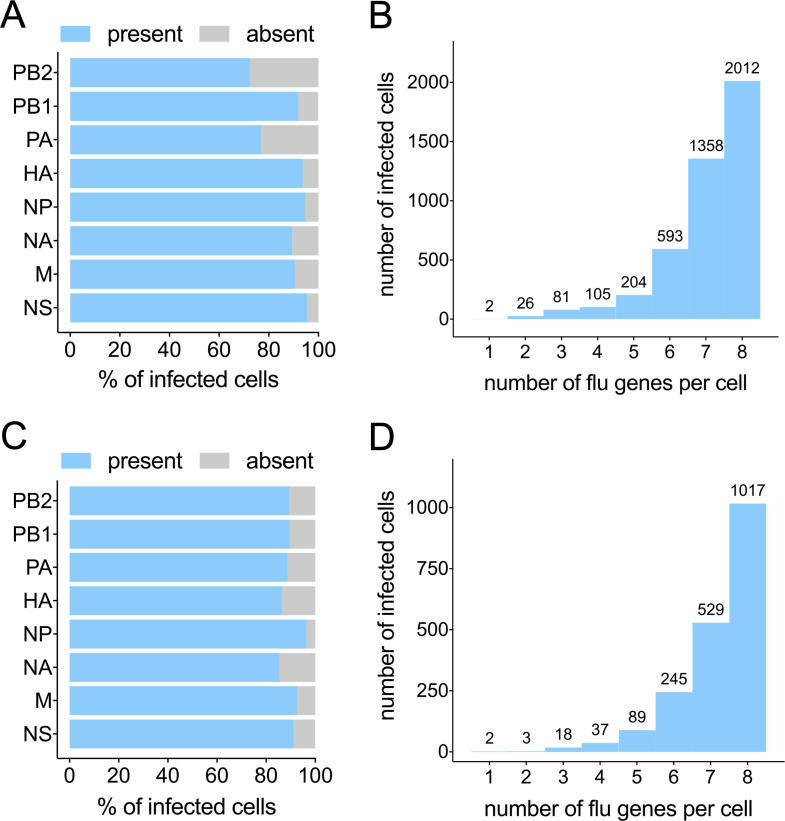
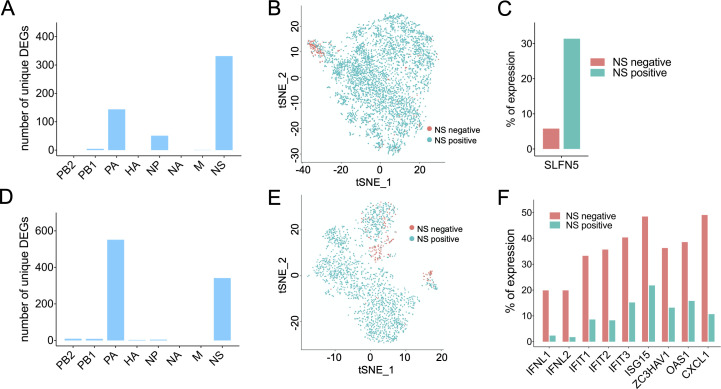
Viral infection outcomes are governed by the complex and dynamic interplay between the infecting virus population and the host response. It is increasingly clear that both viral and host cell populations are highly heterogeneous, but little is known about how this heterogeneity influences infection dynamics or viral pathogenicity. To dissect the interactions between influenza A virus (IAV) and host cell heterogeneity, we examined the combined host and viral transcriptomes of thousands of individual cells, each infected with a single IAV virion. We observed complex patterns of viral gene expression and the existence of multiple distinct host transcriptional responses to infection at the single cell level. We show that human H1N1 and H3N2 strains differ significantly in patterns of both viral and host anti-viral gene transcriptional heterogeneity at the single cell level. Our analyses also reveal that semi-infectious particles that fail to express the viral NS can play a dominant role in triggering the innate anti-viral response to infection. Altogether, these data reveal how patterns of viral population heterogeneity can serve as a major determinant of antiviral gene activation.
病毒感染的结果是由感染病毒群体和宿主反应之间复杂而动态的相互作用决定的。越来越明显的是,病毒和宿主细胞群体都高度异质,但对于这种异质性如何影响感染动力学或病毒致病性知之甚少。为了剖析甲型流感病毒(IAV)与宿主细胞异质性之间的相互作用,我们检测了数千个单个细胞的病毒和宿主转录组,每个细胞都感染了一个单一的 IAV 病毒粒子。我们观察到在单细胞水平上,病毒基因表达存在复杂的模式,以及感染后宿主转录反应的多种不同模式。我们表明,在单细胞水平上,人源 H1N1 和 H3N2 株在病毒和宿主抗病毒基因转录异质性的模式上存在显著差异。我们的分析还揭示了未能表达病毒 NS 的半感染性颗粒在触发感染后先天抗病毒反应方面可以发挥主导作用。总之,这些数据揭示了病毒群体异质性的模式如何成为抗病毒基因激活的主要决定因素。