Princess Máxima Center for Pediatric Oncology, 3584CS, Utrecht, the Netherlands.
Oncode Institute, 3584CS, Utrecht, the Netherlands.
Nat Commun. 2021 Mar 3;12(1):1407. doi: 10.1038/s41467-021-21675-6.
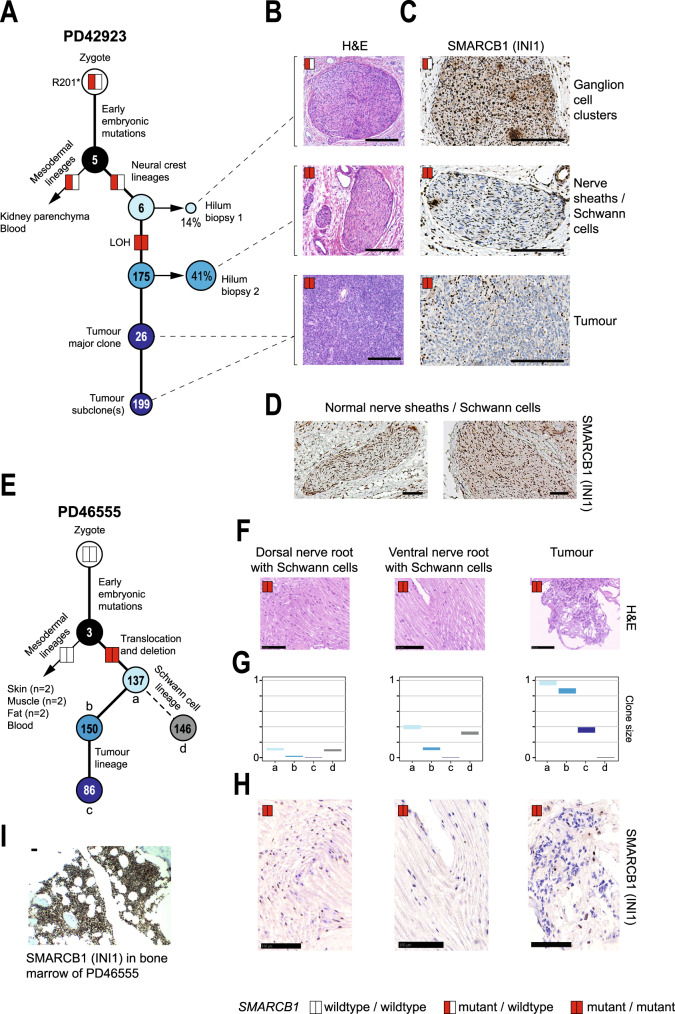
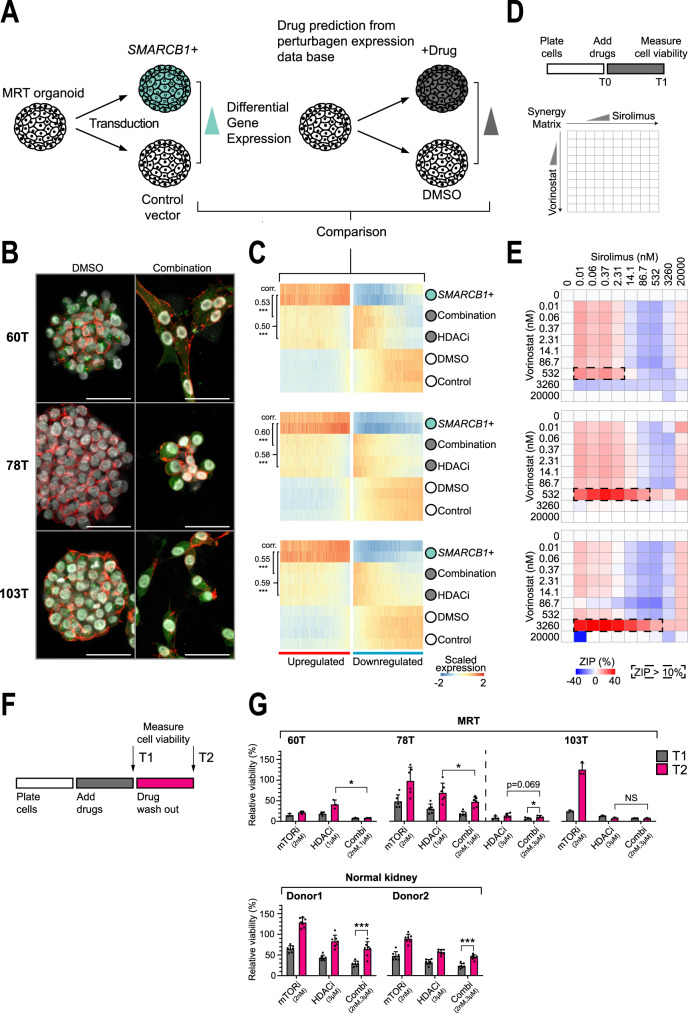
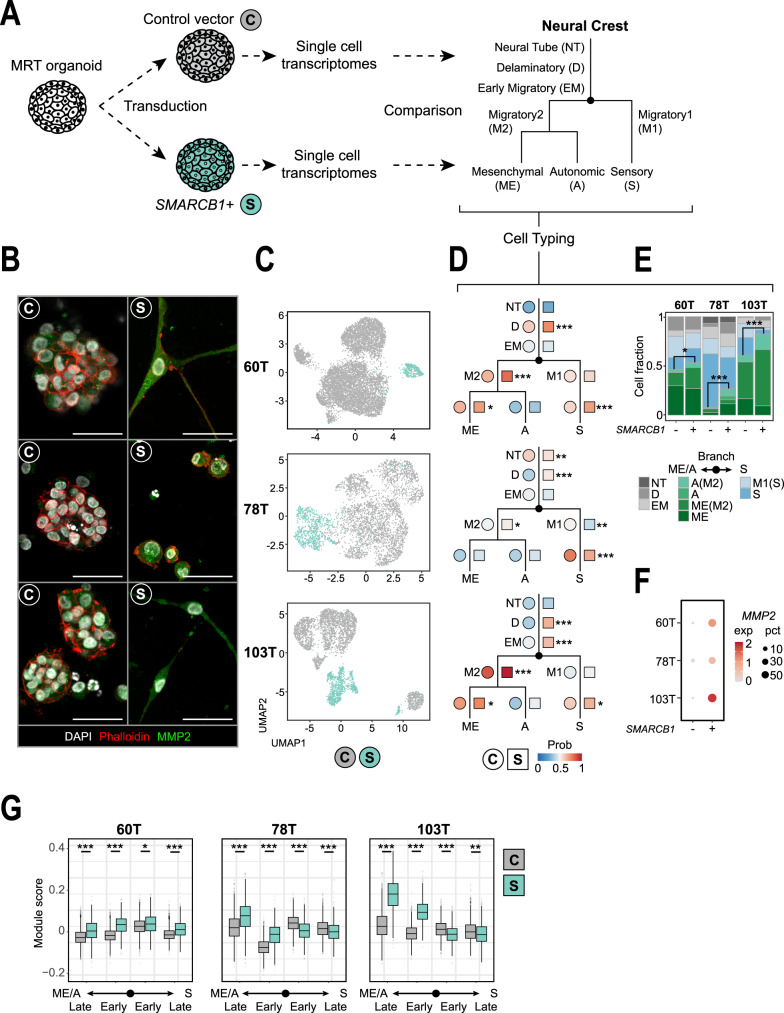
Malignant rhabdoid tumour (MRT) is an often lethal childhood cancer that, like many paediatric tumours, is thought to arise from aberrant fetal development. The embryonic root and differentiation pathways underpinning MRT are not firmly established. Here, we study the origin of MRT by combining phylogenetic analyses and single-cell mRNA studies in patient-derived organoids. Comparison of somatic mutations shared between cancer and surrounding normal tissues places MRT in a lineage with neural crest-derived Schwann cells. Single-cell mRNA readouts of MRT differentiation, which we examine by reverting the genetic driver mutation underpinning MRT, SMARCB1 loss, suggest that cells are blocked en route to differentiating into mesenchyme. Quantitative transcriptional predictions indicate that combined HDAC and mTOR inhibition mimic MRT differentiation, which we confirm experimentally. Our study defines the developmental block of MRT and reveals potential differentiation therapies.
横纹肌肉瘤(MRT)是一种常见的致命性儿童癌症,与许多儿科肿瘤一样,被认为起源于异常的胎儿发育。MRT 所依赖的胚胎起源和分化途径尚未明确。在这里,我们通过结合基于患者来源的类器官的系统发生分析和单细胞 mRNA 研究来研究 MRT 的起源。比较癌症与周围正常组织之间共享的体细胞突变,将 MRT 置于与神经嵴衍生的施万细胞相关的谱系中。我们通过逆转导致 MRT 的遗传驱动突变(SMARCB1 缺失)来研究 MRT 的分化的单细胞 mRNA 读数表明,细胞在向间充质分化的过程中受阻。定量转录预测表明,联合使用 HDAC 和 mTOR 抑制剂可模拟 MRT 分化,我们通过实验证实了这一点。我们的研究定义了 MRT 的发育障碍,并揭示了潜在的分化治疗方法。