Department of Surgery, Iwate Medical University School of Medicine, Iwate, Japan.
Department of Surgery, Iwate Prefectural Kuji Hospital, Iwate, Japan.
Br J Cancer. 2021 Apr;124(9):1556-1565. doi: 10.1038/s41416-021-01266-4. Epub 2021 Mar 3.
Circulating tumour DNA (ctDNA) is known as a tumour-specific personalised biomarker, but the mutation-selection criteria from heterogeneous tumours remain a challenge.
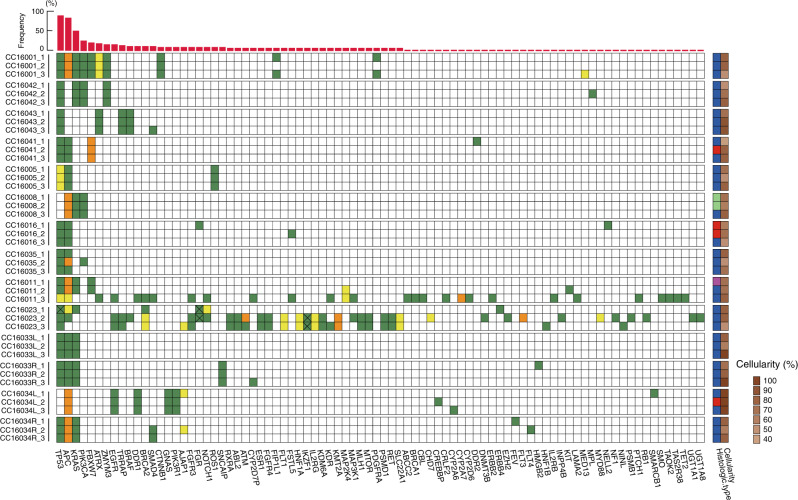
We conducted multiregional sequencing of 42 specimens from 14 colorectal tumours of 12 patients, including two double-cancer cases, to identify mutational heterogeneity to develop personalised ctDNA assays using 175 plasma samples.
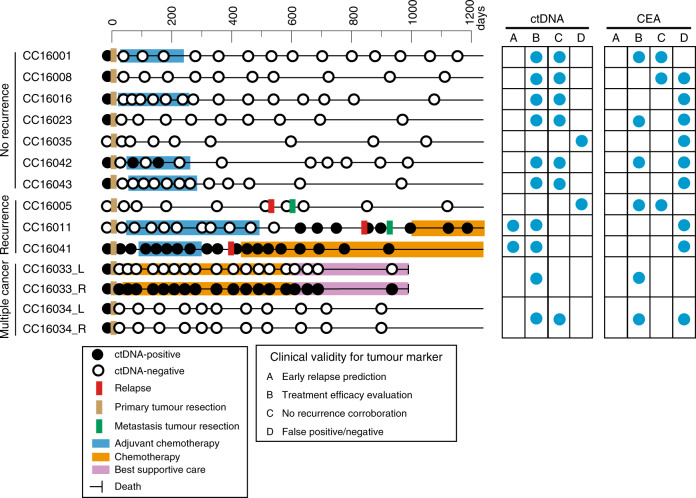
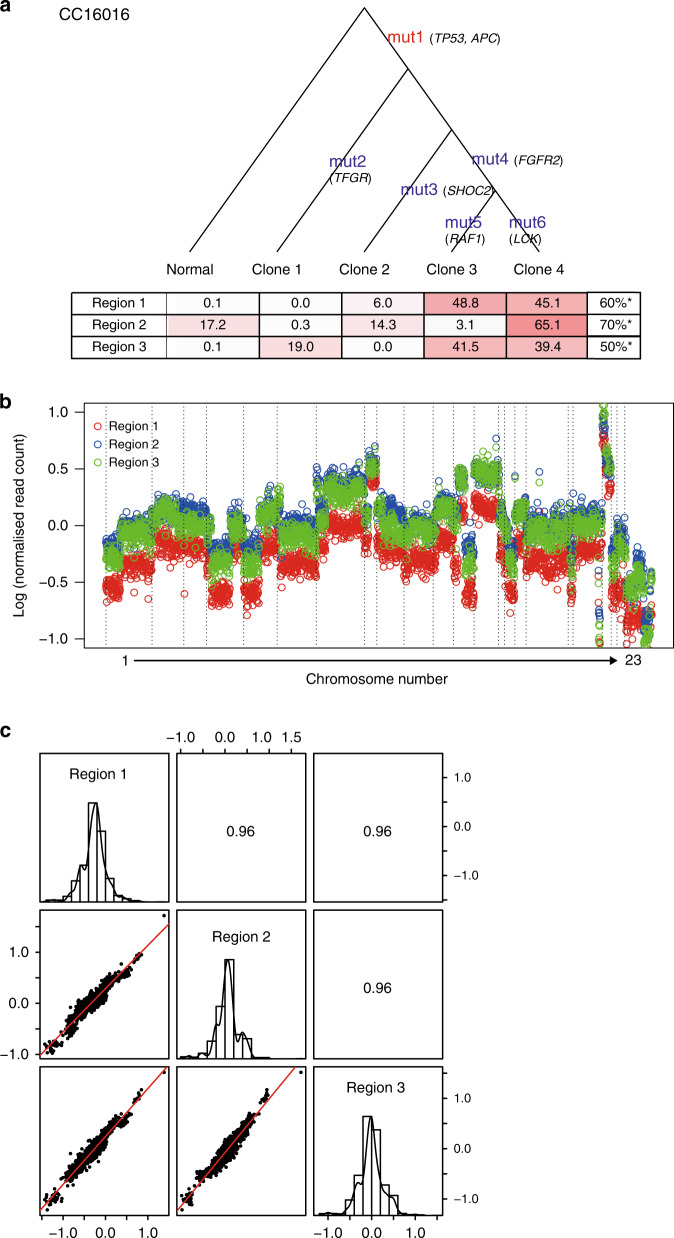
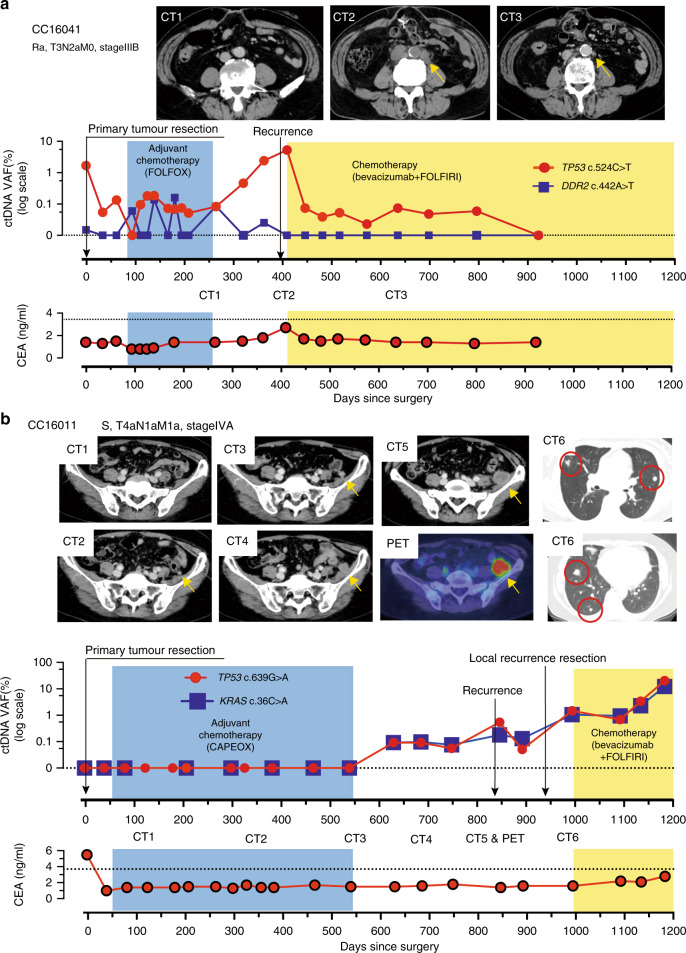
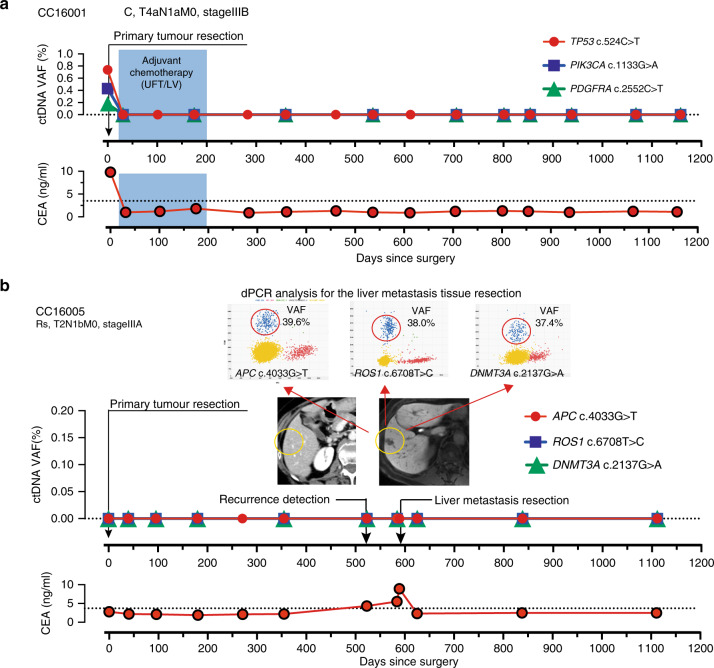
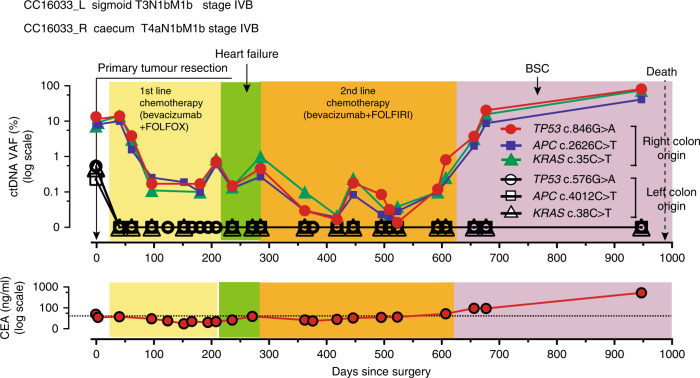
"Founder" mutations, defined as a mutation that is present in all regions of the tumour in a binary manner (i.e., present or absent), were identified in 12/14 tumours. In contrast, "truncal" mutations, which are the first mutation that occurs prior to the divergence of branches in the phylogenetic tree using variant allele frequency (VAF) as continuous variables, were identified in 12/14 tumours. Two tumours without founder and truncal mutations were hypermutators. Most founder and truncal mutations exhibited higher VAFs than "non-founder" and "branch" mutations, resulting in a high chance to be detected in ctDNA. In post-operative long-term observation for 10/12 patients, early relapse prediction, treatment efficacy and non-relapse corroboration were achievable from frequent ctDNA monitoring.
A single biopsy is sufficient to develop custom dPCR probes for monitoring tumour burden in most CRC patients. However, it may not be effective for those with hypermutated tumours.
循环肿瘤 DNA(ctDNA)被认为是一种肿瘤特异性的个体化生物标志物,但来自异质性肿瘤的突变选择标准仍然是一个挑战。
我们对 12 名患者的 14 个结直肠肿瘤的 42 个标本进行了多区域测序,包括两个双癌病例,以确定突变异质性,并使用 175 个血浆样本开发个体化的 ctDNA 检测。
在 14 个肿瘤中,确定了 12 个肿瘤存在“创始”突变,定义为以二元方式(即存在或不存在)存在于肿瘤所有区域的突变。相比之下,在 14 个肿瘤中,“主干”突变被确定为在使用变异等位基因频率(VAF)作为连续变量的系统发育树的分支分歧之前首先发生的突变。两个没有创始和主干突变的肿瘤是高突变者。大多数创始和主干突变的 VAF 高于“非创始”和“分支”突变,因此在 ctDNA 中检测到的可能性较高。在对 10/12 名患者进行的术后长期观察中,通过频繁的 ctDNA 监测可以实现早期复发预测、治疗效果和非复发证实。
对于大多数 CRC 患者,单次活检足以开发用于监测肿瘤负担的定制 dPCR 探针。然而,对于那些高突变肿瘤的患者,可能效果不佳。