Department of General, Visceral and Pediatric Surgery, University Medical Center Göttingen, Göttingen, Germany.
Department of Gastroenterological Surgery, Graduate School of Medicine, Osaka University, Osaka, Japan.
Cell Death Differ. 2021 Jul;28(7):2207-2220. doi: 10.1038/s41418-021-00751-w. Epub 2021 Mar 3.
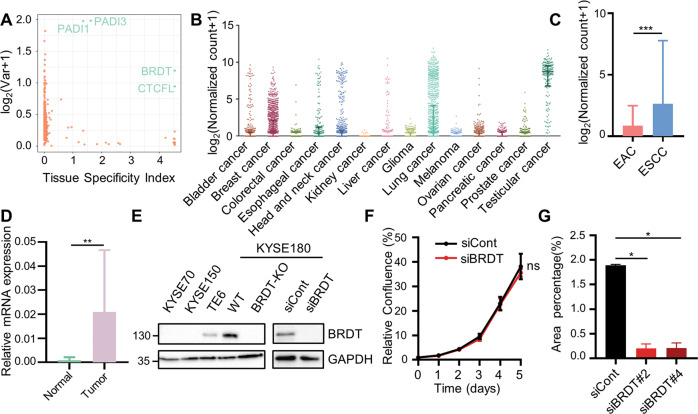
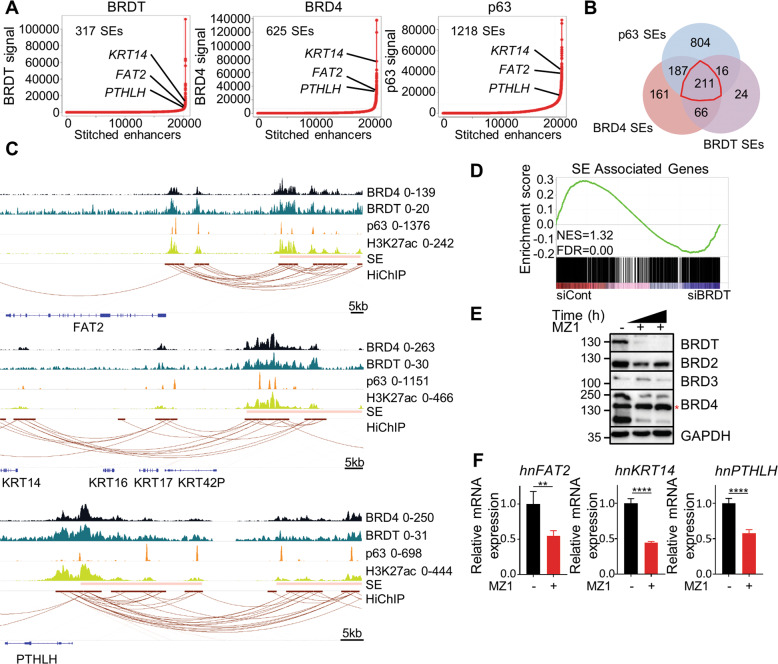
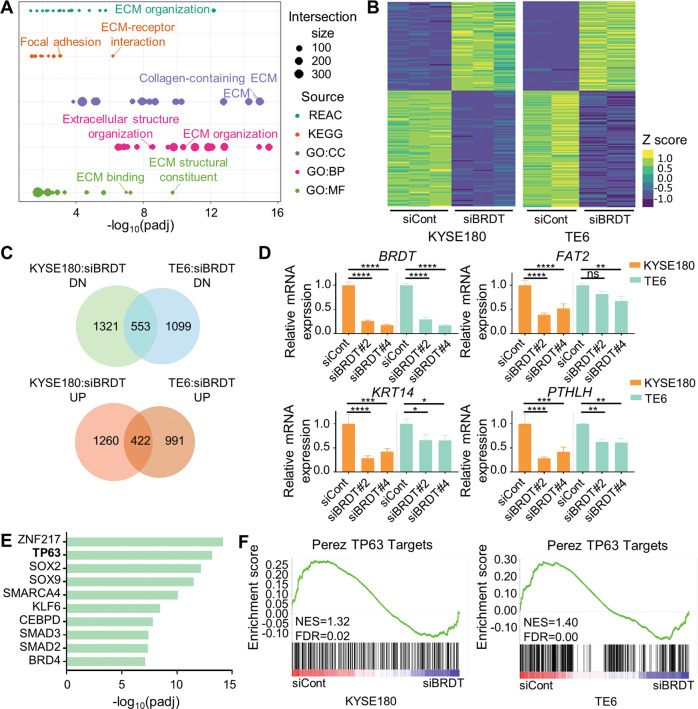
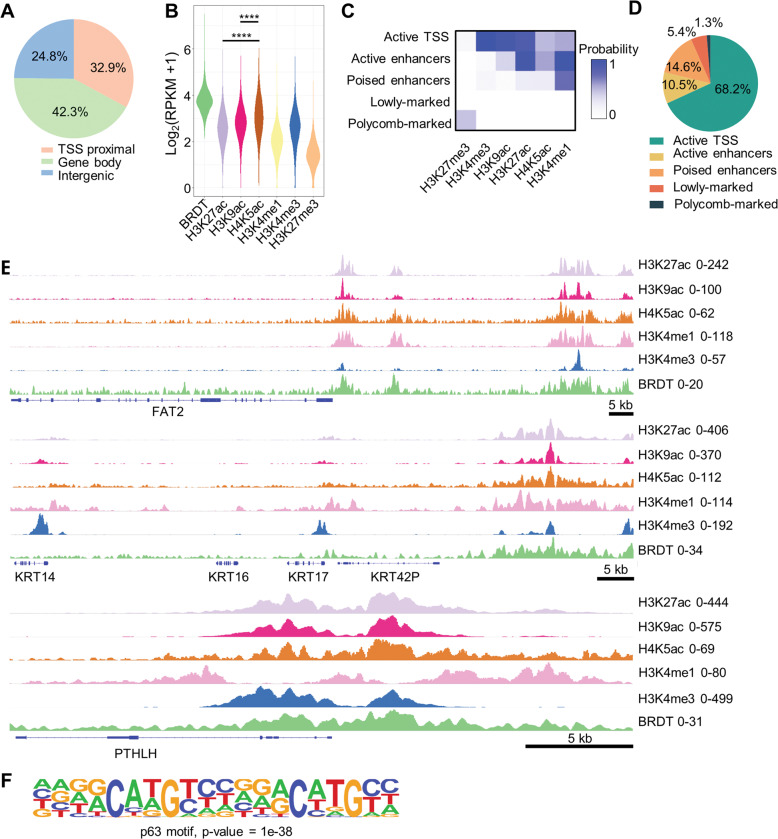
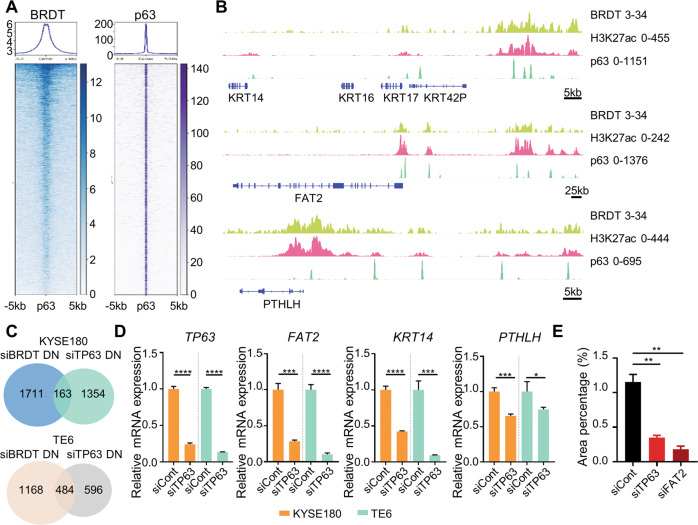
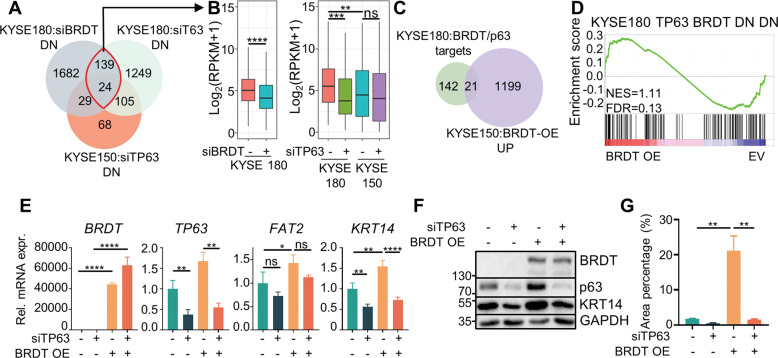
Esophageal squamous cell carcinoma (ESCC) is the predominant subtype of esophageal cancer with a particularly high prevalence in certain geographical regions and a poor prognosis with a 5-year survival rate of 15-25%. Despite numerous studies characterizing the genetic and transcriptomic landscape of ESCC, there are currently no effective targeted therapies. In this study, we used an unbiased screening approach to uncover novel molecular precision oncology targets for ESCC and identified the bromodomain and extraterminal (BET) family member bromodomain testis-specific protein (BRDT) to be uniquely expressed in a subgroup of ESCC. Experimental studies revealed that BRDT expression promotes migration but is dispensable for cell proliferation. Further mechanistic insight was gained through transcriptome analyses, which revealed that BRDT controls the expression of a subset of ΔNp63 target genes. Epigenome and genome-wide occupancy studies, combined with genome-wide chromatin interaction studies, revealed that BRDT colocalizes and interacts with ΔNp63 to drive a unique transcriptional program and modulate cell phenotype. Our data demonstrate that these genomic regions are enriched for super-enhancers that loop to critical ΔNp63 target genes related to the squamous phenotype such as KRT14, FAT2, and PTHLH. Interestingly, BET proteolysis-targeting chimera, MZ1, reversed the activation of these genes. Importantly, we observed a preferential degradation of BRDT by MZ1 compared with BRD2, BRD3, and BRD4. Taken together, these findings reveal a previously unknown function of BRDT in ESCC and provide a proof-of-concept that BRDT may represent a novel therapeutic target in cancer.
食管鳞状细胞癌(ESCC)是食管癌的主要亚型,在某些地理区域特别普遍,预后较差,5 年生存率为 15-25%。尽管有许多研究描述了 ESCC 的遗传和转录组景观,但目前尚无有效的靶向治疗方法。在这项研究中,我们使用了一种无偏见的筛选方法,发现了 ESCC 的新分子精准肿瘤学靶点,并确定了溴结构域和末端(BET)家族成员睾丸特异性溴结构域蛋白(BRDT)在 ESCC 的亚组中独特表达。实验研究表明,BRDT 表达促进迁移,但对细胞增殖不是必需的。通过转录组分析获得了进一步的机制见解,该分析表明 BRDT 控制一组 ΔNp63 靶基因的表达。表观基因组和全基因组占据研究,结合全基因组染色质相互作用研究,揭示了 BRDT 与 ΔNp63 共定位并相互作用,以驱动独特的转录程序并调节细胞表型。我们的数据表明,这些基因组区域富含超级增强子,这些超级增强子与关键的 ΔNp63 靶基因环化,这些靶基因与鳞状表型有关,如 KRT14、FAT2 和 PTHLH。有趣的是,BET 蛋白水解靶向嵌合体 MZ1 逆转了这些基因的激活。重要的是,我们观察到 MZ1 比 BRD2、BRD3 和 BRD4 更优先降解 BRDT。总之,这些发现揭示了 BRDT 在 ESCC 中的一个以前未知的功能,并提供了一个概念验证,即 BRDT 可能代表癌症的一个新的治疗靶点。