Department of Pharmacy, Xiangya Hospital, Central South University, Changsha 410007, PR China.
Institute for Rational and Safe Medication Practices, National Clinical Research Center for Geriatric Disorders, Xiangya Hospital, Central South University, Changsha 410007, PR China.
Int J Biol Sci. 2023 Jan 22;19(4):1036-1048. doi: 10.7150/ijbs.78535. eCollection 2023.
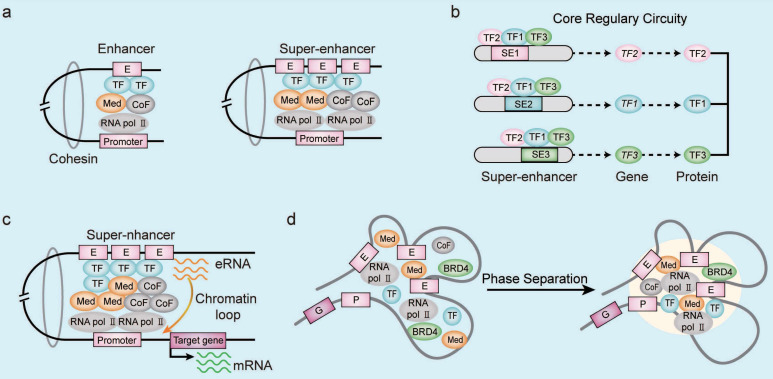
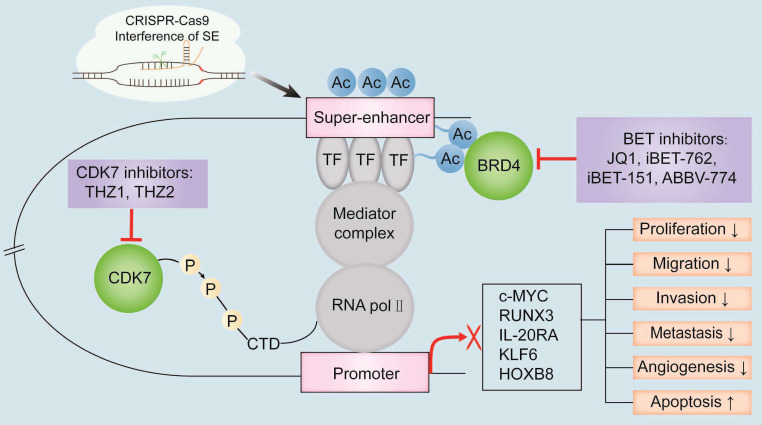
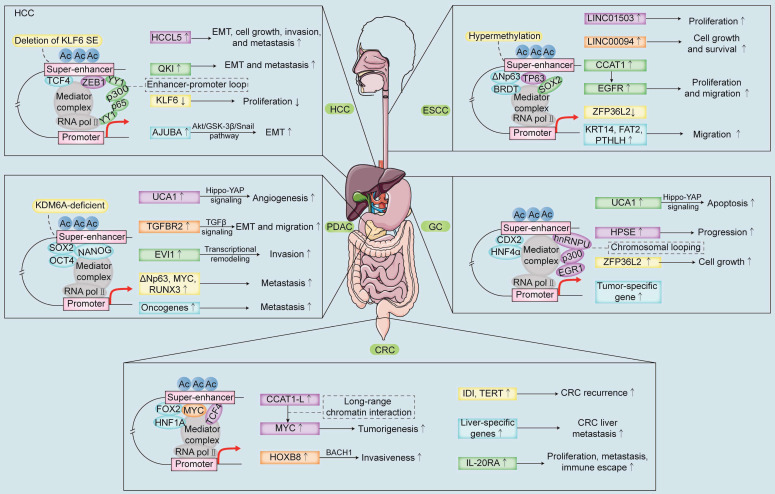
Digestive system tumors include malignancies of the stomach, pancreas, colon, rectum, and the esophagus, and are associated with high morbidity and mortality. Aberrant epigenetic modifications play a vital role in the progression of digestive system tumors. The aberrant transcription of key oncogenes is driven by super-enhancers (SEs), which are characterized by large clusters of enhancers with significantly high density of transcription factors, cofactors, and epigenetic modulatory proteins. The SEs consist of critical epigenetic regulatory elements, which modulate the biological characteristics of digestive system tumors including tumor cell identity and differentiation, tumorigenesis, environmental response, immune response, and chemotherapeutic resistance. The core transcription regulatory loop of the digestive system tumors is complex and a high density of transcription regulatory complexes in the SEs and the crosstalk between SEs and the noncoding RNAs. In this review, we summarized the known characteristics and functions of the SEs in the digestive system tumors. Furthermore, we discuss the oncogenic roles and regulatory mechanisms of SEs in the digestive system tumors. We highlight the role of SE-driven genes, enhancer RNAs (eRNAs), lncRNAs, and miRNAs in the digestive system tumor growth and progression. Finally, we discuss clinical significance of the CRISPR-Cas9 gene editing system and inhibitors of SE-related proteins such as BET and CDK7 as potential cancer therapeutics.
消化系统肿瘤包括胃、胰腺、结肠、直肠和食管的恶性肿瘤,其发病率和死亡率都很高。异常的表观遗传修饰在消化系统肿瘤的进展中起着至关重要的作用。关键癌基因的异常转录是由超级增强子(SEs)驱动的,SEs 的特征是具有大量增强子簇,转录因子、共因子和表观遗传调节蛋白的密度显著升高。SEs 由关键的表观遗传调节元件组成,调节消化系统肿瘤的生物学特征,包括肿瘤细胞的身份和分化、肿瘤发生、环境反应、免疫反应和化疗耐药性。消化系统肿瘤的核心转录调控环路很复杂,SEs 中的转录调控复合物密度很高,SEs 与非编码 RNA 之间存在串扰。在这篇综述中,我们总结了 SEs 在消化系统肿瘤中的已知特征和功能。此外,我们还讨论了 SE 在消化系统肿瘤中的致癌作用和调控机制。我们强调了 SE 驱动基因、增强子 RNA(eRNA)、lncRNA 和 miRNA 在消化系统肿瘤生长和进展中的作用。最后,我们讨论了 CRISPR-Cas9 基因编辑系统和 BET 和 CDK7 等 SE 相关蛋白抑制剂作为潜在癌症治疗药物的临床意义。