
腹泻型肠易激综合征患者的肠道微生物群组成及功能预测
Gut microbiota composition and functional prediction in diarrhea-predominant irritable bowel syndrome.
作者信息
Mei Lijun, Zhou Jiaoli, Su Yimo, Mao Kunhong, Wu Jing, Zhu Caicai, He Ling, Cui Ying
机构信息
Jiangxi University of Traditional Chinese Medicine Affiliated Hospital, Nanchang, 330006, China.
Jiangxi University of Traditional Chinese Medicine, Nanchang, 330004, China.
出版信息
BMC Gastroenterol. 2021 Mar 5;21(1):105. doi: 10.1186/s12876-021-01693-w.
BACKGROUND
Irritable bowel syndrome (IBS) is common and difficult to treat and its pathogenesis is closely related to gut microbiota. However, differences in gut microbiota of patients in different regions make it more difficult to elucidate the mechanism of IBS. We performed an analysis of gut microbiota composition and functional prediction in Chinese patients with diarrhea-predominant IBS (IBS-D).
METHODS
Fecal samples were obtained from 30 IBS-D patients and 30 healthy controls (HCs) in Nanchang, China. Using 16S gene sequence profiles, we analyzed the abundance of dominant microbiota at different taxonomy levels. Based on 16S information, Phylogenetic Investigation of Communities by Reconstruction of Unobserved States (PICRUSt) was used to predicting the function of gut microbiota.
RESULTS
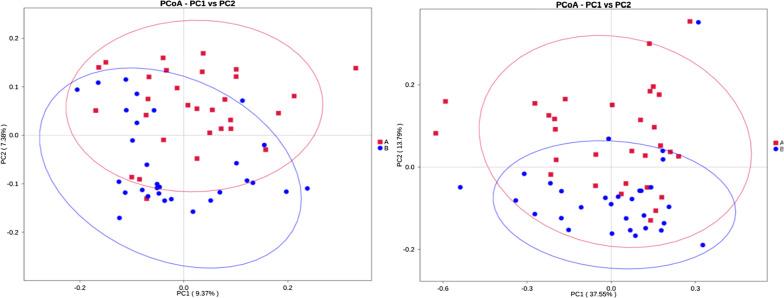
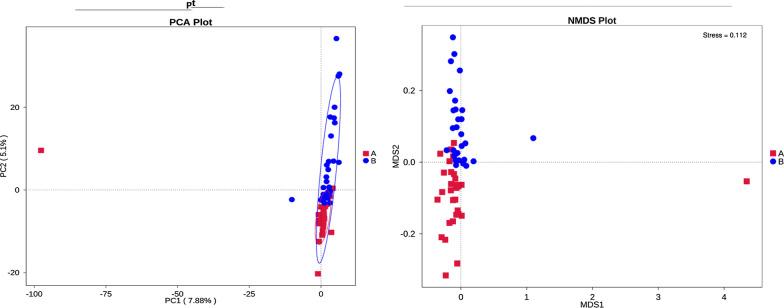
Compared to HCs, gut microbiota richness but not diversity was decreased in IBS-D patients. The abundant phyla Firmicutes, Fusobacteria and Actinobacteria decreased significantly, and Proteobacteria increased significantly in IBS-D patients. PICRUSt indicated that function expression of gut microbiota in IBS-D patients was up-regulated in metabolism of cofactors and vitamins, xenobiotics biodegradation and metabolism, and down-regulated in environmental adaptation, cell growth and death.
CONCLUSIONS
Compared with the normal population in China, IBS-D patients are characterized by complex and unstable gut microbiota, which may influence inflammation and metabolism of the host.
背景
肠易激综合征(IBS)常见且难治,其发病机制与肠道微生物群密切相关。然而,不同地区患者的肠道微生物群存在差异,这使得阐明IBS的发病机制更加困难。我们对中国腹泻型肠易激综合征(IBS-D)患者的肠道微生物群组成进行了分析,并进行了功能预测。
方法
在中国南昌,从30例IBS-D患者和30例健康对照(HCs)中获取粪便样本。利用16S基因序列图谱,我们分析了不同分类水平上优势微生物群的丰度。基于16S信息,采用未观察状态重建群落系统发育研究(PICRUSt)来预测肠道微生物群的功能。
结果
与HCs相比,IBS-D患者的肠道微生物群丰富度降低,但多样性未降低。IBS-D患者中厚壁菌门、梭杆菌门和放线菌门的丰度显著降低,变形菌门显著增加。PICRUSt表明,IBS-D患者肠道微生物群在辅因子和维生素代谢、异生物质生物降解和代谢方面的功能表达上调,在环境适应、细胞生长和死亡方面的功能表达下调。
结论
与中国正常人群相比,IBS-D患者的肠道微生物群具有复杂且不稳定的特征,这可能会影响宿主的炎症和代谢。




 Zotero 插件