Microbiology and Immunology Department, Faculty of Pharmacy, Al-Azhar University-Assiut Branch, Assiut, 71526, Egypt.
Department of Medical Microbiology and Immunology, Faculty of Medicine, Assiut University, Assiut, 71515, Egypt.
Sci Rep. 2021 Mar 4;11(1):5179. doi: 10.1038/s41598-021-84529-7.
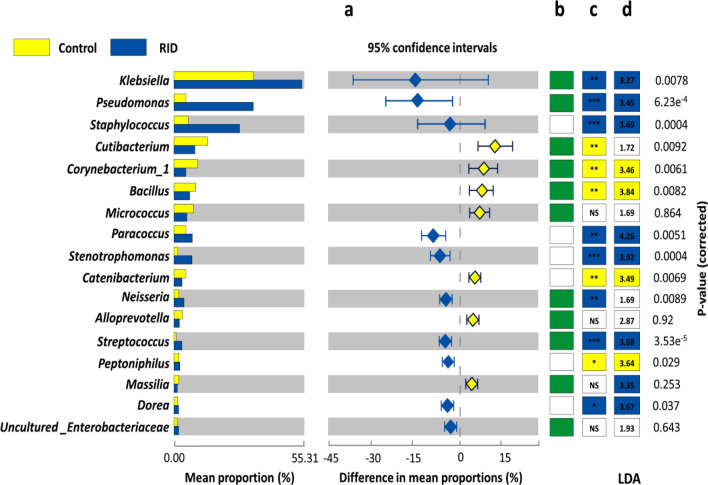
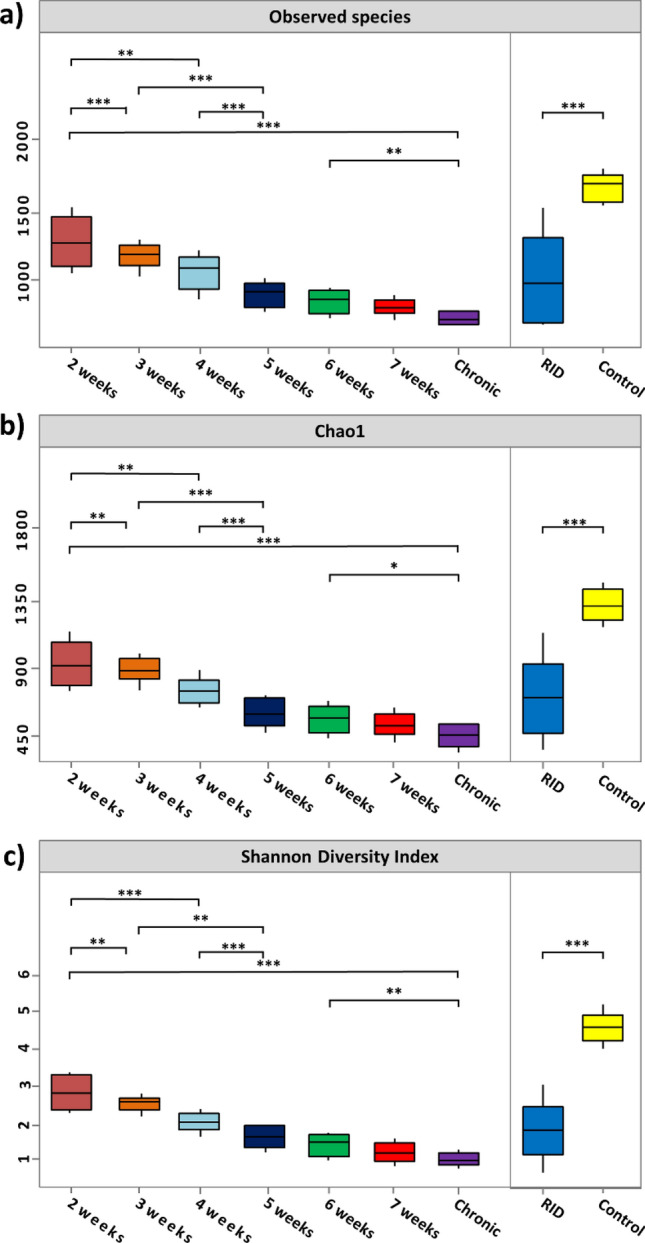
Radiotherapy-induced dermatitis (RID) is an inflammatory cutaneous disorder that is acquired as an adverse effect of undergoing radiotherapy. Skin microbiome dysbiosis has been linked to the outcomes of several dermatological diseases. To explore the skin microbiota of RID and deduce their underlying impact on the outcome of RID, cutaneous microbiomes of 78 RID patients and 20 healthy subjects were characterized by sequencing V1-V3 regions of 16S rRNA gene. In total, a significantly apparent reduction in bacterial diversity was detected in microbiomes of RID in comparison to controls. Overall, the raised Proteobacteria/ Firmicutes ratio was significantly linked to delayed recovery or tendency toward the permanence of RID (Kruskal Wallis: P = 2.66 × 10). Moreover, applying enterotyping on our samples stratified microbiomes into A, B, and C dermotypes. Dermotype C included overrepresentation of Pseudomonas, Staphylococcus and Stenotrophomonas and was markedly associated with delayed healing of RID. Strikingly, coexistence of diabetes mellitus and RID was remarkably correlated with a significant overrepresentation of Klebsiella or Pseudomonas and Staphylococcus. Metabolic abilities of skin microbiome could support their potential roles in the pathogenesis of RID. Cutaneous microbiome profiling at the early stages of RID could be indicative of prospective clinical outcomes and maybe a helpful guide for personalized therapy.
放射性皮炎(RID)是一种炎症性皮肤疾病,是接受放射治疗的不良反应。皮肤微生物组失调与几种皮肤病的结果有关。为了探索 RID 的皮肤微生物群,并推断它们对 RID 结果的潜在影响,我们通过测序 16S rRNA 基因的 V1-V3 区来描述 78 名 RID 患者和 20 名健康受试者的皮肤微生物组。与对照组相比,RID 患者的皮肤微生物组中细菌多样性明显减少。总的来说,升高的变形菌/厚壁菌比值与 RID 恢复延迟或持续存在的趋势显著相关(Kruskal Wallis:P=2.66×10)。此外,在我们的样本中应用肠型分析将微生物组分为 A、B 和 C 型皮肤类型。C 型皮肤类型包括假单胞菌、葡萄球菌和寡养单胞菌的过度表达,与 RID 的愈合延迟明显相关。引人注目的是,糖尿病和 RID 的共存与克雷伯氏菌或假单胞菌和葡萄球菌的显著过度表达显著相关。皮肤微生物组的代谢能力可以支持它们在 RID 发病机制中的潜在作用。在 RID 的早期阶段进行皮肤微生物组分析可以预示未来的临床结果,并可能为个性化治疗提供有益的指导。