Dr. Rath Research Institute BV, 5941 Optical Ct., San Jose, CA, 95138, USA.
Sci Rep. 2021 Mar 4;11(1):5207. doi: 10.1038/s41598-021-84850-1.
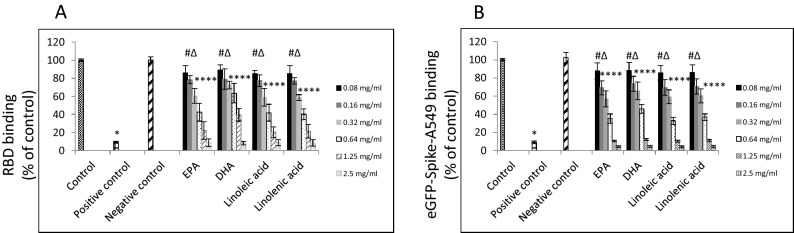
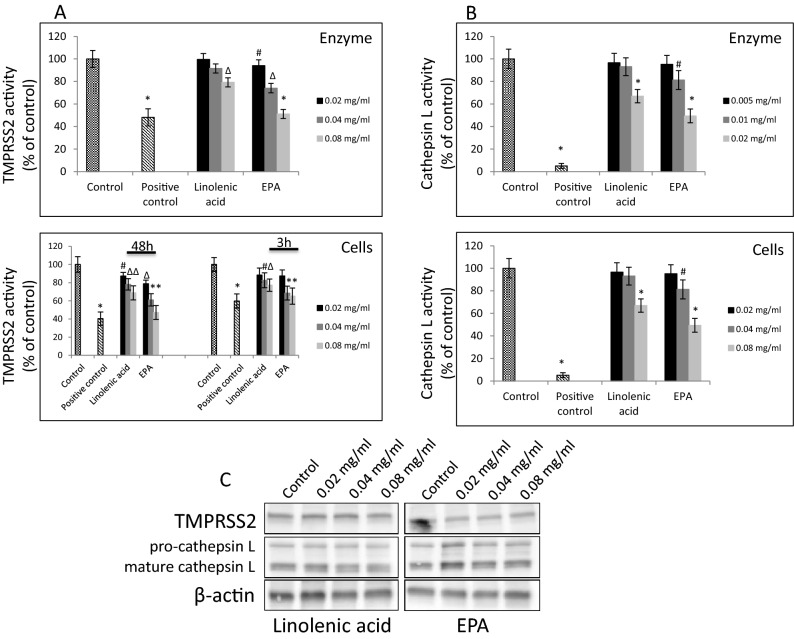
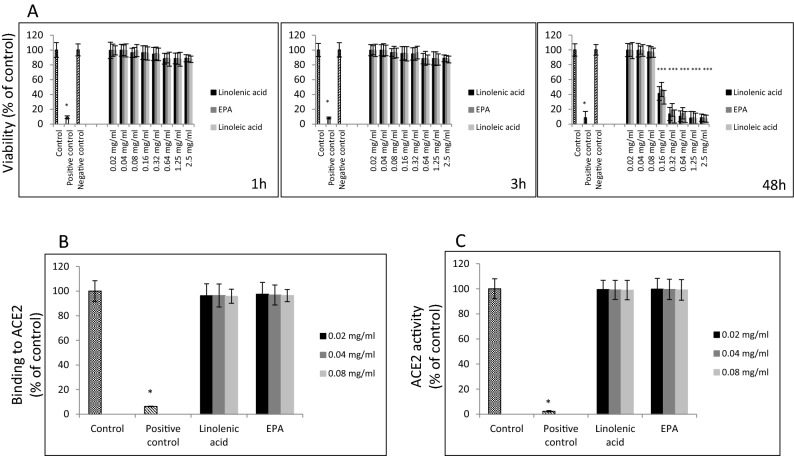
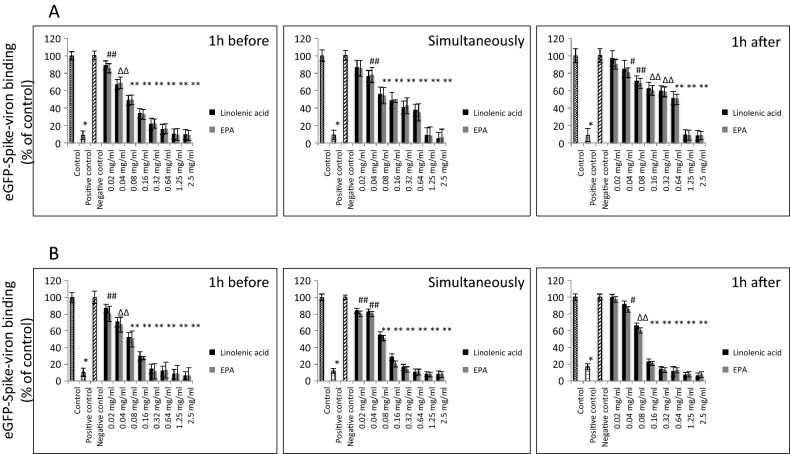
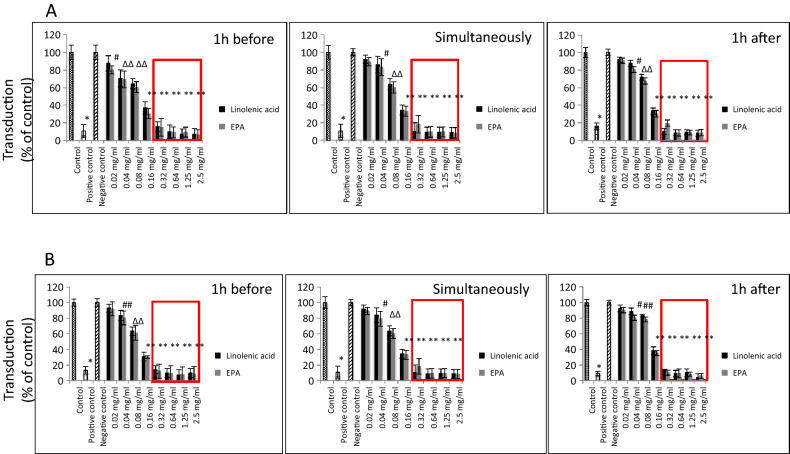
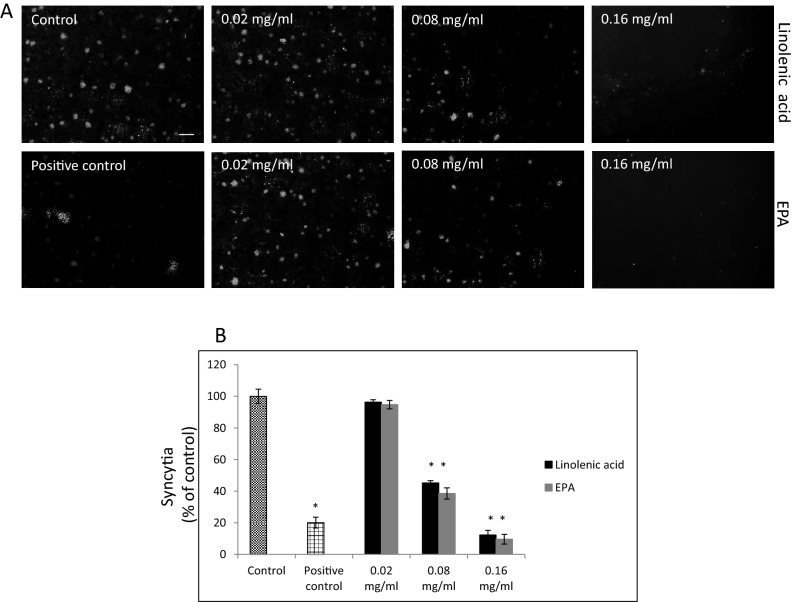
The strain SARS-CoV-2, newly emerged in late 2019, has been identified as the cause of COVID-19 and the pandemic declared by WHO in early 2020. Although lipids have been shown to possess antiviral efficacy, little is currently known about lipid compounds with anti-SARS-CoV-2 binding and entry properties. To address this issue, we screened, overall, 17 polyunsaturated fatty acids, monounsaturated fatty acids and saturated fatty acids, as wells as lipid-soluble vitamins. In performing target-based ligand screening utilizing the RBD-SARS-CoV-2 sequence, we observed that polyunsaturated fatty acids most effectively interfere with binding to hACE2, the receptor for SARS-CoV-2. Using a spike protein pseudo-virus, we also found that linolenic acid and eicosapentaenoic acid significantly block the entry of SARS-CoV-2. In addition, eicosapentaenoic acid showed higher efficacy than linolenic acid in reducing activity of TMPRSS2 and cathepsin L proteases, but neither of the fatty acids affected their expression at the protein level. Also, neither reduction of hACE2 activity nor binding to the hACE2 receptor upon treatment with these two fatty acids was observed. Although further in vivo experiments are warranted to validate the current findings, our study provides a new insight into the role of lipids as antiviral compounds against the SARS-CoV-2 strain.
2019 年末新出现的 SARS-CoV-2 病毒株已被确定为 COVID-19 的病原体,世界卫生组织于 2020 年初宣布此次疫情为大流行。尽管已有研究表明脂类具有抗病毒作用,但目前对于具有抗 SARS-CoV-2 结合和进入特性的脂质化合物知之甚少。为解决这一问题,我们对 17 种多不饱和脂肪酸、单不饱和脂肪酸和饱和脂肪酸以及脂溶性维生素进行了筛选。在利用 RBD-SARS-CoV-2 序列进行基于靶点的配体筛选时,我们发现多不饱和脂肪酸最有效地干扰了与 SARS-CoV-2 的受体 hACE2 的结合。使用刺突蛋白假病毒,我们还发现亚油酸和二十碳五烯酸可显著阻止 SARS-CoV-2 的进入。此外,二十碳五烯酸在降低 TMPRSS2 和组织蛋白酶 L 蛋白酶活性方面比亚油酸更有效,但这两种脂肪酸都不会影响其蛋白水平的表达。此外,在治疗过程中未观察到这两种脂肪酸降低 hACE2 活性或与 hACE2 受体结合。尽管还需要进行更多的体内实验来验证目前的发现,但我们的研究为脂类作为抗 SARS-CoV-2 病毒的抗病毒化合物提供了新的见解。