Wang Xiaopeng, Zhang Hui, Huang Min, Tang Jianhong, Yang Lijuan, Yu Zhiqiang, Li Desen, Li Guixin, Jiang Yongchuang, Sun Yanxiao, Wei Shudong, Xu Pan, Ren Jun
Guangdong Laboratory for Lingnan Modern Agriculture College of Animal Science South China Agricultural University Guangzhou China.
Jinan Conservation Farm for Laiwu Pigs Jinan China.
Evol Appl. 2020 Sep 16;14(2):383-398. doi: 10.1111/eva.13124. eCollection 2021 Feb.
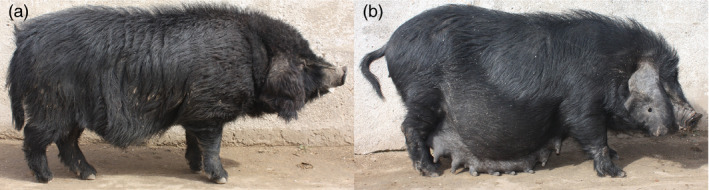
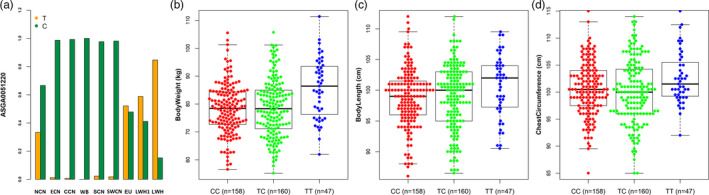
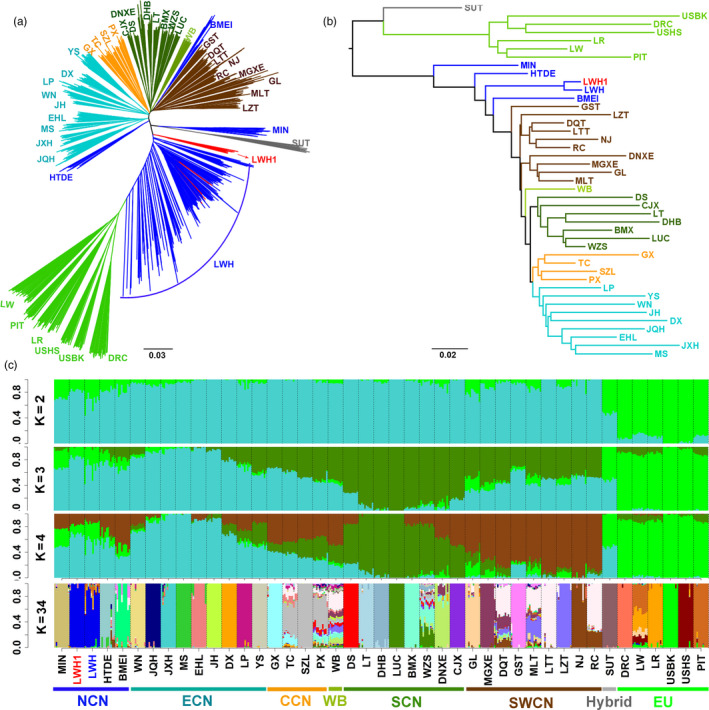
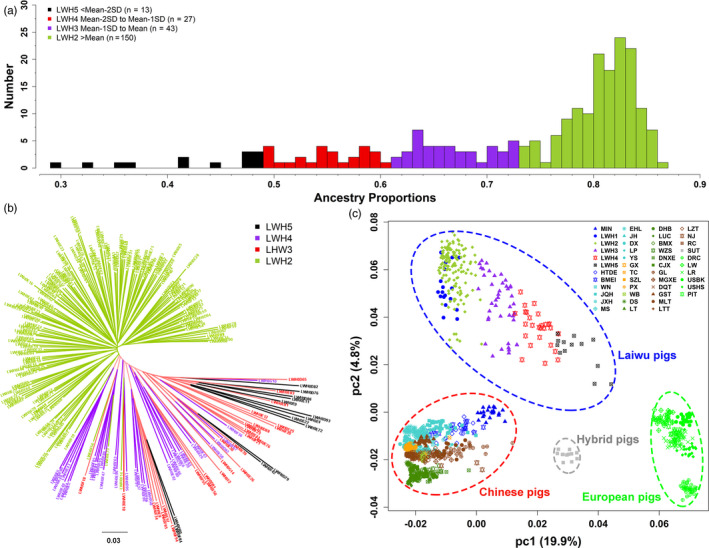
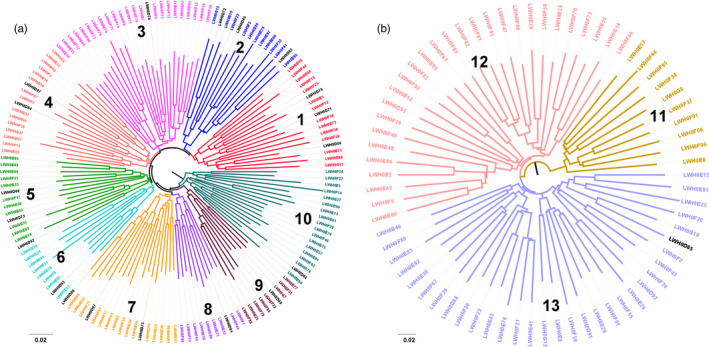
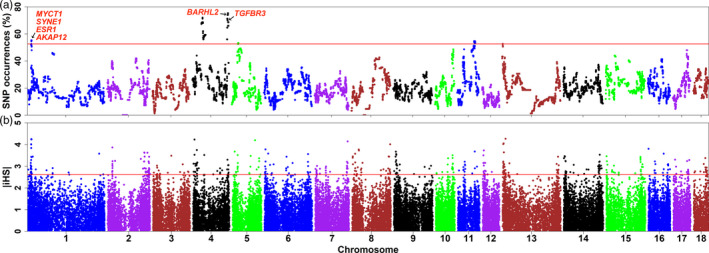
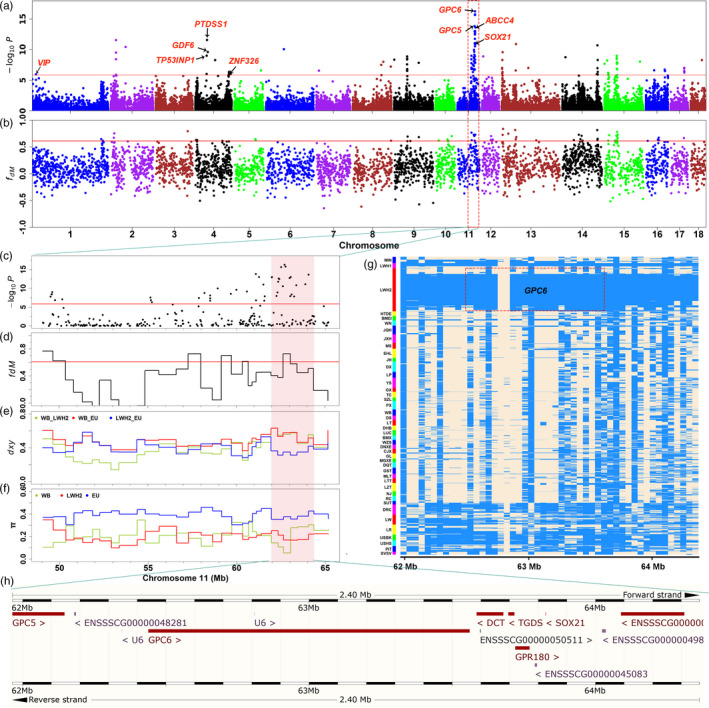
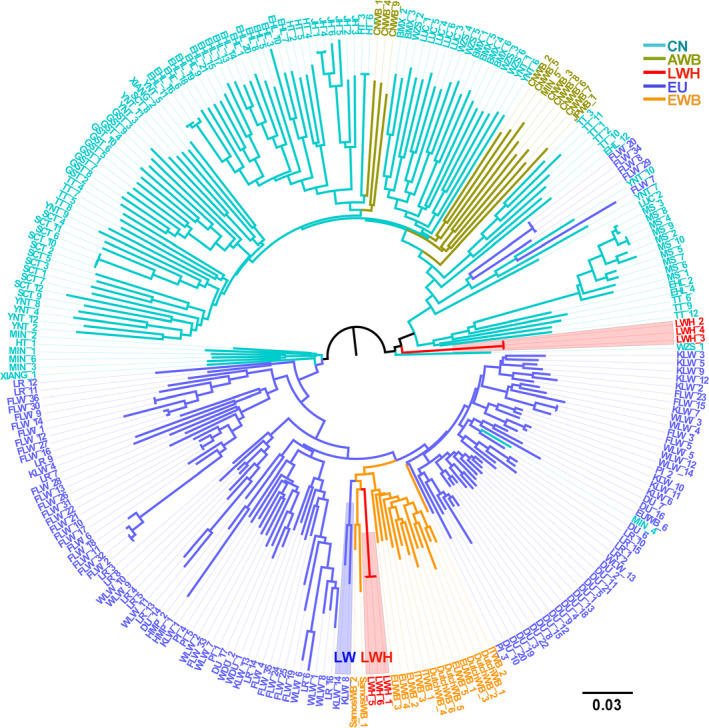
Laiwu pigs are a Chinese indigenous breed that is renowned for its exceptionally high intramuscular fat content (average greater than 6%), providing an excellent genetic resource for the genetic improvement of meat quality of modern commercial pigs. To uncover genetic diversity, population structure, signature of selection, and potential exotic introgression in this breed, we sampled 238 Laiwu pigs from a state-supported conservation population and genotyped these individuals using GeneSeek 80K SNP BeadChip. We then conducted in-depth population genetics analyses for the Laiwu pig in a context of 1,116 pigs from 42 Eurasian diverse breeds. First, we show that the current Laiwu population has more abundant genetic diversity than the population of 18 years ago likely due to gene flow from European commercial breeds. Both neighbor-joining (NJ) and principal component analyses indicate the introgression of European haplotypes into Laiwu pigs. The admixture analysis reveals that an average 26.66% of Laiwu genetic components are of European origin. Then, we assigned the tested individuals to different families according to their clustering patterns in the NJ tree and proposed a family-based conservation strategy to reduce the risk of inbreeding depression in Laiwu pigs. Next, we explored three statistics (ROH and iHS and EigenGWAS) to identify a list of candidate genes for fat deposition, reproduction, and growth in Laiwu pigs. Last, we detected a strong signature of introgression from European pigs into Laiwu pigs at the locus that regulates the growth of developing long bones. Further association analyses indicate that the introgressed haplotype likely contributed to the improvement of growth performance in Laiwu pigs. Altogether, this study not only benefits the better conservation of the Laiwu pig, but also advances our knowledge of the poorly understood effect of human-mediated introgression on phenotypic traits in Chinese indigenous pigs.
莱芜猪是中国本土猪种,以其极高的肌内脂肪含量(平均大于6%)而闻名,为现代商业猪种肉质的遗传改良提供了优良的遗传资源。为了揭示该品种的遗传多样性、群体结构、选择印记和潜在的外来基因渗入情况,我们从一个国家支持的保种群中抽取了238头莱芜猪,并使用GeneSeek 80K SNP芯片对这些个体进行基因分型。然后,我们在来自42个欧亚不同品种的1116头猪的背景下,对莱芜猪进行了深入的群体遗传学分析。首先,我们发现当前的莱芜猪群体比18年前的群体具有更丰富的遗传多样性,这可能是由于欧洲商业品种的基因流入。邻接(NJ)分析和主成分分析均表明欧洲单倍型已渗入莱芜猪。混合分析显示,莱芜猪平均26.66%的遗传成分来自欧洲。然后,我们根据NJ树中的聚类模式将测试个体分配到不同的家系,并提出了一种基于家系的保种策略,以降低莱芜猪近亲繁殖衰退的风险。接下来,我们探索了三种统计方法(ROH、iHS和EigenGWAS),以确定莱芜猪脂肪沉积、繁殖和生长的候选基因列表。最后,我们在调控发育中长骨生长的位点检测到欧洲猪向莱芜猪强烈的基因渗入信号。进一步的关联分析表明,渗入的单倍型可能有助于提高莱芜猪的生长性能。总之,本研究不仅有利于更好地保护莱芜猪,还增进了我们对人类介导的基因渗入对中国本土猪种表型性状影响的了解,而这方面此前了解较少。