Wang Chen, Li Zhelong, Liu Yunnan, Yuan Lijun
Department of Ultrasound Diagnostics, Tangdu Hospital, Fourth Military Medical University, Xi'an 710038, People's Republic of China.
Theranostics. 2021 Feb 15;11(8):3996-4010. doi: 10.7150/thno.56035. eCollection 2021.
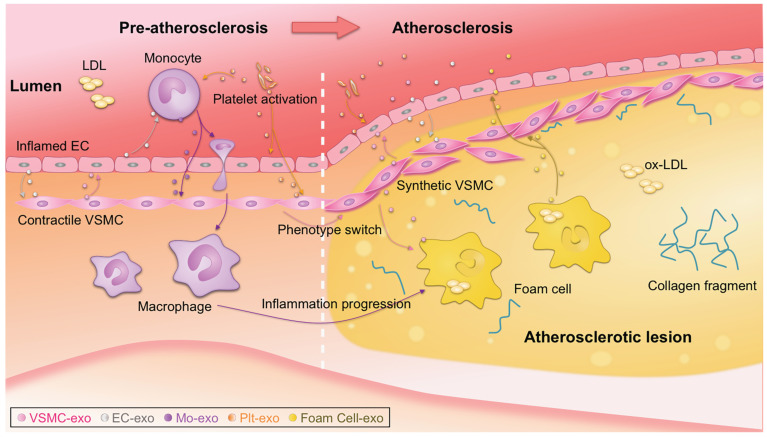
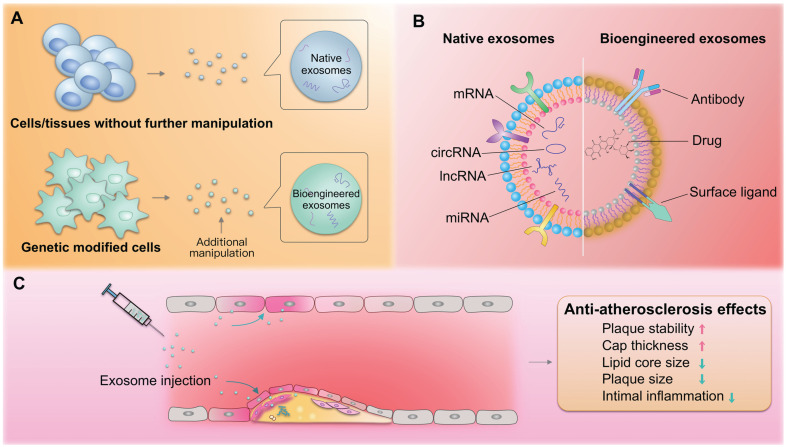
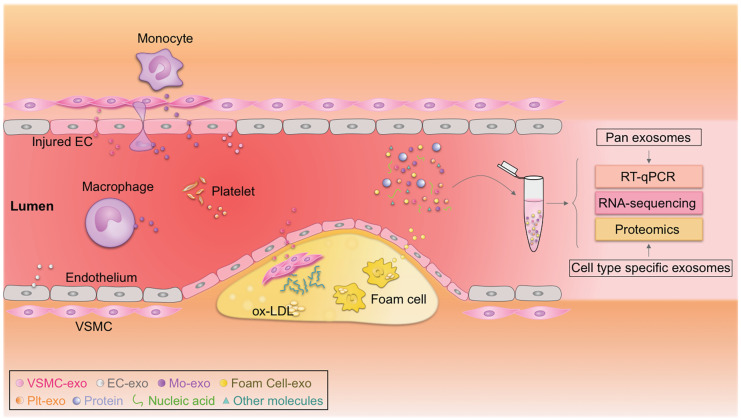
Exosomes are nanosized lipid vesicles originating from the endosomal system that carry many macromolecules from their parental cells and play important roles in intercellular communication. The functions and underlying mechanisms of exosomes in atherosclerosis have recently been intensively studied. In this review, we briefly introduce exosome biology and then focus on advances in the roles of exosomes in atherosclerosis, specifically exosomal changes associated with atherosclerosis, their cellular origins and potential functional cargos, and their detailed impacts on recipient cells. We also discuss the potential of exosomes as biomarkers and drug carriers for managing atherosclerosis.
外泌体是源自内体系统的纳米级脂质囊泡,可从其亲代细胞携带许多大分子,并在细胞间通讯中发挥重要作用。近年来,外泌体在动脉粥样硬化中的功能及潜在机制得到了深入研究。在本综述中,我们简要介绍外泌体生物学,然后重点关注外泌体在动脉粥样硬化中作用的进展,特别是与动脉粥样硬化相关的外泌体变化、它们的细胞来源和潜在的功能性货物,以及它们对受体细胞的详细影响。我们还讨论了外泌体作为动脉粥样硬化管理的生物标志物和药物载体的潜力。