Korgaonkar Mayuresh S, Williamson Thomas, Bryant Richard A
Brain Dynamics Centre, Westmead Institute of Medical Research, Australia.
School of Health Sciences, Faculty of Medicine and Health, University of Sydney, Australia.
Neurobiol Stress. 2021 Feb 17;14:100308. doi: 10.1016/j.ynstr.2021.100308. eCollection 2021 May.
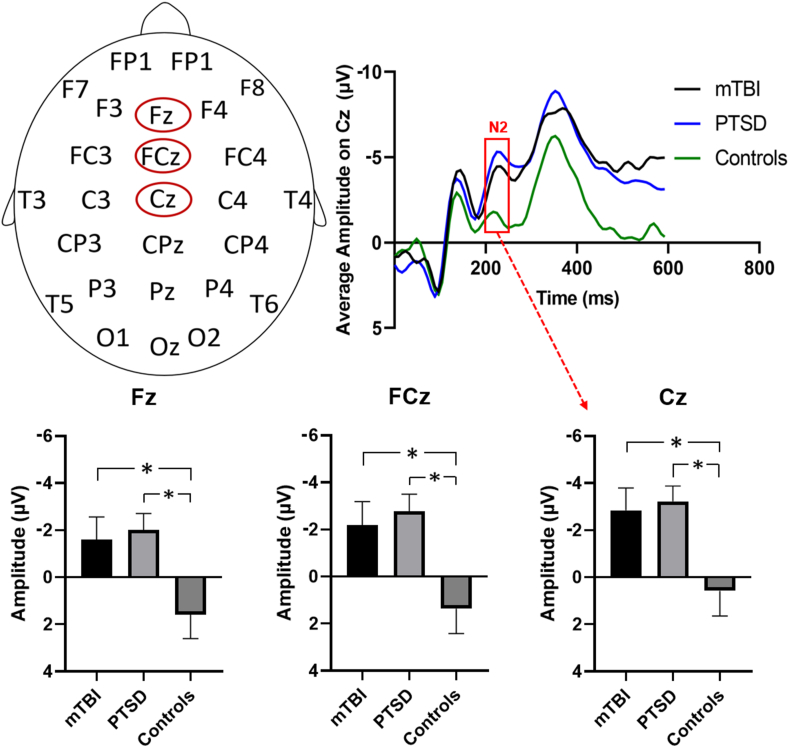
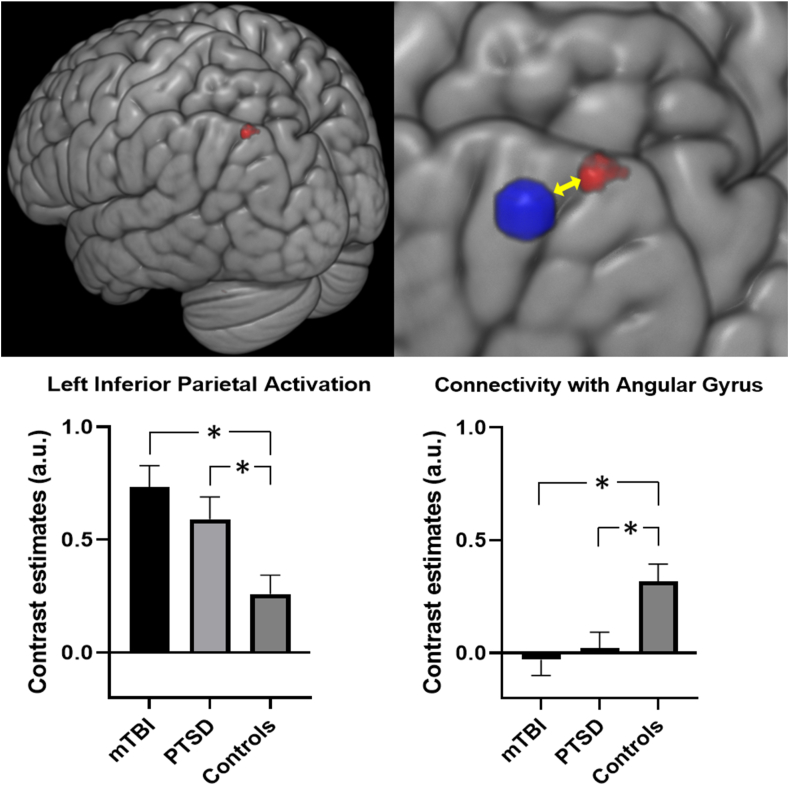
Mild traumatic brain injury (mTBI) is often characterized by deficits in response inhibition, which can contribute to marked social and occupational dysfunction. mTBI often occurs in the context of psychologically traumatic events. This can cause posttraumatic stress disorder (PTSD), which also impedes response inhibition. The overlap or distinction in these inhibitory deficits in mTBI and PTSD is unclear. This study aimed to assess behavioral, neurophysiological, and neuroimaging indices of response inhibition in mTBI by also assessing these parameters in healthy controls (HC) and PTSD participants. Participants with mTBI (without PTSD) (n = 46), PTSD (without mTBI) (n = 41), and HC (n = 40) were assessed during a response inhibition task (the Go/NoGo task) during neuropsychological testing and separate functional magnetic imaging and event-related potentials sessions. PTSD symptom severity was assessed with the Clinician-Administered PTSD Scale. Both mTBI and PTSD participants performed more omission errors on the Go/NoGo task and were associated with greater N2 amplitude, greater left inferior parietal activation and reduced connectivity of the left inferior parietal cluster and left angular gyrus compared to HC. There were no differences between mTBI and PTSD on any of these measures. These findings highlight that both mTBI and PTSD contribute to neural dysfunction during response inhibition, and arguably these occur due to distinct mechanisms. In the context of the common comorbidity between these two conditions, strategies to address response inhibition deficits in mTBI may need to consider causative factors underpinning neurological insult of mTBI and psychological effects associated with PTSD.
轻度创伤性脑损伤(mTBI)通常表现为反应抑制缺陷,这可能导致明显的社交和职业功能障碍。mTBI常发生在心理创伤事件的背景下。这可能会引发创伤后应激障碍(PTSD),而PTSD也会阻碍反应抑制。mTBI和PTSD中这些抑制缺陷的重叠或区别尚不清楚。本研究旨在通过评估健康对照者(HC)和PTSD参与者的这些参数,来评估mTBI中反应抑制的行为、神经生理学和神经影像学指标。在神经心理学测试期间,以及单独的功能磁共振成像和事件相关电位测试环节中,对mTBI(无PTSD)参与者(n = 46)、PTSD(无mTBI)参与者(n = 41)和HC(n = 40)进行了反应抑制任务(Go/NoGo任务)评估。使用临床医生管理的PTSD量表评估PTSD症状严重程度。与HC相比,mTBI和PTSD参与者在Go/NoGo任务中都出现了更多的遗漏错误,并且与更大的N2波幅、左侧顶下叶更大的激活以及左侧顶下叶簇和左侧角回之间连接性降低有关。在这些测量指标上,mTBI和PTSD之间没有差异。这些发现突出表明,mTBI和PTSD在反应抑制过程中都会导致神经功能障碍,可以说这些是由不同的机制引起的。在这两种情况常见的共病背景下,解决mTBI反应抑制缺陷的策略可能需要考虑mTBI神经损伤的致病因素以及与PTSD相关的心理影响。