Perelman School of Medicine, University of Pennsylvania, Philadelphia, PA 19104, USA.
School of Medicine, Georgetown University, Washington, DC 20007, USA.
Int J Environ Res Public Health. 2021 Feb 24;18(5):2211. doi: 10.3390/ijerph18052211.
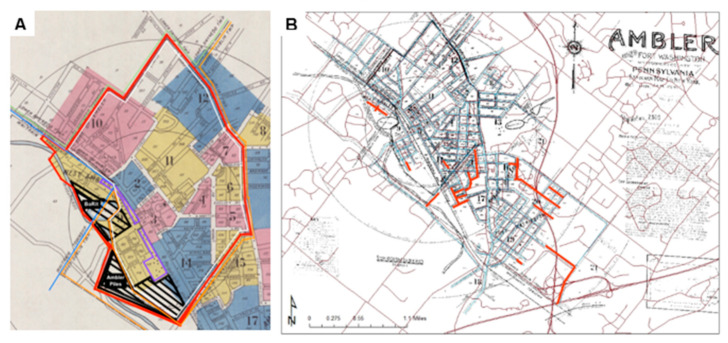
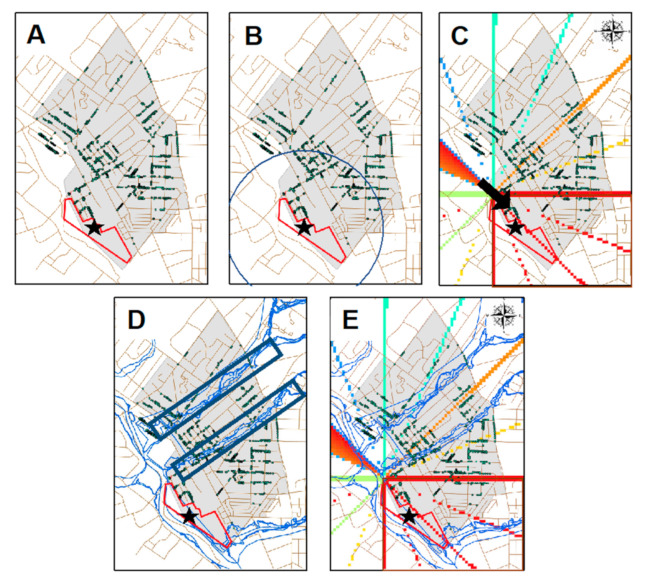
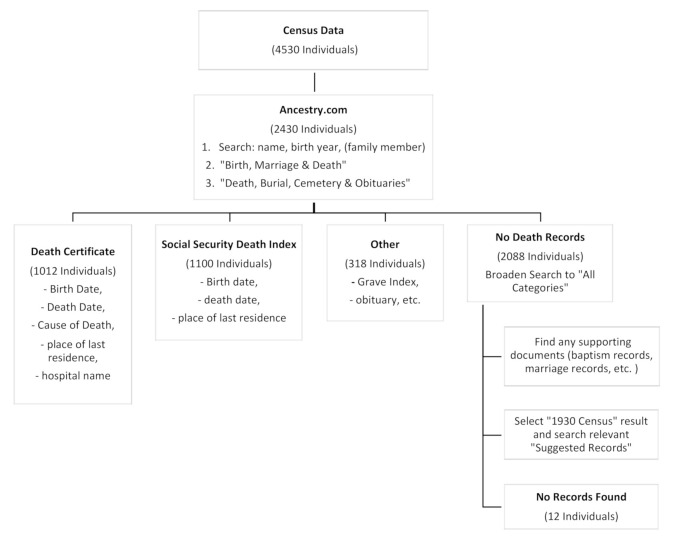
This paper describes follow-up for a cohort of 4530 residents living in the asbestos manufacturing community of Ambler, PA, U.S. in 1930. Using re-identified census data, cause and date of death data obtained from the genealogic website Ancestry.com, along with geospatial analysis, we explored relationships among demographic characteristics, occupational, paraoccupational and environmental asbestos exposures. We identified death data for 2430/4530 individuals. Exposure differed significantly according to race, gender, age, and recency of immigration to the U.S. Notably, there was a significant difference in the availability of year of death information for non-white vs. white individuals (odds ratio (OR) = 0.62 -value < 0.001), females (OR = 0.53, -value < 0.001), first-generation immigrants (OR = 0.67, -value = 0.001), second-generation immigrants (OR = 0.31, -value < 0.001) vs. non-immigrants, individuals aged less than 20 (OR = 0.31 -value < 0.001) and individuals aged 20 to 59 (OR = 0.63, -value < 0.001) vs. older individuals. Similarly, the cause of death was less often available for non-white individuals (OR = 0.42, -value <0.001), first-generation immigrants and (OR = 0.71, -value = 0.009), second-generation immigrants (OR = 0.49, -value < 0.001), individuals aged less than 20 (OR = 0.028 -value < 0.001), and individuals aged 20 to 59 (OR = 0.26, -value < 0.001). These results identified ascertainment bias that is important to consider in analyses that investigate occupational, para-occupational and environmental asbestos exposure as risk factors for mortality in this historic cohort. While this study attempts to describe methods for assessing itemized asbestos exposure profiles for a community in 1930 using Ancestry.com and other publicly accessible databases, it also highlights how historic cohort studies likely underestimate the impact of asbestos exposure on vulnerable populations. Future work will aim to assess mortality patterns in this cohort.
本论文描述了对居住在美国宾夕法尼亚州安伯勒石棉制造社区的 4530 名居民的队列进行的随访。使用重新识别的人口普查数据、从家谱网站 Ancestry.com 获取的死因和死亡日期数据,以及地理空间分析,我们探讨了人口特征、职业、准职业和环境石棉暴露之间的关系。我们确定了 2430/4530 名个体的死亡数据。暴露情况根据种族、性别、年龄和最近移民到美国的情况而有显著差异。值得注意的是,非白人个体与白人个体之间的死亡年份信息的可得性存在显著差异(比值比 (OR) = 0.62,-值 < 0.001),女性(OR = 0.53,-值 < 0.001),第一代移民(OR = 0.67,-值 = 0.001),第二代移民(OR = 0.31,-值 < 0.001)与非移民相比,年龄小于 20 岁的个体(OR = 0.31,-值 < 0.001)和年龄在 20 至 59 岁的个体(OR = 0.63,-值 < 0.001)与年龄较大的个体相比。同样,非白人个体的死因信息往往不可用(OR = 0.42,-值 < 0.001),第一代移民和(OR = 0.71,-值 = 0.009),第二代移民(OR = 0.49,-值 < 0.001),年龄小于 20 岁的个体(OR = 0.028,-值 < 0.001)和年龄在 20 至 59 岁的个体(OR = 0.26,-值 < 0.001)。这些结果确定了在分析该历史队列中职业、准职业和环境石棉暴露作为死亡风险因素时需要考虑的确定偏差。虽然本研究试图描述使用 Ancestry.com 和其他公开可访问的数据库评估 1930 年社区中详细石棉暴露情况的方法,但它也强调了历史队列研究如何可能低估了石棉暴露对弱势群体的影响。未来的工作将旨在评估该队列中的死亡率模式。