State Key Laboratory for Rice Biology, China National Rice Research Institute, Hangzhou 310006, China.
CAAS-IRRI Joint Laboratory for Genomics-assisted Germplasm Enhancement, Agricultural Genomics Institute in Shenzhen, Chinese Academy of Agricultural Sciences, Shenzhen 518120, China.
Int J Mol Sci. 2021 Feb 24;22(5):2254. doi: 10.3390/ijms22052254.
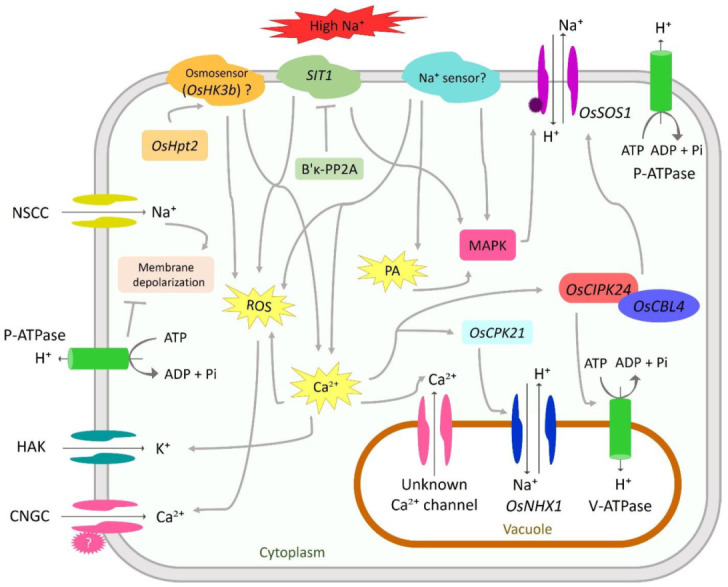
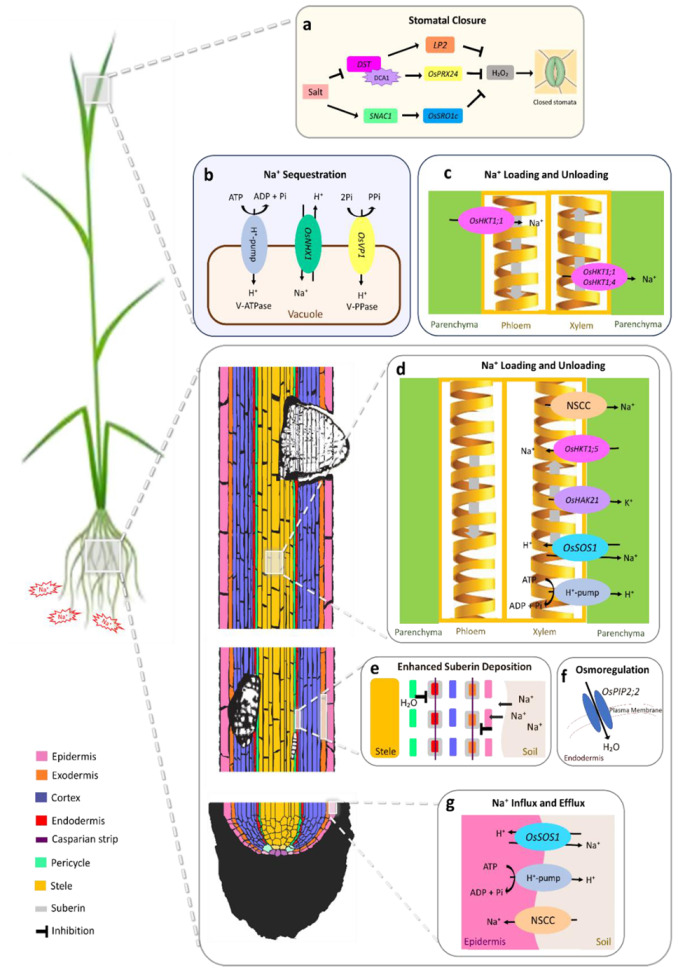
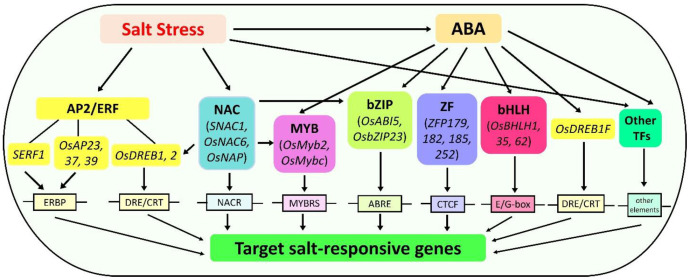
Soil salinity is a serious menace in rice production threatening global food security. Rice responses to salt stress involve a series of biological processes, including antioxidation, osmoregulation or osmoprotection, and ion homeostasis, which are regulated by different genes. Understanding these adaptive mechanisms and the key genes involved are crucial in developing highly salt-tolerant cultivars. In this review, we discuss the molecular mechanisms of salt tolerance in rice-from sensing to transcriptional regulation of key genes-based on the current knowledge. Furthermore, we highlight the functionally validated salt-responsive genes in rice.
土壤盐度是水稻生产中的一个严重威胁,威胁着全球粮食安全。水稻对盐胁迫的响应涉及一系列生物学过程,包括抗氧化、渗透调节或渗透保护以及离子稳态平衡,这些过程受不同基因的调控。了解这些适应机制和关键基因对于培育高耐盐品种至关重要。在这篇综述中,我们根据目前的知识讨论了水稻耐盐性的分子机制——从感应到关键基因的转录调控。此外,我们还强调了在水稻中功能验证的盐响应基因。