Sato Jinya, Hirano Yoji, Hirakawa Noriaki, Takahashi Junichi, Oribe Naoya, Kuga Hironori, Nakamura Itta, Hirano Shogo, Ueno Takefumi, Togao Osamu, Hiwatashi Akio, Nakao Tomohiro, Onitsuka Toshiaki
Department of Neuropsychiatry, Graduate School of Medical Sciences, Kyushu University, Fukuoka 812-8582, Japan.
Institute of Industrial Science, The University of Tokyo, Tokyo 153-8505, Japan.
J Pers Med. 2021 Feb 13;11(2):121. doi: 10.3390/jpm11020121.
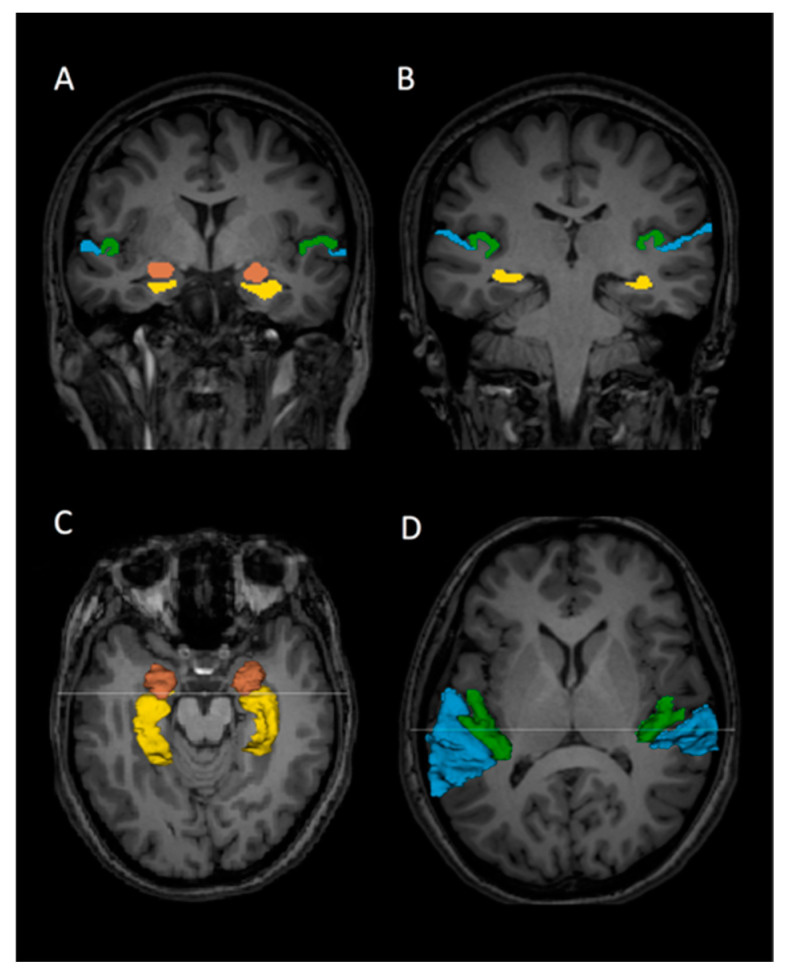
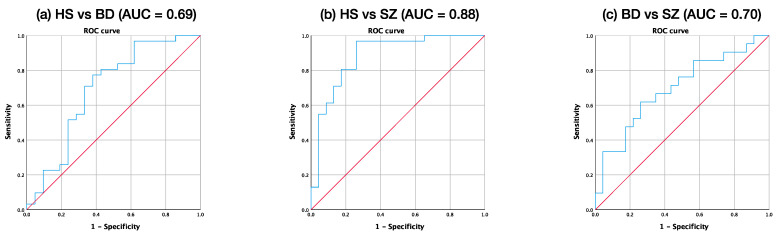
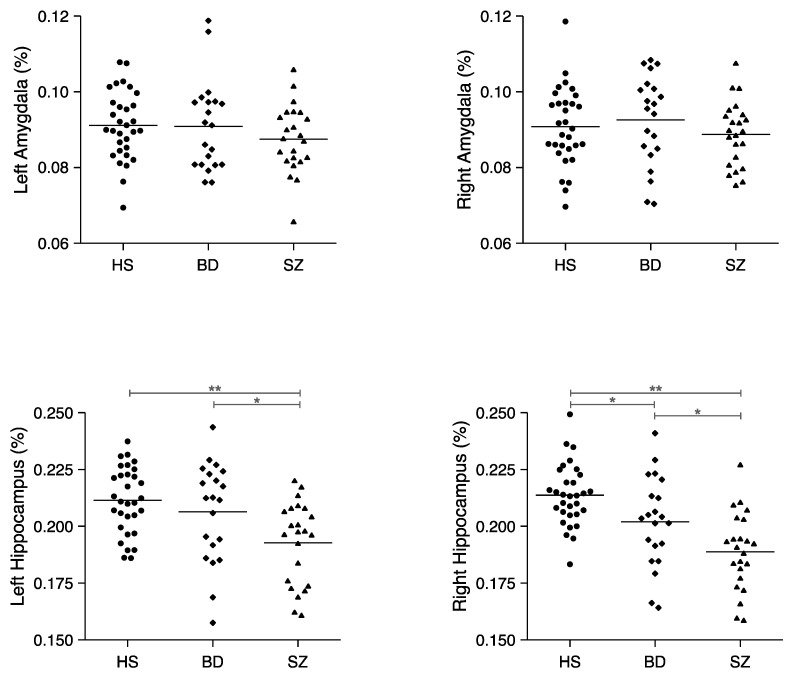
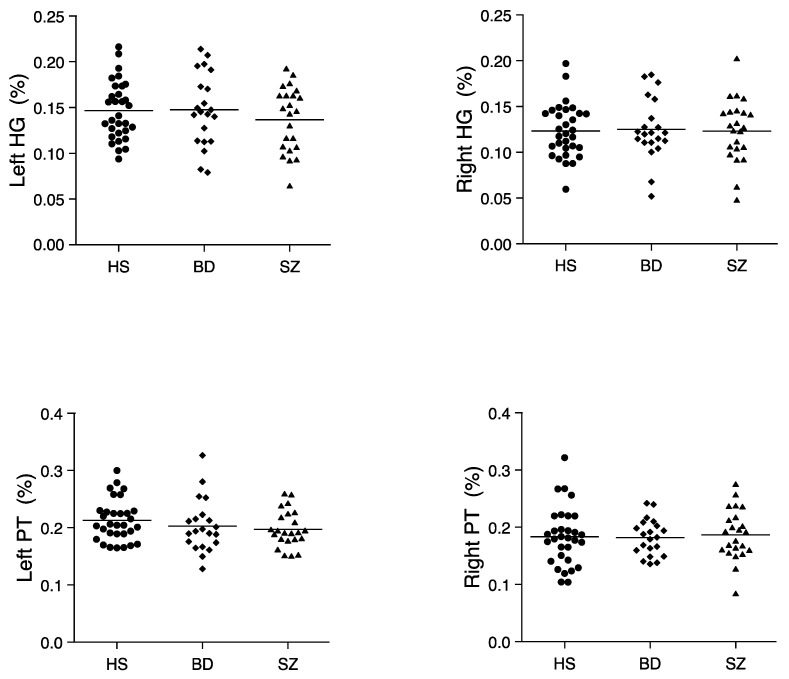
Since patients with schizophrenia (SZ) and bipolar disorder (BD) share many biological features, detecting biomarkers that differentiate SZ and BD patients is crucial for optimized treatments. High-resolution magnetic resonance imaging (MRI) is suitable for detecting subtle brain structural differences in patients with psychiatric disorders. In the present study, we adopted a neuroanatomically defined and manually delineated region of interest (ROI) method to evaluate the amygdalae, hippocampi, Heschl's gyrus (HG), and planum temporale (PT), because these regions are crucial in the development of SZ and BD. ROI volumes were measured using high resolution MRI in 31 healthy subjects (HS), 23 SZ patients, and 21 BD patients. Right hippocampal volumes differed significantly among groups (HS > BD > SZ), whereas left hippocampal volumes were lower in SZ patients than in HS and BD patients (HS = BD > SZ). Volumes of the amygdalae, HG, and PT did not differ among the three groups. For clinical correlations, there were no significant associations between ROI volumes and demographics/clinical symptoms. Our study revealed significant lower hippocampal volume in patients with SZ and BD, and we suggest that the right hippocampal volume is a potential biomarker for differentiation between SZ and BD.
由于精神分裂症(SZ)患者和双相情感障碍(BD)患者具有许多共同的生物学特征,因此检测能够区分SZ和BD患者的生物标志物对于优化治疗至关重要。高分辨率磁共振成像(MRI)适用于检测精神疾病患者细微的脑结构差异。在本研究中,我们采用了一种基于神经解剖学定义并手动勾勒的感兴趣区域(ROI)方法来评估杏仁核、海马体、颞横回(HG)和颞平面(PT),因为这些区域在SZ和BD的发病过程中至关重要。使用高分辨率MRI测量了31名健康受试者(HS)、23名SZ患者和21名BD患者的ROI体积。右侧海马体体积在各组之间存在显著差异(HS > BD > SZ),而SZ患者的左侧海马体体积低于HS和BD患者(HS = BD > SZ)。杏仁核、HG和PT的体积在三组之间没有差异。对于临床相关性,ROI体积与人口统计学/临床症状之间没有显著关联。我们的研究揭示了SZ和BD患者的海马体体积显著降低,并且我们认为右侧海马体体积是区分SZ和BD的潜在生物标志物。