Altaib Hend, Nakamura Kohei, Abe Mayuko, Badr Yassien, Yanase Emiko, Nomura Izumi, Suzuki Tohru
The United Graduate School of Agricultural Science, Gifu University, 1-1 Yanagido, Gifu 501-1193, Japan.
Graduate School of Natural Science and Technology, Gifu University, Gifu 501-1193, Japan.
Microorganisms. 2021 Feb 13;9(2):378. doi: 10.3390/microorganisms9020378.
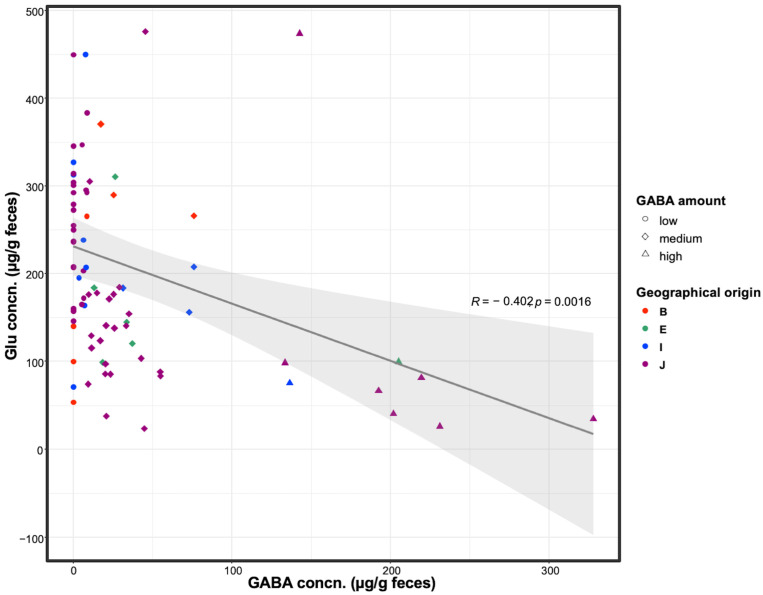
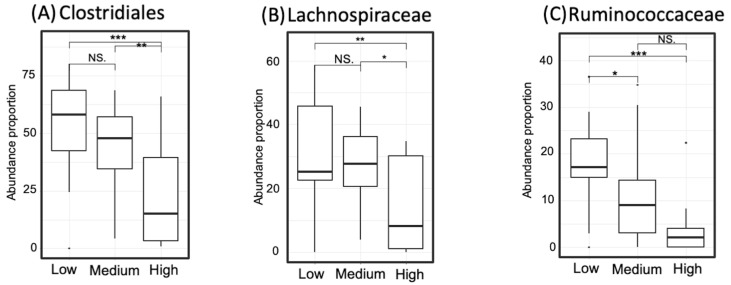
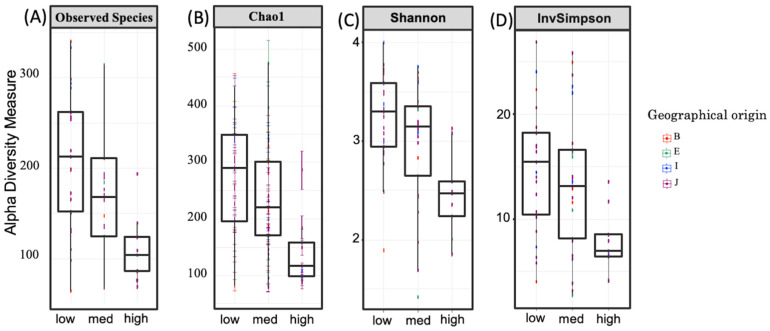
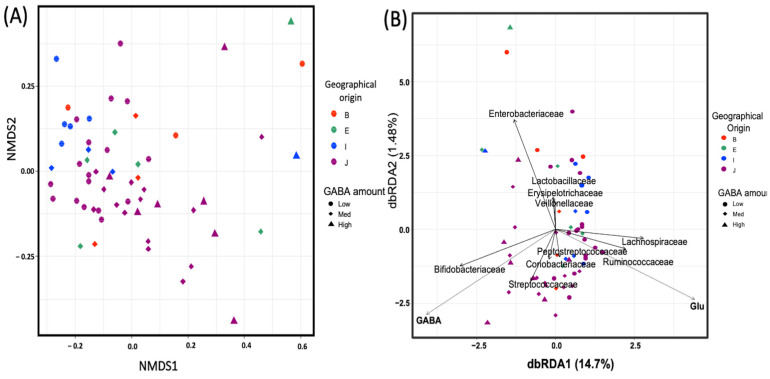
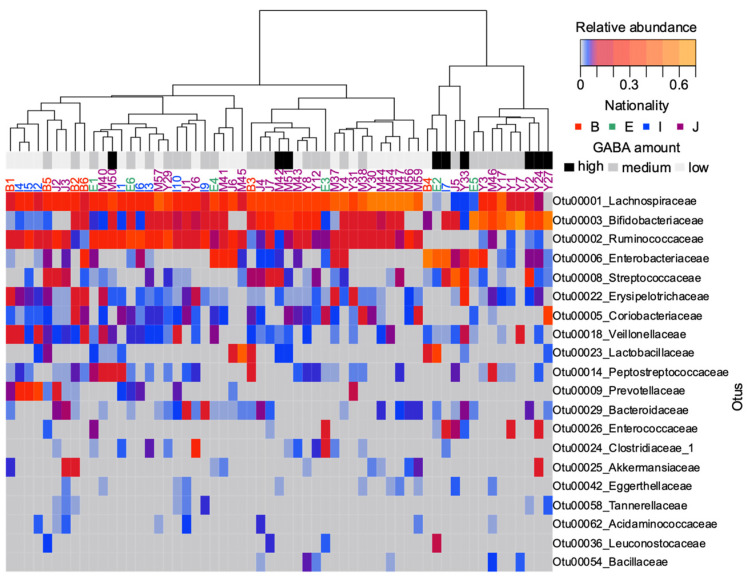
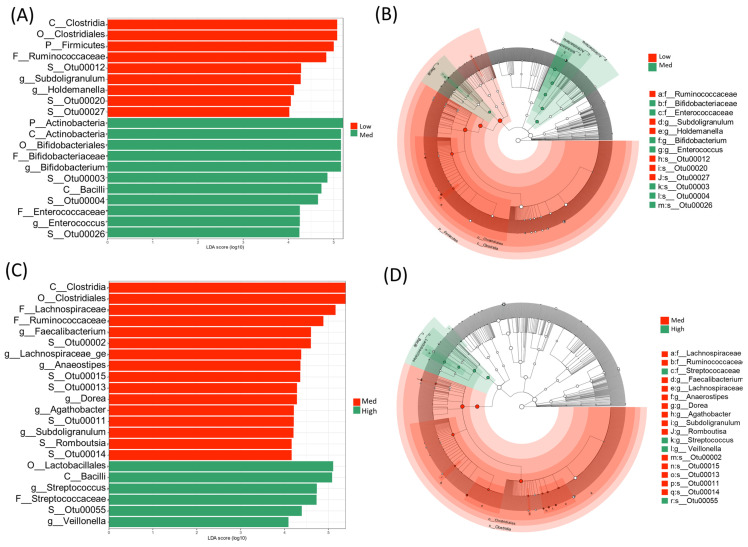
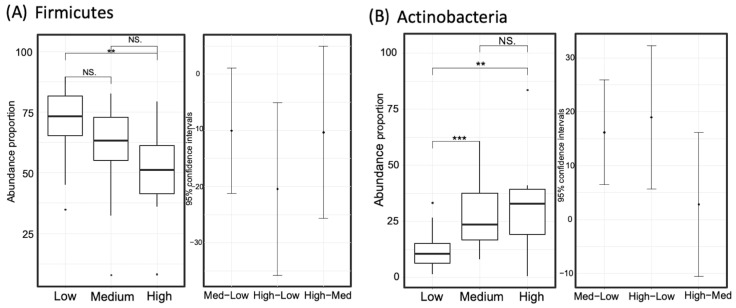
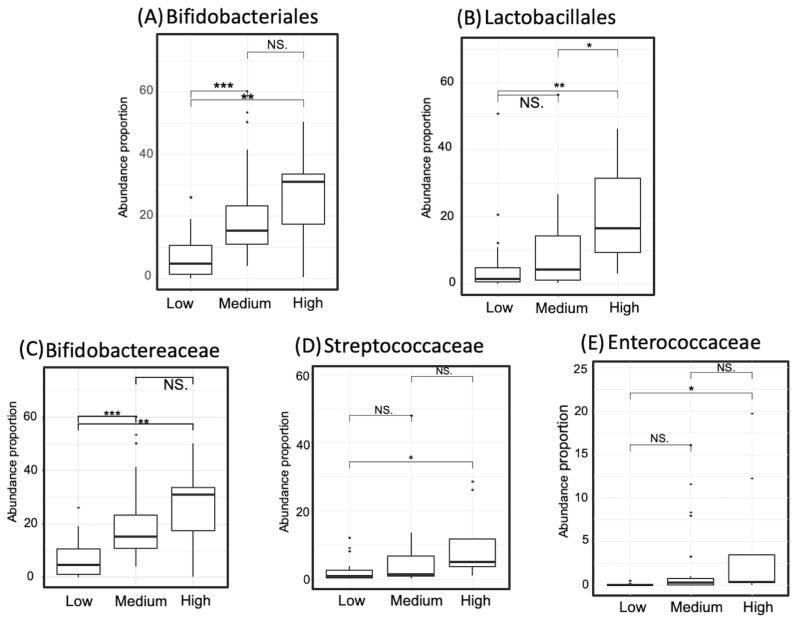
Recent studies have shown that the gut microbiota modulates the physical and psychological functions of the host through several modes of action. One of them is mediating the production of active neurotransmitters, such as serotonin and gamma-aminobutyric acid (GABA). GABA is the major inhibitory neurotransmitter in the central nervous system. Here, we analyzed the relationship between fecal GABA concentration and microbial composition in more than 70 human participants. The gut microbiome composition was analyzed using next-generation sequencing based on 16S ribosomal RNA. High-performance liquid chromatography was used to evaluate the neurotransmitters GABA and glutamate. The GABA level was detected in a broad range (0-330 µg/g feces). The participants' samples were classified into high (>100 µg/g), medium (10-100 µg/g), and low (<10 µg/g) groups, based on fecal GABA concentration. The results reveal that the microbiome of the high-GABA samples had lower alpha diversity than the other samples. Beta diversity analysis showed significant ( < 0.05) separation between the high-GABA samples and others. Furthermore, we surveyed the abundance of specific GABA producer biomarkers among the microbiomes of tested samples. The family Bifidobacteriaceae exhibited high abundance in the microbiome of the high-GABA group. This study demonstrated that abundance was associated with high fecal GABA content in healthy human subjects. These results may aid the development of potential probiotics to improve microbial GABA production, which can support the maintenance of the physical and psychiatric health of the host.
最近的研究表明,肠道微生物群通过多种作用方式调节宿主的生理和心理功能。其中之一是介导活性神经递质的产生,如血清素和γ-氨基丁酸(GABA)。GABA是中枢神经系统中的主要抑制性神经递质。在此,我们分析了70多名人类参与者粪便中GABA浓度与微生物组成之间的关系。使用基于16S核糖体RNA的下一代测序技术分析肠道微生物群组成。采用高效液相色谱法评估神经递质GABA和谷氨酸。检测到的GABA水平范围很广(0-330μg/g粪便)。根据粪便GABA浓度,将参与者的样本分为高(>100μg/g)、中(10-100μg/g)和低(<10μg/g)三组。结果显示,高GABA样本的微生物群α多样性低于其他样本。β多样性分析表明,高GABA样本与其他样本之间存在显著(<0.05)分离。此外,我们还调查了测试样本微生物群中特定GABA产生菌生物标志物的丰度。双歧杆菌科在高GABA组的微生物群中表现出高丰度。这项研究表明,在健康人类受试者中,丰度与高粪便GABA含量相关。这些结果可能有助于开发潜在的益生菌,以提高微生物GABA的产生,从而支持宿主身体和精神健康的维持。