Tyumentseva Marina, Mikhaylova Yulia, Prelovskaya Anna, Tyumentsev Aleksandr, Petrova Lyudmila, Fomina Valeria, Zamyatin Mikhail, Shelenkov Andrey, Akimkin Vasiliy
Central Research Institute of Epidemiology, Novogireevskaya str., 3a, 111123 Moscow, Russia.
National Medical and Surgical Center named after N.I. Pirogov, Nizhnyaya Pervomayskaya str., 70, 105203 Moscow, Russia.
Pathogens. 2021 Feb 13;10(2):205. doi: 10.3390/pathogens10020205.
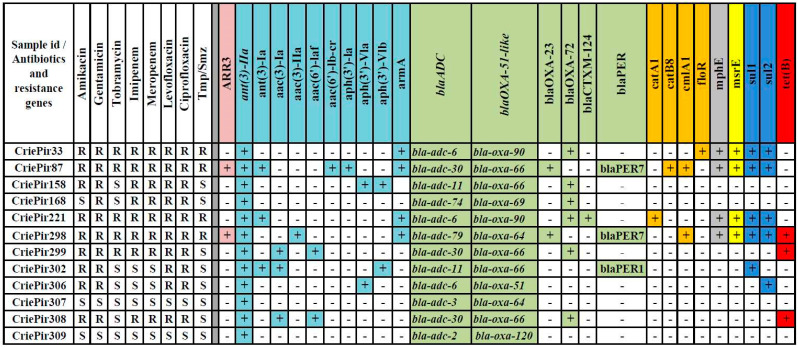
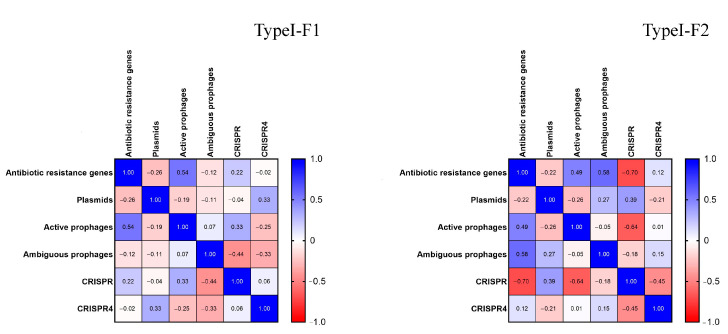
is an opportunistic pathogen being one of the most important causative agents of a wide range of nosocomial infections associated with multidrug resistance and high mortality rate. This study presents a multiparametric and correlation analyses of clinical multidrug-resistant isolates using short- and long-read whole-genome sequencing, which allowed us to reveal specific characteristics of the isolates with different CRISPR/Cas systems. We also compared antibiotic resistance and virulence gene acquisition for the groups of the isolates having functional CRISPR/Cas systems, just CRISPR arrays without cas genes, and without detectable CRISPR spacers. The data include three schemes of molecular typing, phenotypic and genotypic antibiotic resistance determination, as well as phylogenetic analysis of full-length cas gene sequences, predicted prophage sequences and CRISPR array type determination. For the first time the differences between the isolates carrying Type I-F1 and Type I-F2 CRISPR/Cas systems were investigated. isolates with Type I-F1 system were shown to have smaller number of reliably detected CRISPR arrays, and thus they could more easily adapt to environmental conditions through acquisition of antibiotic resistance genes, while Type I-F2 might have stronger "immunity" and use CRISPR/Cas system to block the dissemination of these genes. In addition, virulence factors , and were overrepresented in isolates lacking CRISPR/Cas system. This indicates the role of CRISPR/Cas in fighting against phage infections and preventing horizontal gene transfer. We believe that the data presented will contribute to further investigations in the field of antimicrobial resistance and CRISPR/Cas studies.
是一种机会致病菌,是多种医院感染的最重要病原体之一,与多重耐药性和高死亡率相关。本研究使用短读长和长读长全基因组测序对临床多重耐药分离株进行了多参数和相关性分析,这使我们能够揭示具有不同CRISPR/Cas系统的分离株的特定特征。我们还比较了具有功能性CRISPR/Cas系统的分离株组、仅具有CRISPR阵列而无cas基因的分离株组以及未检测到CRISPR间隔序列的分离株组的抗生素耐药性和毒力基因获得情况。数据包括三种分子分型方案、表型和基因型抗生素耐药性测定,以及全长cas基因序列的系统发育分析、预测的前噬菌体序列和CRISPR阵列类型测定。首次研究了携带I-F1型和I-F2型CRISPR/Cas系统的分离株之间的差异。结果表明,具有I-F1型系统的分离株可靠检测到的CRISPR阵列数量较少,因此它们可以通过获得抗生素耐药基因更容易地适应环境条件,而I-F2型可能具有更强的“免疫力”,并利用CRISPR/Cas系统阻止这些基因的传播。此外,在缺乏CRISPR/Cas系统的分离株中,毒力因子、和的含量过高。这表明CRISPR/Cas在对抗噬菌体感染和防止水平基因转移中的作用。我们相信所呈现的数据将有助于抗菌耐药性和CRISPR/Cas研究领域的进一步调查。