Boubekri Kenza, Soumare Abdoulaye, Mardad Ilham, Lyamlouli Karim, Hafidi Mohamed, Ouhdouch Yedir, Kouisni Lamfeddal
Laboratory of Microbial Biotechnologies Agrosciences and Environment (BioMAgE), Faculty of Sciences Semlalia, Cadi Ayyad University, Marrakech P.O. Box 2390, Morocco.
AgroBioSciences Program, Mohammed VI Polytechnic University (UM6P), Benguerir 43150, Morocco.
Microorganisms. 2021 Feb 25;9(3):470. doi: 10.3390/microorganisms9030470.
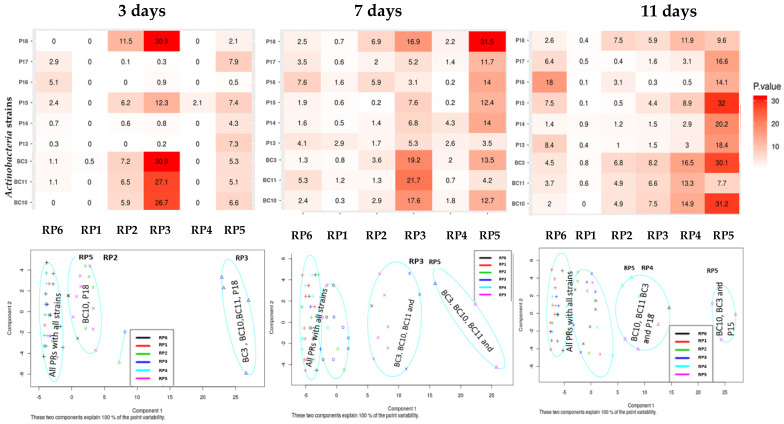
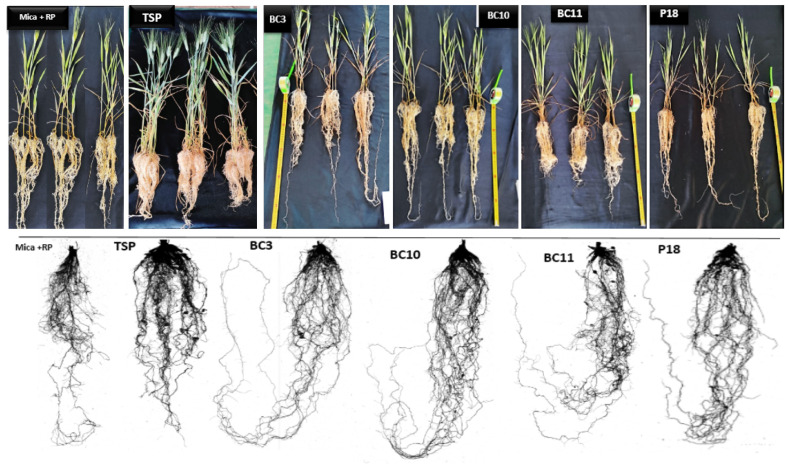
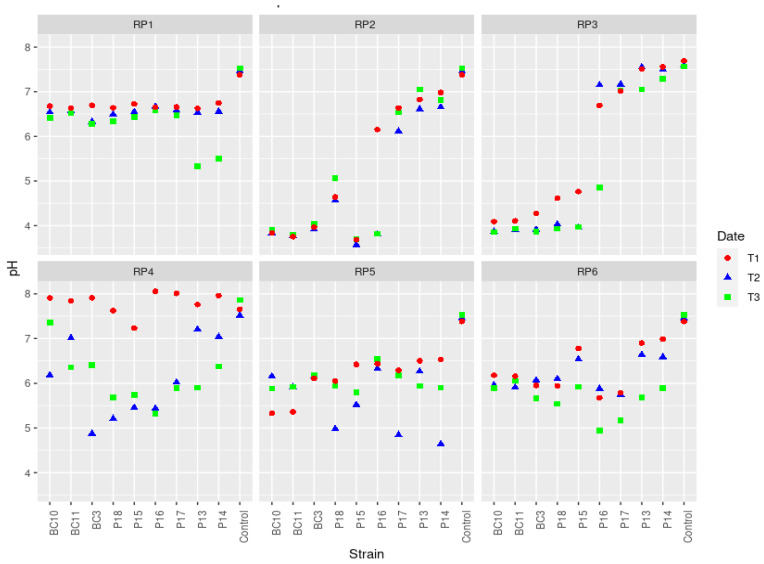
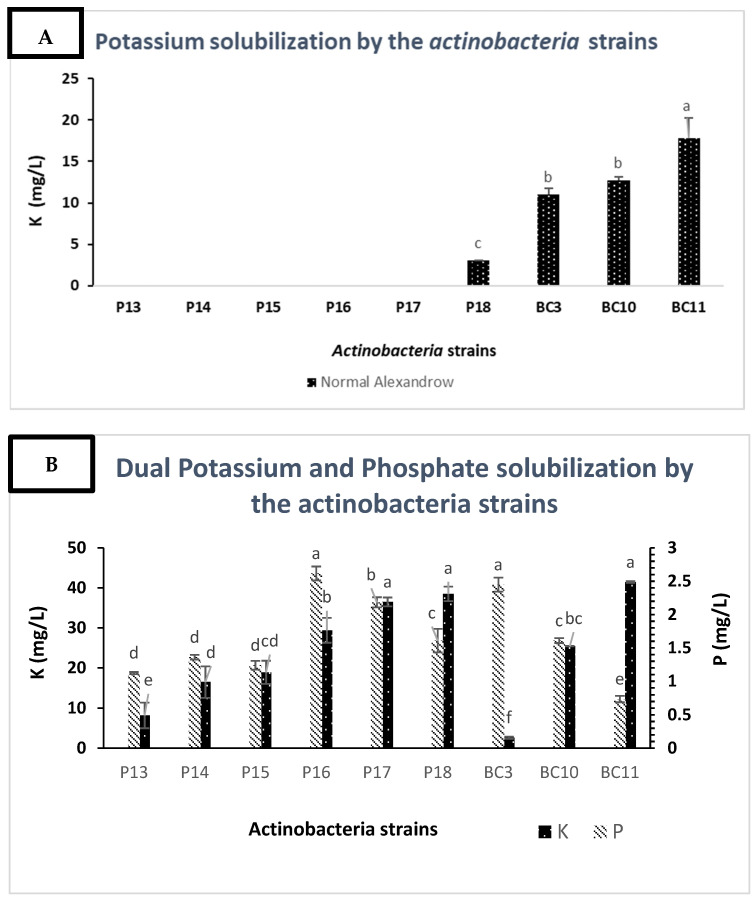
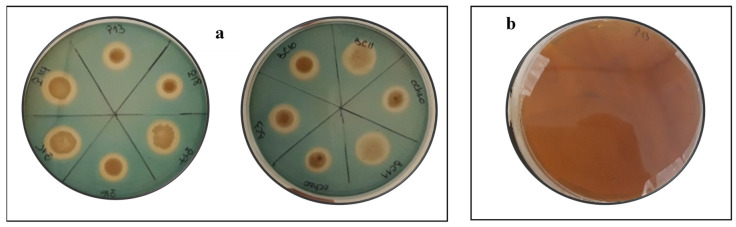
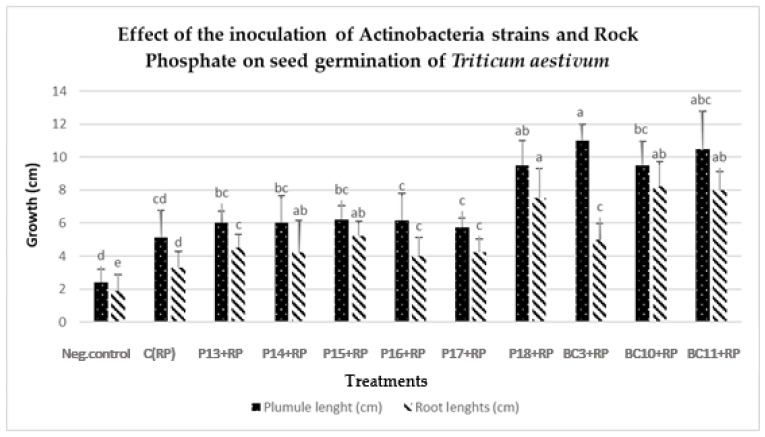
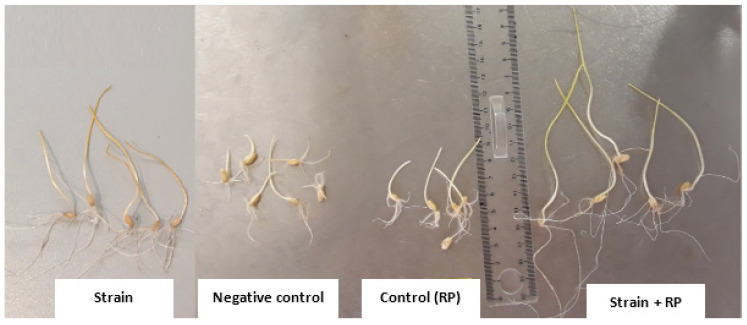
Soil fertility and plant nutrition require an adequate management of essential macronutrients such as potassium (K) and phosphorus (P), which are mandatory for plant development. Bioleaching of K and P bearing minerals improves their chemical weathering and increases the performance of the biofertilization strategies. In this study, in vitro and greenhouse experiments were carried out to investigate P and K solubilization traits of nine Actinobacteria (P13, P14, P15, P16, P17, P18, BC3, BC10, and BC11) under fertilization with rock phosphate (RP). K and P solubilization were evaluated on Alexandrov and NBRIP media containing mica and six RP samples, respectively. The actinobacterial strains were able to solubilize K in Alexandrov medium supplemented with RP. However, when soluble P was used instead of RP, only four strains of Actinobacteria ( P18- BC3- BC10 and BC11) solubilized K. The solubilization values of K ranged from 2.6 to 41.45 mg/L while those of P varied from 0.1 to 32 mg/L. Moreover, all strains were able to produce IAA, siderophore, HCN, and ammonia and significantly improved the germination rate and the vigor index of wheat. The pot experiments revealed that four strains ( P18, BC3, BC10, and BC11) significantly improved the growth parameters of wheat, namely root length (1.75-23.84%), root volume (41.57-71.46%), root dry weight (46.89-162.41%), shoot length (8.92-23.56%), and shoot dry weight (2.56-65.68%) compared to the uninoculated control. These findings showed that BC10 and BC11 are promising candidates for the implementation of efficient biofertilization strategies to improve soil fertility and plant yield under rock P and rock K fertilization.
土壤肥力和植物营养需要对钾(K)和磷(P)等必需大量营养素进行适当管理,这些营养素对植物发育至关重要。含钾和磷矿物的生物浸出可改善其化学风化,并提高生物施肥策略的效果。在本研究中,进行了体外和温室实验,以研究九种放线菌(P13、P14、P15、P16、P17、P18、BC3、BC10和BC11)在施用磷矿粉(RP)情况下的磷和钾溶解特性。分别在含有云母的亚历山德罗夫培养基和六种RP样品的NBRIP培养基上评估钾和磷的溶解情况。这些放线菌菌株能够在添加了RP的亚历山德罗夫培养基中溶解钾。然而,当使用可溶性磷代替RP时,只有四种放线菌菌株(P18、BC3、BC10和BC11)能够溶解钾。钾的溶解值范围为2.6至41.45毫克/升,而磷的溶解值范围为0.1至32毫克/升。此外,所有菌株都能够产生吲哚乙酸、铁载体、HCN和氨,并显著提高了小麦的发芽率和活力指数。盆栽实验表明,与未接种对照相比,四种菌株(P18、BC3、BC10和BC11)显著改善了小麦的生长参数,即根长(1.75 - 23.84%)、根体积(41.57 - 71.46%)、根干重(46.89 - 162.41%)、地上部长度(8.92 - 23.56%)和地上部干重(2.56 - 65.68%)。这些发现表明,BC10和BC11是实施高效生物施肥策略以提高磷矿粉和钾矿粉施肥条件下土壤肥力和作物产量的有潜力的候选菌株。