Kim Kangho, Eun Denny, Jee Yong-Seok
Research Institute of Sports and Industry Science, Hanseo University, Seosan 31962, Korea.
Medicina (Kaunas). 2021 Feb 25;57(3):191. doi: 10.3390/medicina57030191.
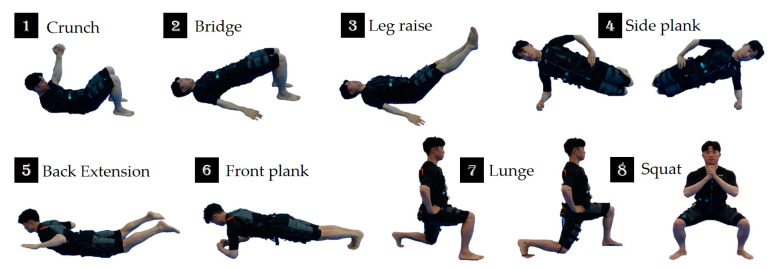
: This study investigated the various impulse effects of whole-body electromyostimulation (WB-EMS) on psychophysiological responses and adaptations. : The participants included fifty-four men between 20 and 27 years of age who practiced isometric exercises for 20 min, three days a week, for 12 weeks while wearing WB-EMS suits, which enabled the simultaneous activation of eight muscle groups with three types of impulse intensities. Participants were allocated to one of four groups: control group (CON), low-impulse-intensity group (LIG), mid-impulse-intensity group (MIG), and high-impulse-intensity group (HIG). Psychophysiological conditions were measured at week 0, week 4, week 8, and week 12. : Compared with the CON, (1) three psychological conditions in LIG, MIG, and HIG showed positive tendencies every four weeks, and the analysis of covariance (ANCOVA) test revealed that body image ( = 0.004), body shape ( = 0.007), and self-esteem ( = 0.001) were significantly different among the groups. (2) Body weight, fat mass, body mass index, and percent fat in the CON showed decreasing tendencies, whereas those in LIG, MIG, and HIG showed a noticeable decrease, which revealed that there were significant differences among the groups. Specifically, a higher impulse intensity resulted in a greater increase in muscle mass. (3) Although there was no interaction effect in the abdominal visceral fat area, there were significant interactions in the abdominal subcutaneous fat (ASF) and total fat (ATF) areas. Both the ASF and ATF in the CON showed decreasing tendencies, whereas those in other groups showed a noticeable decrease. The ANCOVA revealed that the ASF ( = 0.002) and ATF ( = 0.001) were significantly different among the groups. In particular, the higher the impulse intensity, the greater the decrease in abdominal fat. : This study confirmed that high-impulse-intensity EMS can improve psychophysiological conditions. In other words, healthy young adults felt that the extent to which their body image, body shape, and self-esteem improved depended on how intense their EMS impulse intensities were. The results also showed that higher levels of impulse intensity led to improved physical conditions.
本研究调查了全身肌电刺激(WB-EMS)对心理生理反应及适应性的各种脉冲效应。研究参与者包括54名年龄在20至27岁之间的男性,他们每周三天穿着WB-EMS套装进行20分钟的等长运动,持续12周,该套装能够以三种脉冲强度同时激活八个肌肉群。参与者被分配到四组之一:对照组(CON)、低脉冲强度组(LIG)、中脉冲强度组(MIG)和高脉冲强度组(HIG)。在第0周、第4周、第8周和第12周测量心理生理状况。与CON组相比,(1)LIG组、MIG组和HIG组的三种心理状况每四周均呈现积极趋势,协方差分析(ANCOVA)测试显示,身体形象(=0.004)、体型(=0.007)和自尊(=0.001)在各组之间存在显著差异。(2)CON组的体重、脂肪量、体重指数和体脂百分比呈下降趋势,而LIG组、MIG组和HIG组则有明显下降,这表明各组之间存在显著差异。具体而言,较高的脉冲强度导致肌肉量增加更多。(3)尽管腹部内脏脂肪面积没有交互作用效应,但在腹部皮下脂肪(ASF)和总脂肪(ATF)面积存在显著交互作用。CON组的ASF和ATF均呈下降趋势,而其他组则有明显下降。ANCOVA显示,各组之间的ASF(=0.002)和ATF(=0.001)存在显著差异。特别是,脉冲强度越高,腹部脂肪减少越多。本研究证实,高脉冲强度的EMS可以改善心理生理状况。换句话说,健康的年轻成年人认为他们的身体形象、体型和自尊改善的程度取决于他们的EMS脉冲强度有多高。结果还表明,较高水平的脉冲强度导致身体状况改善。