Kemmler Wolfgang, Shojaa Mahdieh, Steele James, Berger Joshua, Fröhlich Michael, Schoene Daniel, von Stengel Simon, Kleinöder Heinz, Kohl Matthias
Institute of Medical Physics, University of Erlangen-Nürnberg, Erlangen, Germany.
Ukactive Research Institute, London, United Kingdom.
Front Physiol. 2021 Feb 26;12:640657. doi: 10.3389/fphys.2021.640657. eCollection 2021.
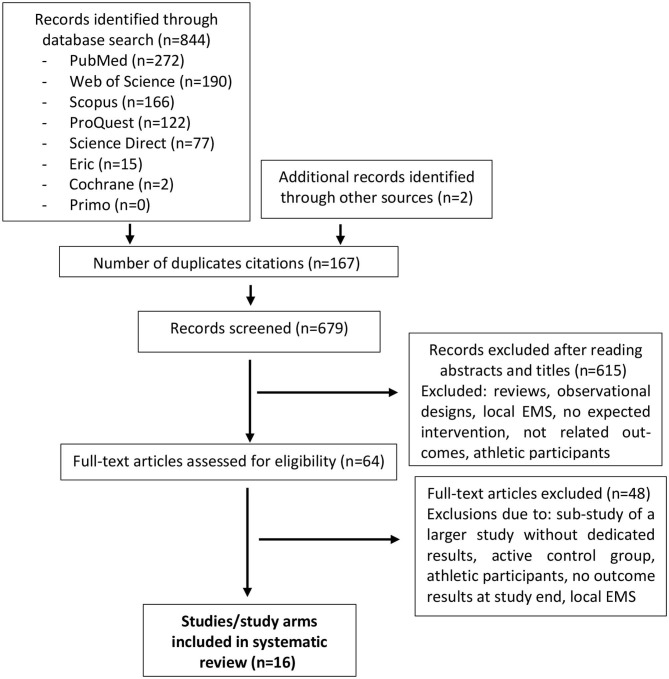
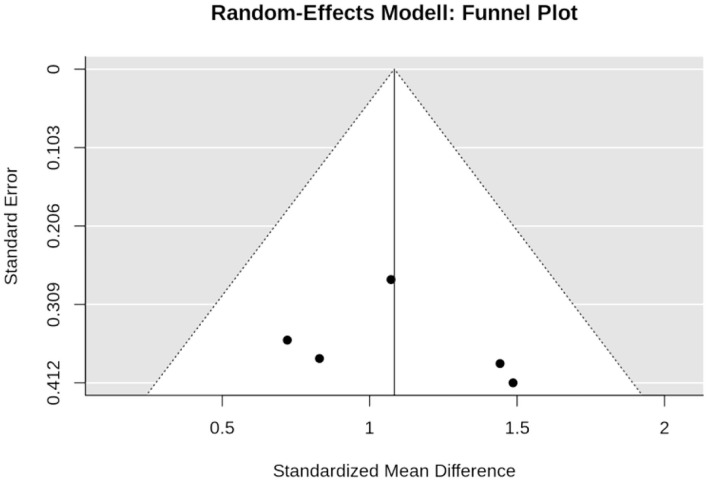
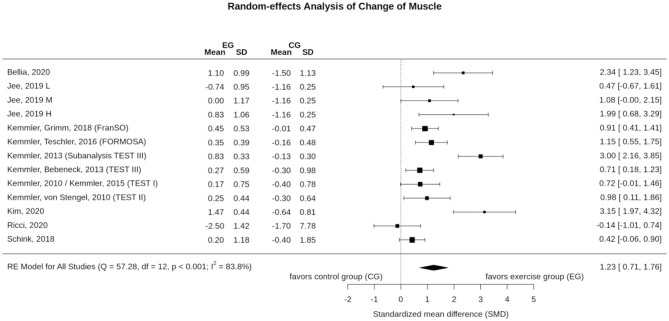
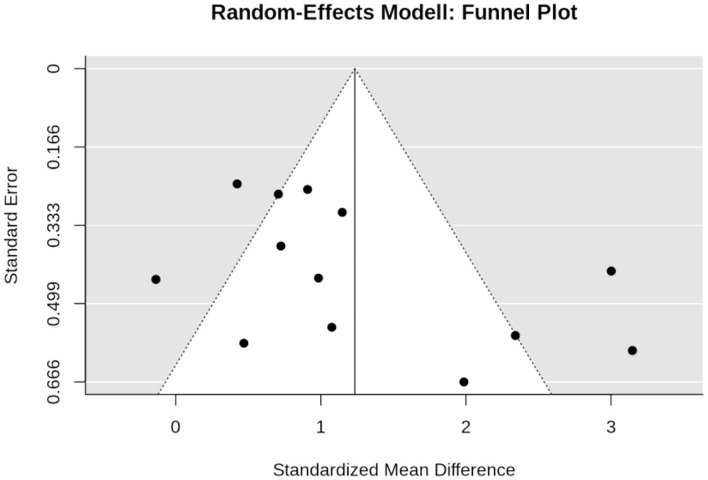
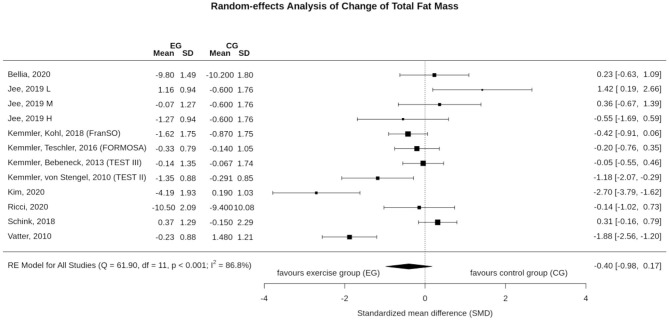
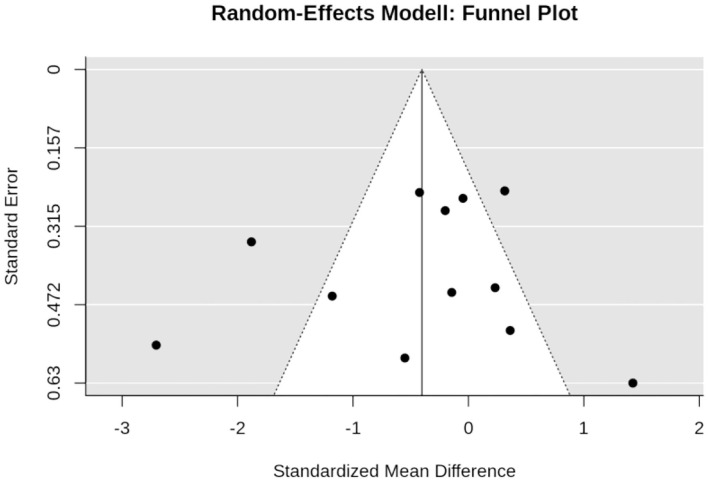
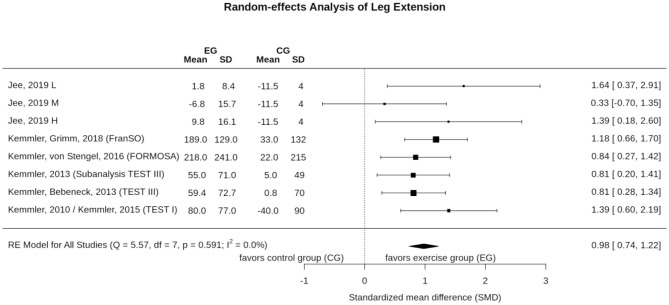
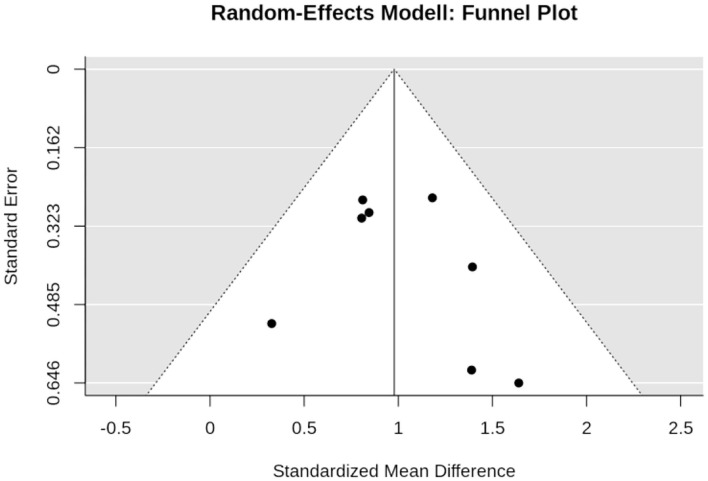
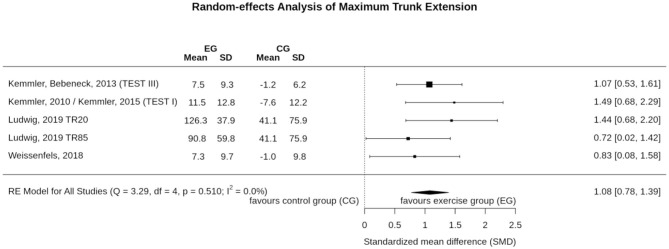
This systematic review and meta-analysis set out to determine the efficacy on whole-body electromyostimulation (WB-EMS) on body composition and strength parameters in non-athletic cohorts. A systematic review of the literature according to the PRISMA statement included (a) controlled trials, (b) WB-EMS trials with at least one exercise and one control group, (c) WB-EMS as primary physical intervention, (d) WB-EMS with at least six electrodes covering most muscle groups, (e) non-athletic cohorts. We searched eight electronic databases up to June 30, 2020, without language restrictions. Standardized mean differences (SMD) for muscle mass parameters, total body fat mass, maximum leg extension, and trunk extension strength were defined as outcome measures. In summary, 16 studies with 19 individual WB-EMS groups representing 897 participants were included. Studies vary considerably with respect to age, BMI, and physical conditions. Impulse protocols of the studies were roughly comparable, but training frequency (1-5 sessions/week) and intervention length (6-54 weeks) differed between the studies. SMD average was 1.23 (95%-CI: 0.71-1.76) for muscle mass, 0.98 (0.74-1.22) for maximum leg, and 1.08 (0.78-1.39) for maximum trunk extension strength changes (all < 0.001). SMD for body fat changes (-0.40, [-0.98 to 0.17]), however, did not reach significance. and Q-statistics revealed substantial heterogeneity of muscle and fat mass changes between the trials. However, rank and regression tests did not indicate positive evidence for small-study bias and funnel plot asymmetries. This work provided further evidence for significant, large-sized effects of WB-EMS on muscle mass and strength parameters, but not on body fat mass. ClinicalTrials.gov, PROSPERO; ID: CRD42020183059.
本系统评价和荟萃分析旨在确定全身肌电刺激(WB-EMS)对非运动员群体身体成分和力量参数的疗效。根据PRISMA声明对文献进行的系统评价纳入了:(a)对照试验;(b)至少有一个运动组和一个对照组的WB-EMS试验;(c)WB-EMS作为主要物理干预措施;(d)使用至少六个电极覆盖大多数肌肉群的WB-EMS;(e)非运动员群体。我们检索了截至2020年6月30日的八个电子数据库,无语言限制。将肌肉质量参数、全身脂肪量、最大腿部伸展和躯干伸展力量的标准化平均差(SMD)定义为结局指标。总之,纳入了16项研究,其中19个独立的WB-EMS组,共897名参与者。这些研究在年龄、体重指数和身体状况方面差异很大。研究的脉冲方案大致可比,但研究之间的训练频率(每周1-5次)和干预时长(6-54周)有所不同。肌肉质量的SMD平均值为1.23(95%置信区间:0.71-1.76),最大腿部伸展为0.98(0.74-1.22),最大躯干伸展力量变化为1.08(0.78-1.39)(均<0.001)。然而,身体脂肪变化的SMD(-0.40,[-0.98至0.17])未达到显著水平。Q统计显示试验之间肌肉和脂肪量变化存在显著异质性。然而,秩和回归检验未表明存在小规模研究偏倚和漏斗图不对称的阳性证据。这项工作为WB-EMS对肌肉质量和力量参数有显著的、较大规模的影响提供了进一步证据,但对身体脂肪量没有影响。ClinicalTrials.gov,PROSPERO;识别号:CRD42020183059。