Kauerova Sona, Bartuskova Hana, Muffova Barbora, Janousek Libor, Fronek Jiri, Petras Marek, Poledne Rudolf, Kralova Lesna Ivana
Laboratory for Atherosclerosis Research, Centre for Experimental Medicine, Institute for Clinical and Experimental Medicine, 140 21 Prague, Czech Republic.
Department of Physiology, Faculty of Science, Charles University, 128 00 Prague, Czech Republic.
Biomedicines. 2021 Feb 19;9(2):211. doi: 10.3390/biomedicines9020211.
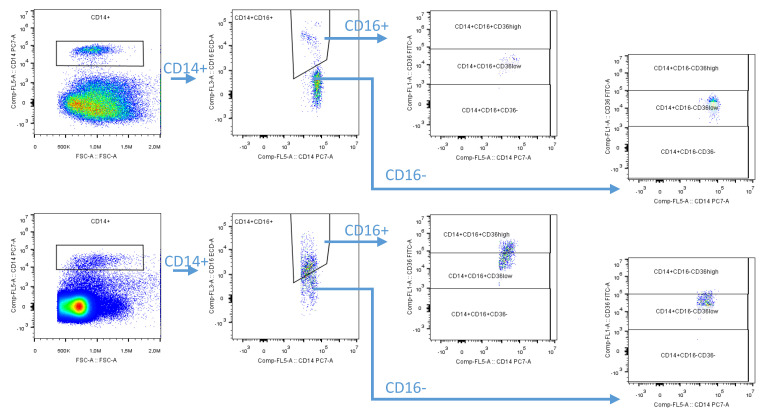
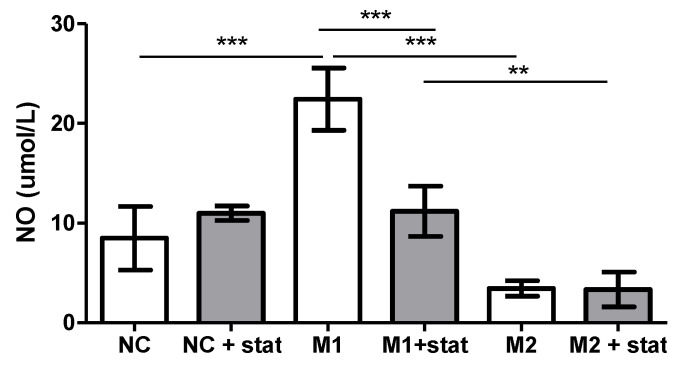
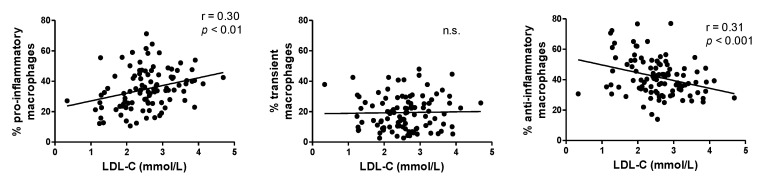
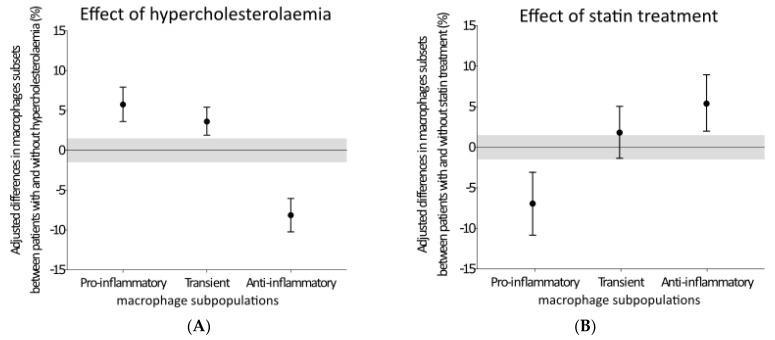
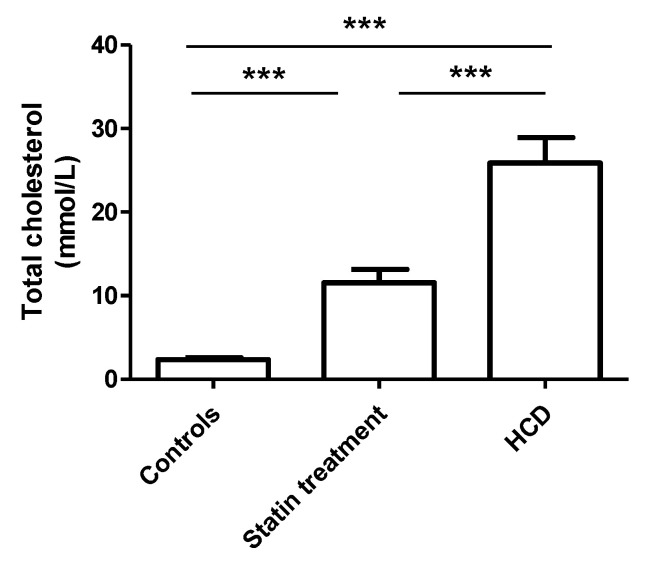
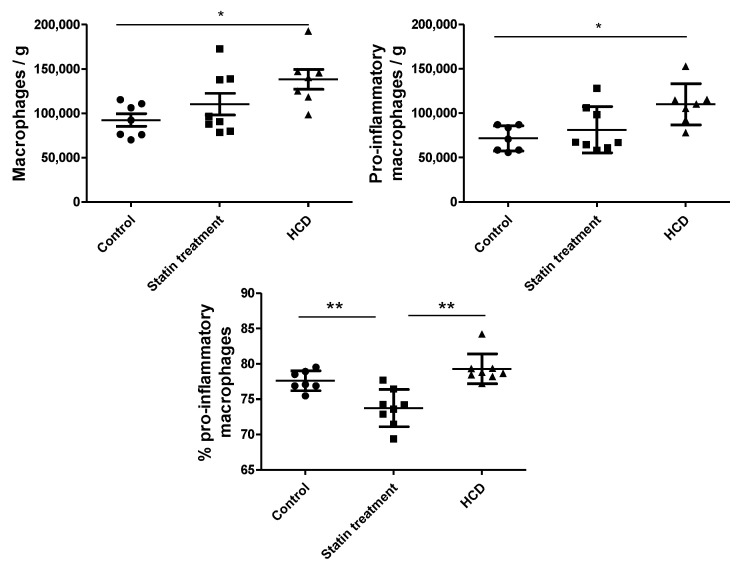
Statins represent one of the most widely used classes of drugs in current medicine. In addition to a substantial decrease in atherogenic low density lipoprotein (LDL) particle concentrations, several large trials have documented their potent anti-inflammatory activity. Based on our preliminary data, we showed that statins are able to decrease the proportion of pro-inflammatory macrophages (CD14+16+CD36high) in visceral adipose tissue in humans. In the present study including 118 healthy individuals (living kidney donors), a very close relationship between the pro-inflammatory macrophage proportion and LDL cholesterol levels was found. This was confirmed after adjustment for the most important risk factors. The effect of statins on the proportion of pro-inflammatory macrophages was also confirmed in an experimental model of the Prague hereditary hypercholesterolemia rat. A direct anti-inflammatory effect of fluvastatin on human macrophage polarization in vitro was documented. Based on modifying the LDL cholesterol concentrations, statins are suggested to decrease the cholesterol inflow through the lipid raft of macrophages in adipose tissue and hypercholesterolemia to enhance the pro-inflammatory macrophage phenotype polarization. On the contrary, due to their opposite effect, statins respond with anti-inflammatory activity, affecting the whole organism.
他汀类药物是当前医学中使用最广泛的一类药物之一。除了能大幅降低致动脉粥样硬化的低密度脂蛋白(LDL)颗粒浓度外,多项大型试验还证明了它们具有强大的抗炎活性。根据我们的初步数据,我们发现他汀类药物能够降低人体内脏脂肪组织中促炎性巨噬细胞(CD14+16+CD36高表达)的比例。在这项纳入118名健康个体(活体肾供体)的研究中,发现促炎性巨噬细胞比例与LDL胆固醇水平之间存在非常密切的关系。在对最重要的风险因素进行校正后,这一点得到了证实。在布拉格遗传性高胆固醇血症大鼠的实验模型中,也证实了他汀类药物对促炎性巨噬细胞比例的影响。文献记载了氟伐他汀在体外对人巨噬细胞极化具有直接的抗炎作用。基于对LDL胆固醇浓度的调节,他汀类药物被认为可减少脂肪组织中胆固醇通过巨噬细胞脂筏的流入以及高胆固醇血症,从而增强促炎性巨噬细胞表型极化。相反,由于其相反的作用,他汀类药物具有抗炎活性,对整个机体产生影响。