
赫尔曼陆龟人工孵化后未孵化卵的监测及孵化方面可能的改进措施
Monitoring of Unhatched Eggs in Hermann's Tortoise () after Artificial Incubation and Possible Improvements in Hatching.
作者信息
Dovč Alenka, Stvarnik Mateja, Lindtner Knific Renata, Gregurić Gračner Gordana, Klobučar Igor, Zorman Rojs Olga
机构信息
Institute for Poultry, Birds, Small Animals and Reptiles, Veterinary Faculty, University of Ljubljana, Gerbičeva 60, 1000 Ljubljana, Slovenia.
Clinic for Reproduction and Large Animals, Veterinary Faculty, Gerbičeva 60, 1000 Ljubljana, Slovenia.
出版信息
Animals (Basel). 2021 Feb 11;11(2):478. doi: 10.3390/ani11020478.
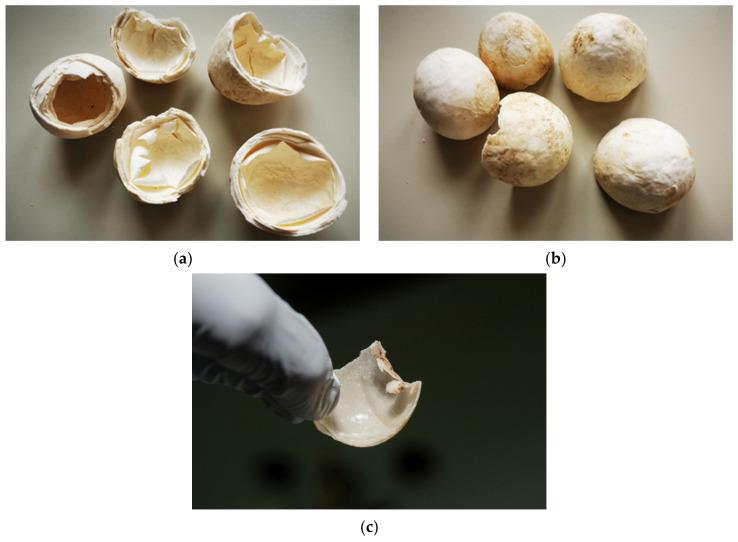
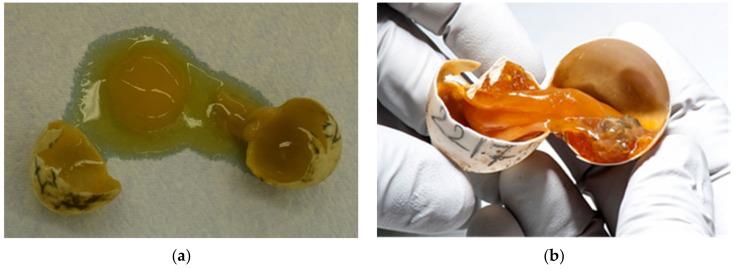
The causes of embryonic mortality in Hermann's tortoises () during artificial incubation were determined. Total egg failure at the end of the hatching period was investigated. The hatching artefacts represented 19.2% (N = 3557) of all eggs (N = 18,520). The viability rate of incubated eggs was 80.8%. The eggs, i.e., embryos, were sorted according to the cause of unsuccessful hatching and subsequently analyzed. Some of the eggs were divided into two or more groups. Unfertilized eggs were confirmed in 61.0%, infected eggs in 52.5%, and eggs in various stages of desiccation in 19.1%. This group also included mummified embryos. , sp., , and were frequently confirmed in infected eggs. Embryos were divided into three groups: embryos up to 1.0 cm-group 1 (2.2%), embryos from 1.0 cm to 1.5 cm-group 2 (5.4%) and embryos longer than 1.5 cm-group 3 (7.3%) of all unhatched eggs. Inability of embryos to peck the shell was found in 1.3%. These tortoises died shortly before hatching. Embryos still alive from the group 2 and group 3 were confirmed in 0.7% of cases. Dead and alive deformed embryos and twins were detected in the group 3 in 0.5% and 0.1% of cases, respectively. For successful artificial hatching, it is important to establish fumigation with disinfectants prior to incubation and elimination of eggs with different shapes, eggs with broken shells, and eggs weighted under 10 g. Eggs should be candled before and periodically during artificial incubation, and all unfertilized and dead embryos must be removed. Heartbeat monitor is recommended. Proper temperature and humidity, incubation of "clean" eggs on sterile substrate and control for the presence of mites is essential. Monitoring of the parent tortoises is also necessary.
确定了赫尔曼陆龟()人工孵化期间胚胎死亡的原因。研究了孵化期结束时的总卵失败情况。孵化假象占所有卵(N = 18520)的19.2%(N = 3557)。孵化卵的存活率为80.8%。根据孵化失败的原因对卵(即胚胎)进行分类,随后进行分析。一些卵被分为两个或更多组。未受精卵占61.0%,受感染卵占52.5%,处于不同干燥阶段的卵占19.1%。该组还包括木乃伊化胚胎。在受感染的卵中经常检测到、、种和种。胚胎分为三组:所有未孵化卵中,长度达1.0厘米的胚胎为第1组(2.2%),长度从1.0厘米到1.5厘米的胚胎为第2组(5.4%),长度超过1.5厘米的胚胎为第3组(7.3%)。发现1.3%的胚胎无法啄破蛋壳。这些陆龟在孵化前不久死亡。在0.7%的案例中确认第2组和第3组仍有存活胚胎。在第3组中分别检测到0.5%的死亡和存活畸形胚胎以及0.1%的双胞胎。为实现成功的人工孵化,在孵化前用消毒剂进行熏蒸以及剔除形状各异的卵、破壳卵和重量不足10克的卵很重要。在人工孵化前和孵化期间应定期对卵进行烛光检查,必须清除所有未受精和死亡的胚胎。建议使用心跳监测器。合适的温度和湿度、在无菌基质上孵化“干净”的卵以及控制螨虫的存在至关重要。对亲龟进行监测也很有必要。






 Zotero 插件