Laboratory of Medical Genetics, Harbin Medical University, Harbin 150081, China.
Department of Pharmacology, Harbin Medical University-Daqing, Daqing 163319, China.
Cells. 2021 Feb 28;10(3):512. doi: 10.3390/cells10030512.
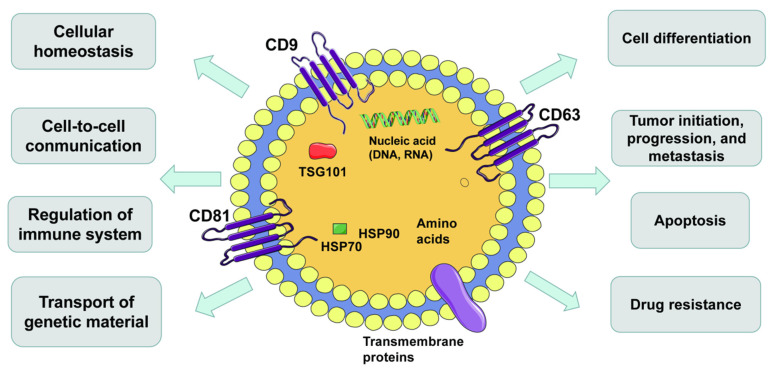
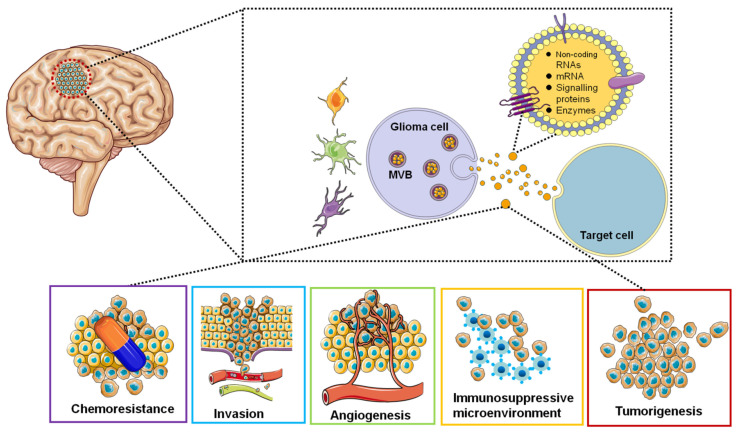
Glioblastoma (GBM) is the most common primary central nervous system tumor and one of the most lethal cancers worldwide, with morbidity of 5.26 per 100,000 population per year. These tumors are often associated with poor prognosis and terrible quality of life. Extracellular vesicles (EVs) are membrane-bound nanoparticles secreted by cells and contain lipid, protein, DNA, mRNA, miRNA and other bioactive substances. EVs perform biological functions by binding or horizontal transfer of bioactive substances to target cell receptors. In recent years, EVs have been considered as possible targets for GBM therapy. A great many types of research demonstrated that EVs played a vital role in the GBM microenvironment, development, progression, angiogenesis, invasion, and even the diagnosis of GBM. Nevertheless, the exact molecular mechanisms and roles of EVs in these processes are unclear. It can provide the basis for GBM treatment in the future that clarifying the regulatory mechanism and related signal pathways of EVs derived from GBM and their clinical value in GBM diagnosis and treatment. In this paper, the research progress and clinical application prospects of GBM-derived EVs are reviewed and discussed.
胶质母细胞瘤(GBM)是最常见的原发性中枢神经系统肿瘤,也是全球最致命的癌症之一,年发病率为每 10 万人 5.26 例。这些肿瘤通常与预后不良和生活质量极差有关。细胞外囊泡(EVs)是由细胞分泌的具有膜结构的纳米颗粒,包含脂质、蛋白质、DNA、mRNA、miRNA 和其他生物活性物质。EVs 通过结合或水平转移生物活性物质到靶细胞受体来发挥生物学功能。近年来,EVs 被认为是 GBM 治疗的潜在靶点。大量研究表明,EVs 在 GBM 微环境、发展、进展、血管生成、侵袭,甚至 GBM 的诊断中发挥着重要作用。然而,EVs 在这些过程中的确切分子机制和作用尚不清楚。阐明源自 GBM 的 EVs 的调节机制及相关信号通路及其在 GBM 诊断和治疗中的临床价值,可为未来的 GBM 治疗提供依据。本文综述并讨论了 GBM 衍生 EVs 的研究进展和临床应用前景。