Department of Obstetrics and Gynecology, University of Toyama, Toyama 9300194, Japan.
Department of Pediatrics, Women and Infants Hospital of Rhode Island, Warren Alpert Medical School of Brown University, Providence, RI 02905, USA.
Int J Mol Sci. 2021 Feb 28;22(5):2432. doi: 10.3390/ijms22052432.
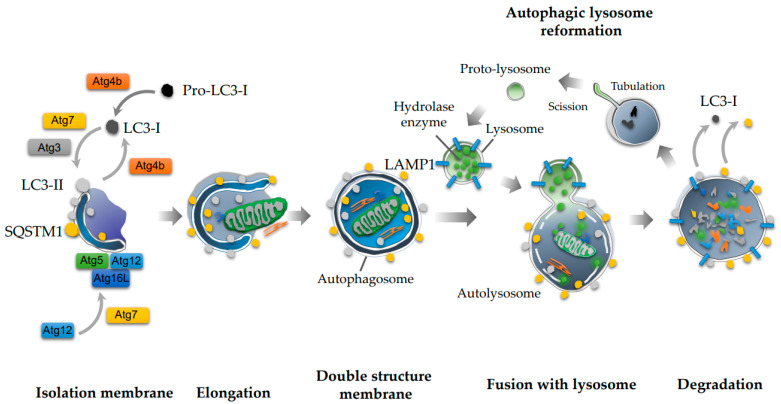
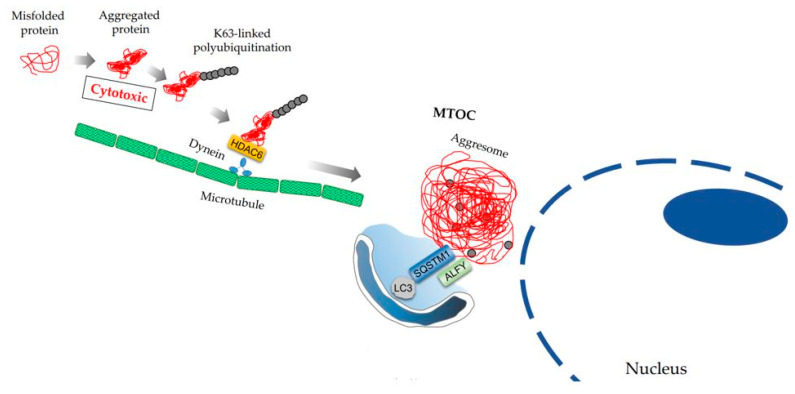
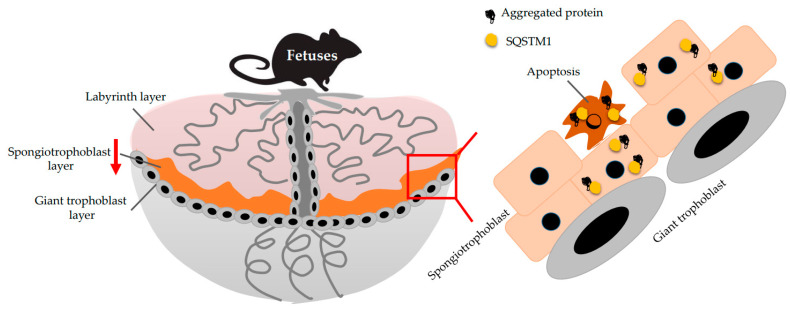
Aggrephagy is defined as the selective degradation of aggregated proteins by autophagosomes. Protein aggregation in organs and cells has been highlighted as a cause of multiple diseases, including neurodegenerative diseases, cardiac failure, and renal failure. Aggregates could pose a hazard for cell survival. Cells exhibit three main mechanisms against the accumulation of aggregates: protein refolding by upregulation of chaperones, reduction of protein overload by translational inhibition, and protein degradation by the ubiquitin-proteasome and autophagy-lysosome systems. Deletion of autophagy-related genes reportedly contributes to intracellular protein aggregation in vivo. Some proteins recognized in aggregates in preeclamptic placentas include those involved in neurodegenerative diseases. As aggregates are derived both intracellularly and extracellularly, special endocytosis for extracellular aggregates also employs the autophagy machinery. In this review, we discuss how the deficiency of aggrephagy and/or macroautophagy leads to poor placentation, resulting in preeclampsia or fetal growth restriction.
聚集体自噬被定义为自噬体对聚集蛋白的选择性降解。器官和细胞中的蛋白聚集已被强调为多种疾病的病因,包括神经退行性疾病、心力衰竭和肾衰竭。聚集体可能对细胞存活构成威胁。细胞表现出三种主要的机制来对抗聚集体的积累:通过上调伴侣蛋白进行蛋白重折叠、通过翻译抑制减少蛋白过载以及通过泛素-蛋白酶体和自噬-溶酶体系统进行蛋白降解。据报道,自噬相关基因的缺失会导致体内细胞内蛋白聚集。在子痫前期胎盘的聚集体中识别出的一些蛋白质包括那些与神经退行性疾病有关的蛋白质。由于聚集体既存在于细胞内也存在于细胞外,因此细胞外聚集体的特殊内吞作用也利用了自噬机制。在这篇综述中,我们讨论了聚集体自噬和/或巨自噬的缺乏如何导致不良的胎盘形成,从而导致子痫前期或胎儿生长受限。