Palladino Giorgia, Rampelli Simone, Scicchitano Daniel, Musella Margherita, Quero Grazia Marina, Prada Fiorella, Mancuso Arianna, Seyfarth Anne Mette, Turroni Silvia, Candela Marco, Biagi Elena
Unit of Microbiome Science and Biotechnology, Department of Pharmacy and Biotechnology (FaBiT), Alma Mater Studiorum-University of Bologna, 40126 Bologna, Italy.
Fano Marine Center, The Inter-Institute Center for Research on Marine Biodiversity, Resources and Biotechnologies, Viale Adriatico 1/N, 61032 Fano, Italy.
Microorganisms. 2021 Feb 22;9(2):455. doi: 10.3390/microorganisms9020455.
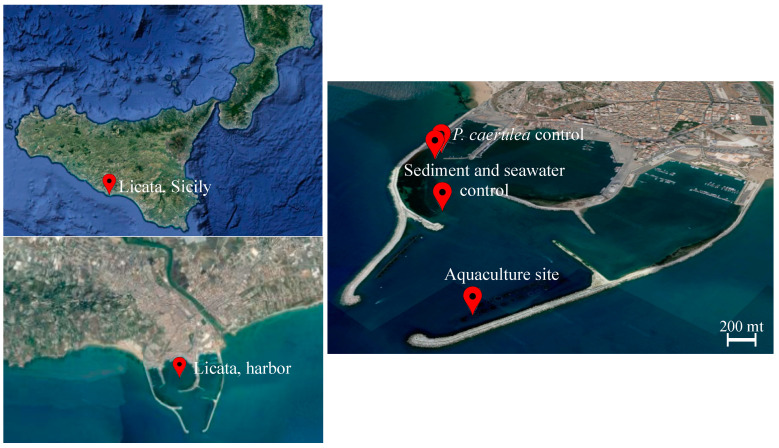
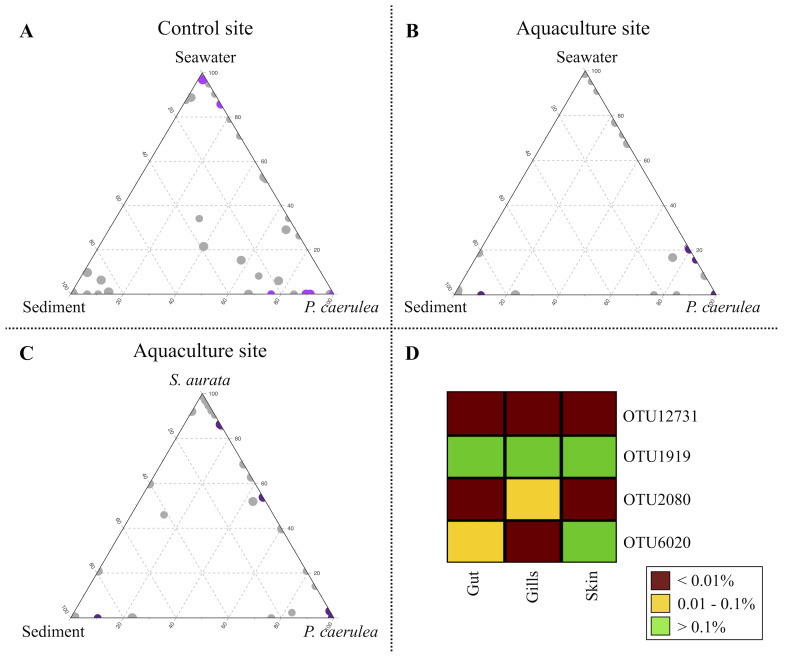
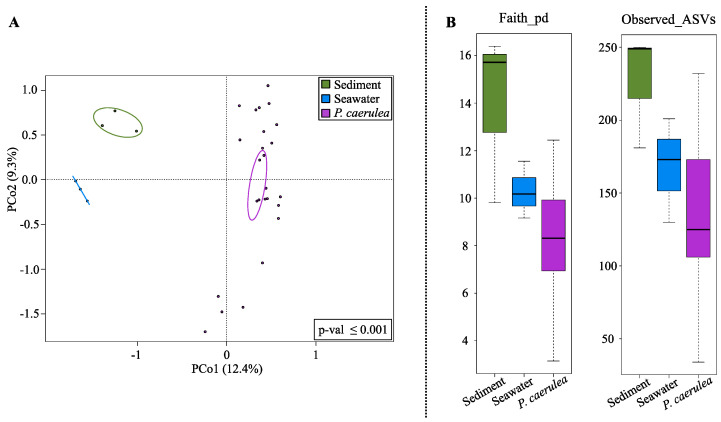
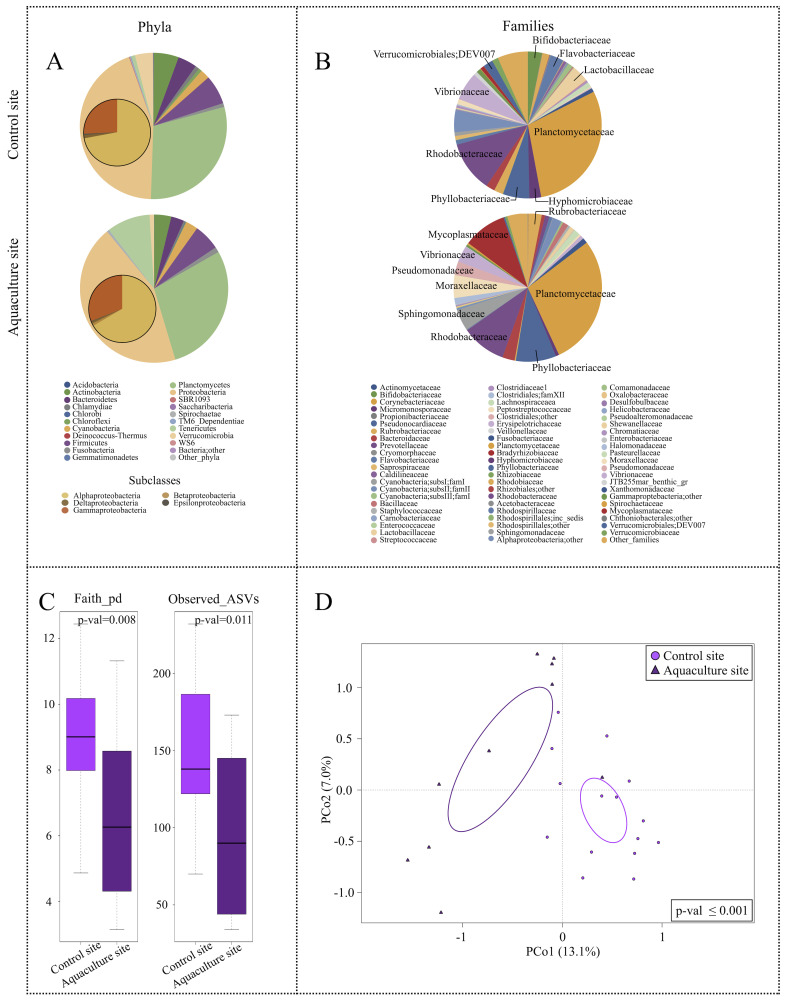
Aquaculture plays a major role in the coastal economy of the Mediterranean Sea. This raises the issue of the impact of fish cages on the surrounding environment. Here, we explore the impact of aquaculture on the composition of the digestive gland microbiome of a representative locally dwelling wild holobiont, the grazer gastropod , at an aquaculture facility located in Southern Sicily, Italy. The microbiome was assessed in individuals collected on sea bream aquaculture cages and on a rocky coastal tract located about 1.2 km from the cages, as the control site. microbiome variations were explained in the broad marine metacommunity context, assessing the water and sediment microbiome composition at both sites, and characterizing the microbiome associated with the farmed sea bream. The digestive gland microbiome at the aquaculture site was characterized by a lower diversity, the loss of microorganisms sensitive to heavy metal contamination, and by the acquisition of fish pathogens and parasites. However, we also observed possible adaptive responses of the digestive gland microbiome at the aquaculture site, including the acquisition of putative bacteria able to deal with metal and sulfide accumulation, highlighting the inherent microbiome potential to drive the host acclimation to stressful conditions.
水产养殖在地中海沿海经济中发挥着重要作用。这就引发了鱼笼对周围环境影响的问题。在此,我们在意大利西西里岛南部的一个水产养殖设施中,探究水产养殖对一种具有代表性的当地野生共生生物——食草腹足类动物消化腺微生物组组成的影响。在从养殖海鲷的笼子上采集的个体以及距离笼子约1.2公里的岩石海岸区域(作为对照地点)采集的个体中评估微生物组。在广阔的海洋群落背景下解释微生物组的变化,评估两个地点的水和沉积物微生物组组成,并对与养殖海鲷相关的微生物组进行特征描述。水产养殖地点的消化腺微生物组具有多样性较低、对重金属污染敏感的微生物丧失以及获得鱼类病原体和寄生虫等特征。然而,我们还观察到水产养殖地点消化腺微生物组可能的适应性反应,包括获得能够应对金属和硫化物积累的假定细菌,这突出了微生物组驱动宿主适应压力条件的内在潜力。