Institute of Genetics and Cell Biology, School of Life Sciences, Northeast Normal University, No. 5268, Renmin St., Changchun 130024, China.
Key Laboratory of Pathobiology of Ministry of Education, Norman Bethune College of Medicine, Jilin University, No. 126, Xinmin St., Changchun 130021, China.
Int J Mol Sci. 2021 Feb 23;22(4):2219. doi: 10.3390/ijms22042219.
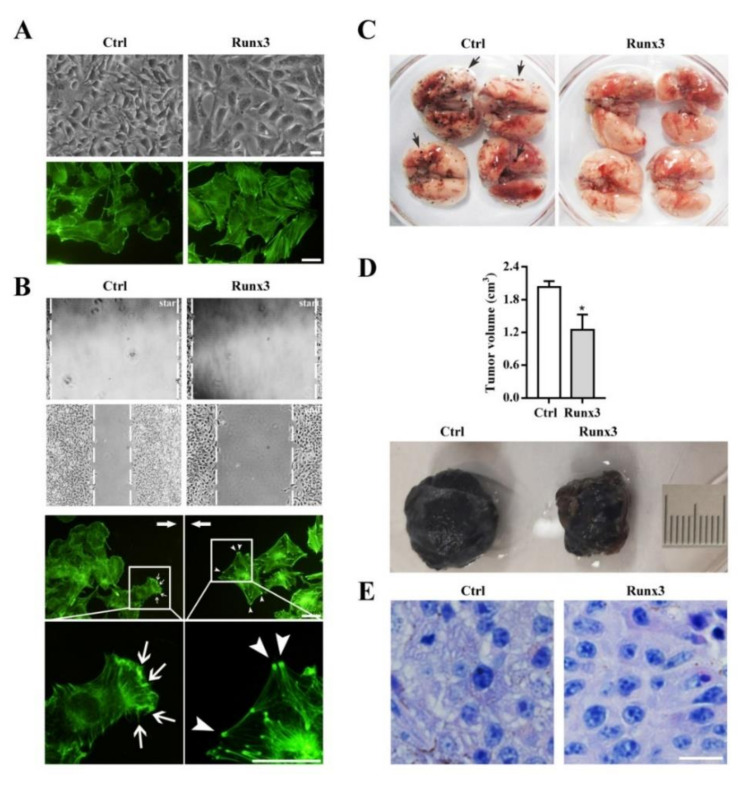
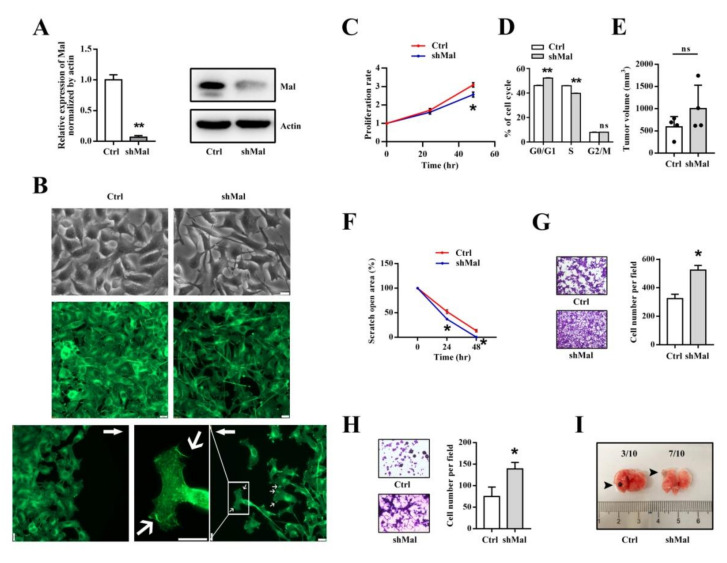
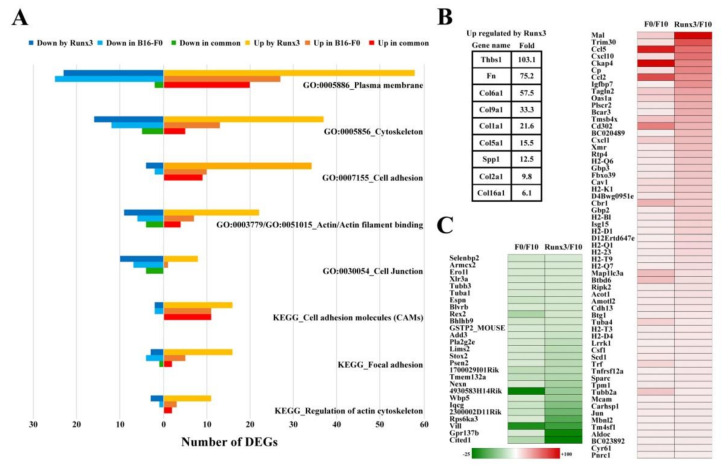
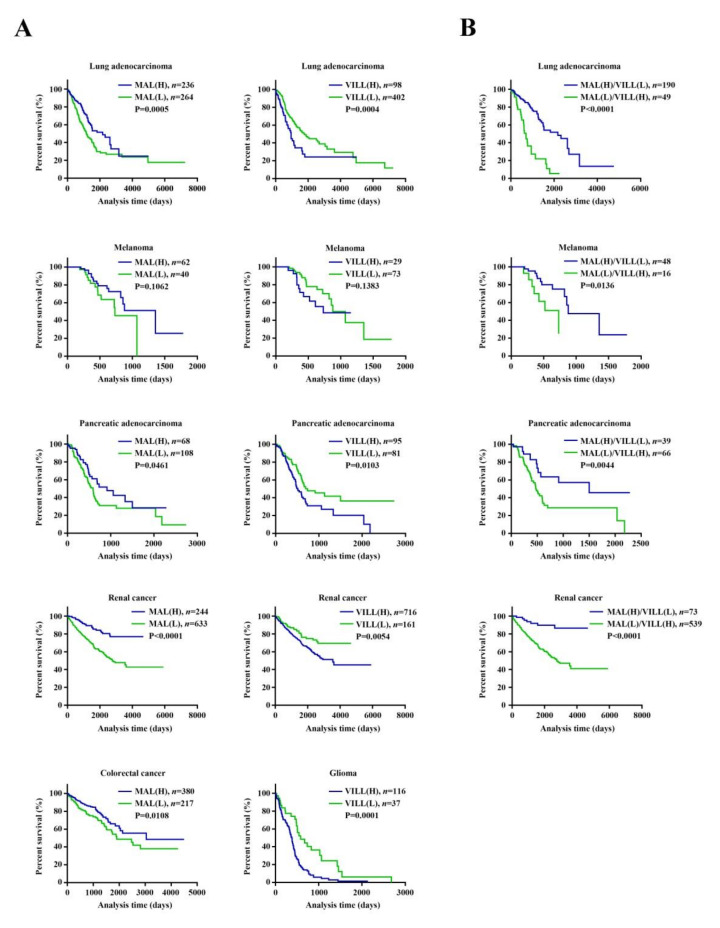
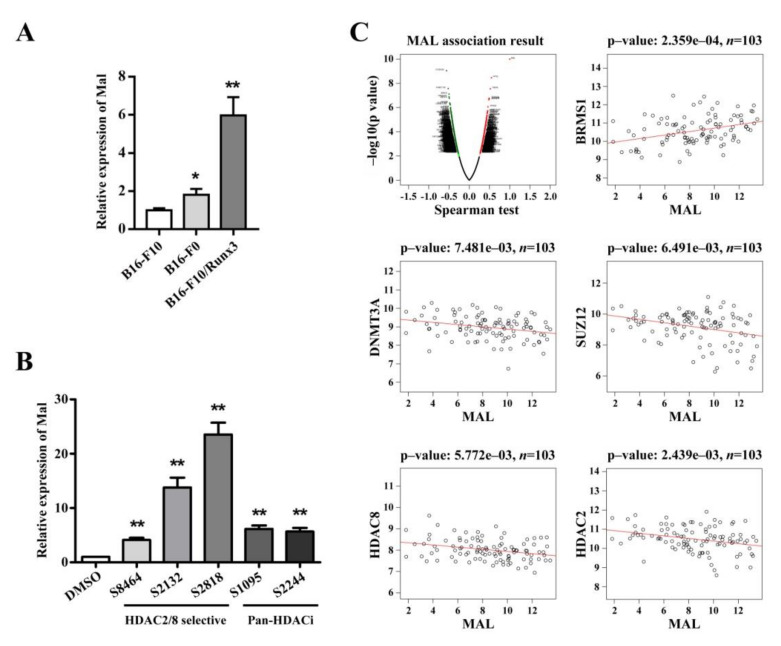
Runt-related transcription factor-3 (Runx3) is a tumor suppressor, and its contribution to melanoma progression remains unclear. We previously demonstrated that Runx3 re-expression in B16-F10 melanoma cells changed their shape and attenuated their migration. In this study, we found that Runx3 re-expression in B16-F10 cells also suppressed their pulmonary metastasis. We performed microarray analysis and uncovered an altered transcriptional profile underlying the cell shape change and the suppression of migration and metastasis. This altered transcriptional profile was rich in Gene Ontology/Kyoto Encyclopedia of Genes and Genomes (GO/KEGG) annotations relevant to adhesion and the actin cytoskeleton and included differentially expressed genes for some major extracellular matrix (ECM) proteins as well as genes that were inversely associated with the increase in the metastatic potential of B16-F10 cells compared to B16-F0 melanoma cells. Further, we found that this altered transcriptional profile could have prognostic value, as evidenced by myelin and lymphocyte protein () and vilin-like (). Finally, gene expression was correlated with metastatic potential among the cells and was targeted by histone deacetylase (HDAC) inhibitors in B16-F10 cells, and the knockdown of gene expression in B16-F0 cells changed their shape and enhanced the migratory and invasive traits of their metastasis. Our study suggests that self-entrapping of metastatic Runx3-negative melanoma cells via adhesion and the actin cytoskeleton could be a powerful therapeutic strategy.
runt 相关转录因子-3 (Runx3) 是一种肿瘤抑制因子,但其在黑色素瘤进展中的作用尚不清楚。我们之前的研究表明,Runx3 在 B16-F10 黑色素瘤细胞中的重新表达改变了它们的形状并减弱了它们的迁移能力。在这项研究中,我们发现 Runx3 在 B16-F10 细胞中的重新表达也抑制了它们的肺转移。我们进行了微阵列分析,揭示了导致细胞形状变化以及迁移和转移抑制的改变的转录谱。该改变的转录谱富含与粘附和肌动蛋白细胞骨架相关的基因本体论/京都基因与基因组百科全书 (GO/KEGG) 注释,包括一些主要细胞外基质 (ECM) 蛋白的差异表达基因,以及与 B16-F10 细胞相比 B16-F0 黑色素瘤细胞转移潜能增加呈负相关的基因。此外,我们发现该改变的转录谱具有预后价值,这一点可以通过髓鞘和淋巴细胞蛋白 (Myelin and lymphocyte protein, ) 和类似微绒毛蛋白 (Villin-like, ) 得到证明。最后,基因表达与细胞间的转移潜能相关,并且在 B16-F10 细胞中被组蛋白去乙酰化酶 (Histone deacetylase, HDAC) 抑制剂靶向,B16-F0 细胞中基因表达的敲低改变了它们的形状并增强了其转移的迁移和侵袭特性。我们的研究表明,通过粘附和肌动蛋白细胞骨架自我困住转移性 Runx3 阴性黑色素瘤细胞可能是一种强大的治疗策略。