Patergnani Simone, Bouhamida Esmaa, Leo Sara, Pinton Paolo, Rimessi Alessandro
Department of Medical Sciences and Laboratory for Technologies of Advanced Therapies (LTTA), University of Ferrara, 44121 Ferrara, Italy.
Center of Research for Innovative Therapies in Cystic Fibrosis, University of Ferrara, 44121 Ferrara, Italy.
Biomedicines. 2021 Feb 20;9(2):216. doi: 10.3390/biomedicines9020216.
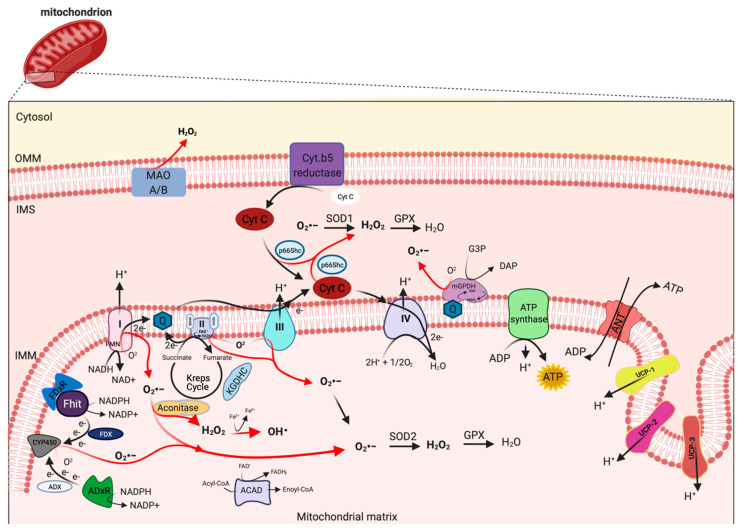
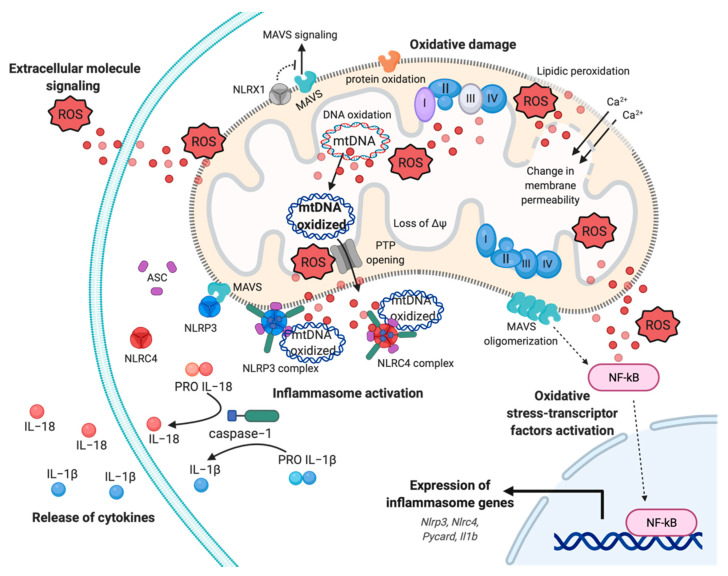
A decline in mitochondrial redox homeostasis has been associated with the development of a wide range of inflammatory-related diseases. Continue discoveries demonstrate that mitochondria are pivotal elements to trigger inflammation and stimulate innate immune signaling cascades to intensify the inflammatory response at front of different stimuli. Here, we review the evidence that an exacerbation in the levels of mitochondrial-derived reactive oxygen species (ROS) contribute to mito-inflammation, a new concept that identifies the compartmentalization of the inflammatory process, in which the mitochondrion acts as central regulator, checkpoint, and arbitrator. In particular, we discuss how ROS contribute to specific aspects of mito-inflammation in different inflammatory-related diseases, such as neurodegenerative disorders, cancer, pulmonary diseases, diabetes, and cardiovascular diseases. Taken together, these observations indicate that mitochondrial ROS influence and regulate a number of key aspects of mito-inflammation and that strategies directed to reduce or neutralize mitochondrial ROS levels might have broad beneficial effects on inflammatory-related diseases.
线粒体氧化还原稳态的下降与多种炎症相关疾病的发生有关。不断的发现表明,线粒体是触发炎症和刺激先天免疫信号级联反应以在不同刺激面前强化炎症反应的关键因素。在此,我们综述了线粒体衍生的活性氧(ROS)水平升高导致线粒体炎症的证据,线粒体炎症是一个识别炎症过程区室化的新概念,其中线粒体充当中央调节器、检查点和仲裁者。特别是,我们讨论了ROS如何在不同的炎症相关疾病中,如神经退行性疾病、癌症、肺部疾病、糖尿病和心血管疾病,促成线粒体炎症的特定方面。综上所述,这些观察结果表明线粒体ROS影响和调节线粒体炎症的许多关键方面,并且旨在降低或中和线粒体ROS水平的策略可能对炎症相关疾病具有广泛的有益影响。