van der Torre Mireille H, Shen Hongwei, Rautemaa-Richardson Riina, Richardson Malcolm D, Novak-Frazer Lilyann
Mycology Reference Centre Manchester, ECMM Centre of Excellence in Clinical and Laboratory Mycology and Clinical Studies, Manchester University NHS Foundation Trust, Wythenshawe Hospital, Manchester M23 9LT, UK.
Division of Infection, Inflammation and Respiratory Medicine, Faculty of Biology, Medicine and Health, University of Manchester, Manchester M13 9PL, UK.
J Fungi (Basel). 2021 Feb 20;7(2):152. doi: 10.3390/jof7020152.
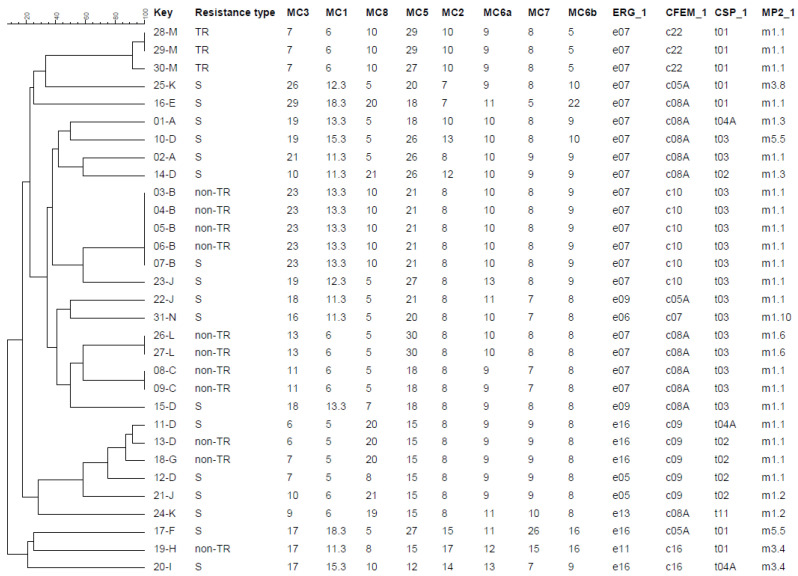
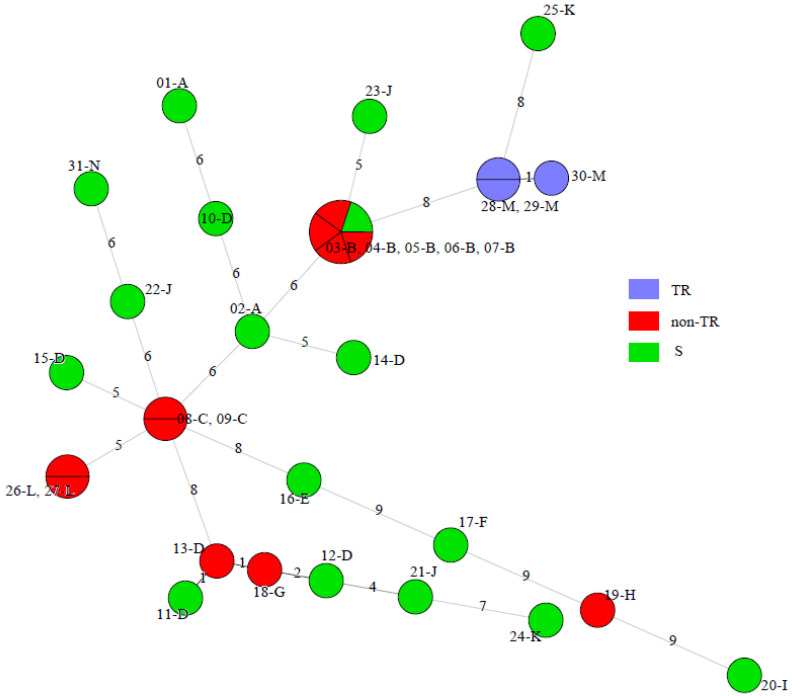
Molecular fungal genotyping techniques developed and employed for epidemiological studies have understandably concentrated on establishing the genetic diversity of in invasive aspergillosis due to its severity, the urgency for treatment, and the need to demonstrate possible sources. Some early studies suggested that these strains were phenotypically, if not genotypically, different from others. However, with improved discrimination and evaluations, incorporating environmental as well as clinical isolates from other conditions (e.g., chronic pulmonary aspergillosis and cystic fibrosis), this premise is no longer upheld. Moreover, with the onset of increased global triazole resistance, there has been a concerted effort to incorporate resistance profiling into genotyping studies and the realisation that the wider population of non-immunocompromised aspergillosis patients are at risk. This review summarises the developments in molecular genotyping studies that incorporate resistance profiling with attention to chronic pulmonary aspergillosis and an example of our UK experience.
由于侵袭性曲霉病的严重性、治疗的紧迫性以及确定可能来源的必要性,为流行病学研究而开发和应用的分子真菌基因分型技术理所当然地集中于确定其基因多样性。一些早期研究表明,这些菌株即使在基因上与其他菌株没有差异,在表型上也是不同的。然而,随着鉴别和评估方法的改进,纳入来自其他病症(如慢性肺曲霉病和囊性纤维化)的环境及临床分离株后,这一前提不再成立。此外,随着全球三唑耐药性的增加,人们一致努力将耐药性分析纳入基因分型研究,并认识到更广泛的非免疫受损曲霉病患者群体也面临风险。本综述总结了分子基因分型研究的进展,这些研究结合了耐药性分析,重点关注慢性肺曲霉病,并以我们在英国的经验为例。