Sawanyawisuth Kanlayanee, Sashida Goro, Sheng Guojun
Department of Biochemistry, Faculty of Medicine, Khon Kaen University, Khon Kaen 40002, Thailand.
Laboratory of Transcriptional Regulation in Leukemogenesis, International Research Centre for Medical Sciences, Kumamoto University, Kumamoto 860-0811, Japan.
Cancers (Basel). 2021 Feb 14;13(4):791. doi: 10.3390/cancers13040791.
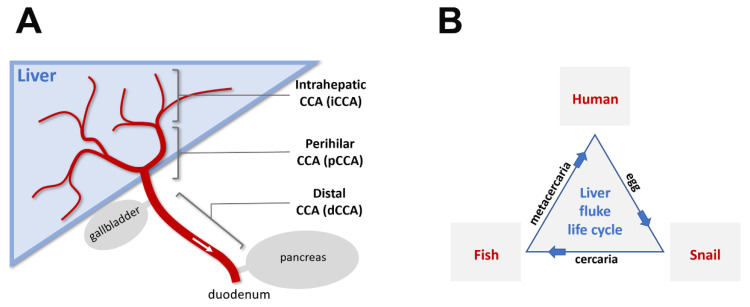
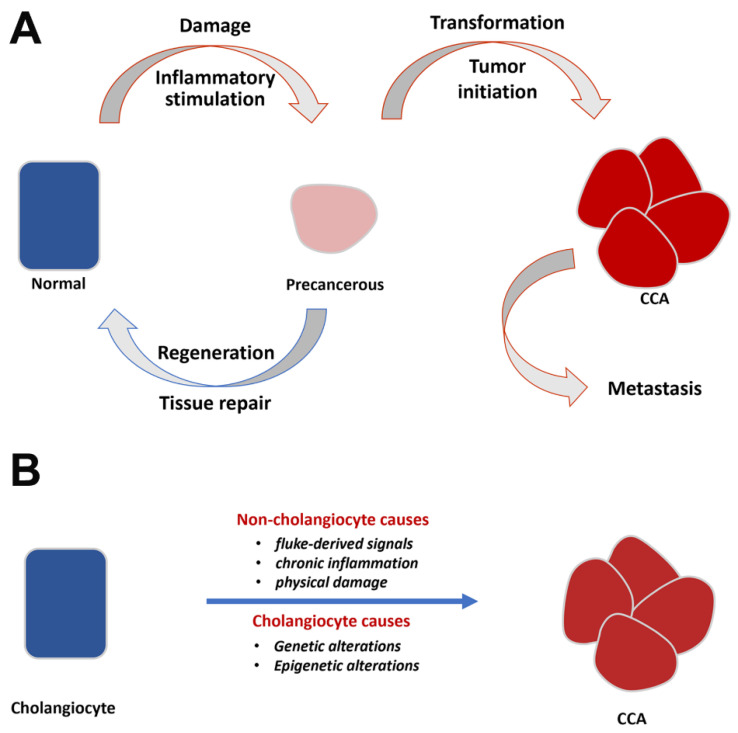
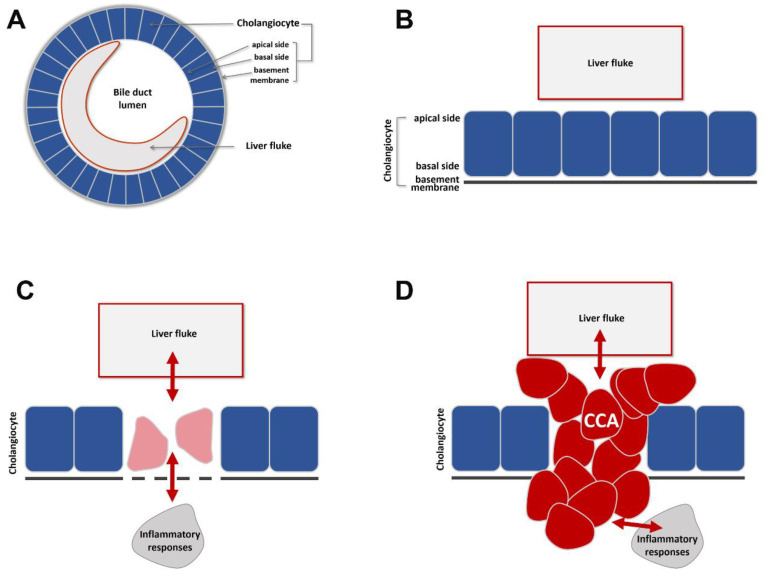
Cholangiocarcinoma (CCA) is the second most common type of hepatic cancer. In east and southeast Asia, intrahepatic CCA is caused predominantly by infection of and , two species of parasitic liver flukes. In this review, we present molecular evidence that liver fluke-associated CCAs have enhanced features of epithelial-mesenchymal transition (EMT) in bile duct epithelial cells (cholangiocytes) and that some of those features are associated with mis-regulation at the epigenetic level. We hypothesize that both direct and indirect mechanisms underlie parasitic infection-induced EMT in CCA.
胆管癌(CCA)是第二常见的肝癌类型。在东亚和东南亚,肝内CCA主要由两种肝吸虫寄生虫——华支睾吸虫和肝片形吸虫感染引起。在本综述中,我们提供了分子证据,表明肝吸虫相关的CCA在胆管上皮细胞(胆管细胞)中具有增强的上皮-间质转化(EMT)特征,并且其中一些特征与表观遗传水平的调控异常有关。我们假设,直接和间接机制都是寄生虫感染诱导CCA中EMT的基础。